
How-to guides
How to Read the Bible with Toddlers
Reading the Bible with a one-, two- or three-year-old is less about getting through the story and more about building a warm, happy habit. Here is what works, what to expect, and where to start.
By the Biblelings team · Updated
What toddlers can (and cannot) take in
A toddler will not understand the doctrine of creation or the meaning of the cross. That is not the goal yet. What a toddler can take in is surprisingly important:
- Names. God, Jesus, Noah, Mary, David. Familiar names become the hooks that later understanding hangs on.
- Simple truths. God made everything. God loves me. Jesus is kind. God keeps his promises.
- The feeling of Bible time. Being snuggled on a lap, hearing a loved voice, looking at pictures. Children who associate the Bible with warmth and closeness carry that with them.
- Routine. "We read a Bible story before bed" becomes part of who they are.
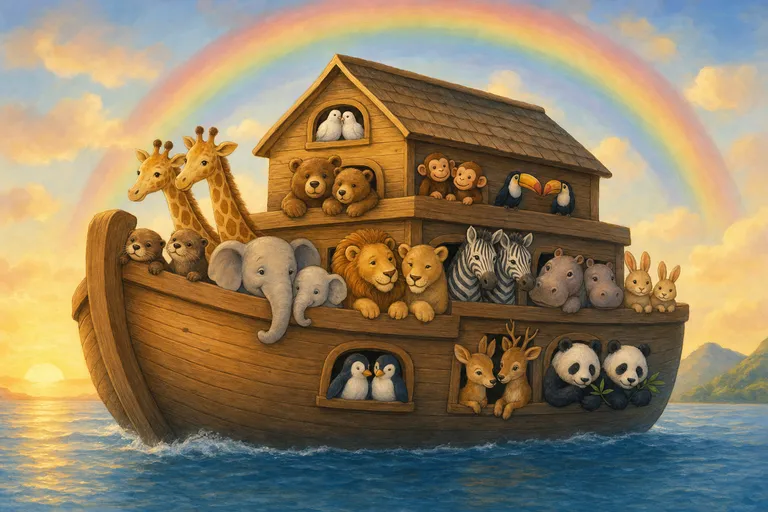
So relax. If your two-year-old only looks at the animals on the ark page and says "duck!", Bible time has done its job.
Choose the right Bible
For toddlers, a board-book Bible is best: thick pages they can turn, very short stories (a few sentences each), and bright, clear pictures. It will be chewed, dropped and carried around, so durability matters.
Good options include the Laugh and Grow Bible for Little Ones by Phil Vischer, The Tiny Truths Bible for Little Ones by Joanna Rivard and Tim Penner, and the Read and Share Toddler Bible by Gwen Ellis. See our full guide to the best children's Bibles by age.
Keep it somewhere they can reach. A Bible a toddler can pull off the shelf and "read" alone is a Bible they will bring to you.
12 practical tips
- Keep it short. One to three minutes is plenty. One story, or even one page.
- Read at the same time each day. Bedtime is easiest; breakfast works too. Routine does the remembering for you.
- Let them hold the book and turn the pages. It makes them a participant, not an audience.
- Point and name. "Where's Noah? There he is! Where's the giraffe?" Toddlers learn by pointing.
- Use your voice. Make the lion roar (gently), the wind whoosh, the sheep baa. Toddlers love sound effects.
- Add actions. Rock side to side for the boat in the storm. Make a rainbow with your arms. Clap when Jesus heals someone.
- Ask one tiny question. "Who's this?" "What does a sheep say?" "Is Jesus happy?" Celebrate any answer.
- Repeat favorites. If they want Noah every night for a month, read Noah every night for a month. Repetition is how toddlers learn language and meaning.
- Say one simple truth. After the story, sum it up in a sentence: "God takes care of Noah. God takes care of you."
- Pray one sentence. "Thank you, God, for the animals. Amen." Let them say "Amen."
- Stop before they lose interest. End on a happy note, even if you are mid-story. You can finish tomorrow.
- Do not worry about wandering. If they toddle off, keep reading a little. They are often still listening. Then let it go.
Stories to start with
Toddlers love stories with animals, babies, water, food and happy endings. Good first stories:
- Creation: God made light, sky, sea, plants, animals and people. Perfect for naming things.
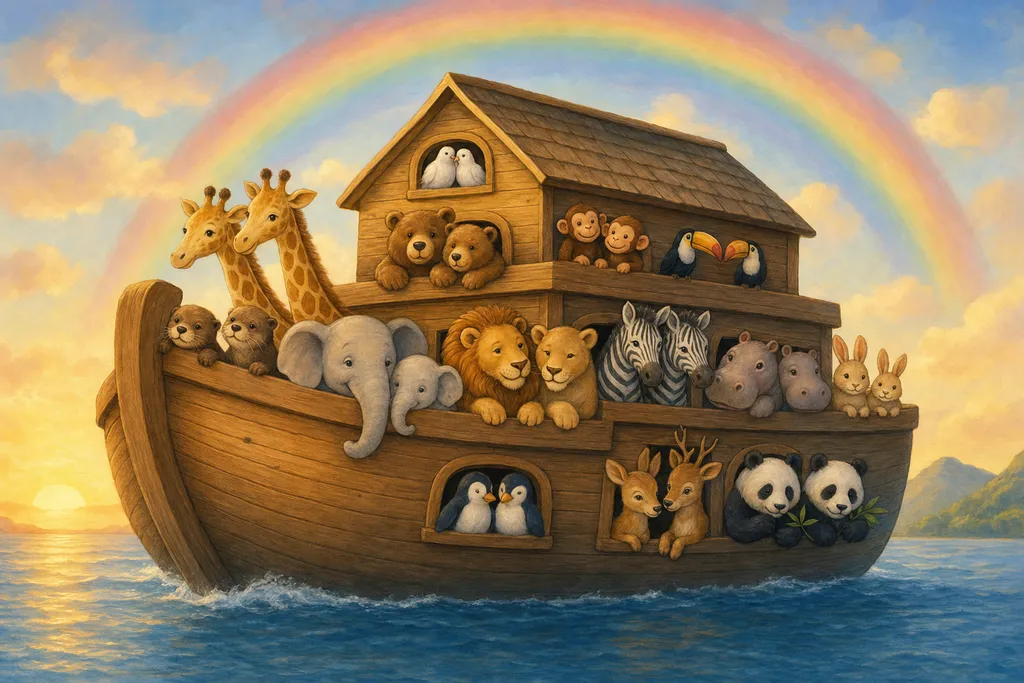
- Noah's Ark: animals two by two, a big boat and a rainbow promise. The classic first Bible story.
- Baby Moses: a baby in a basket, kept safe by his sister and found by a princess.
- The birth of Jesus: a baby, a stable, animals and angels.
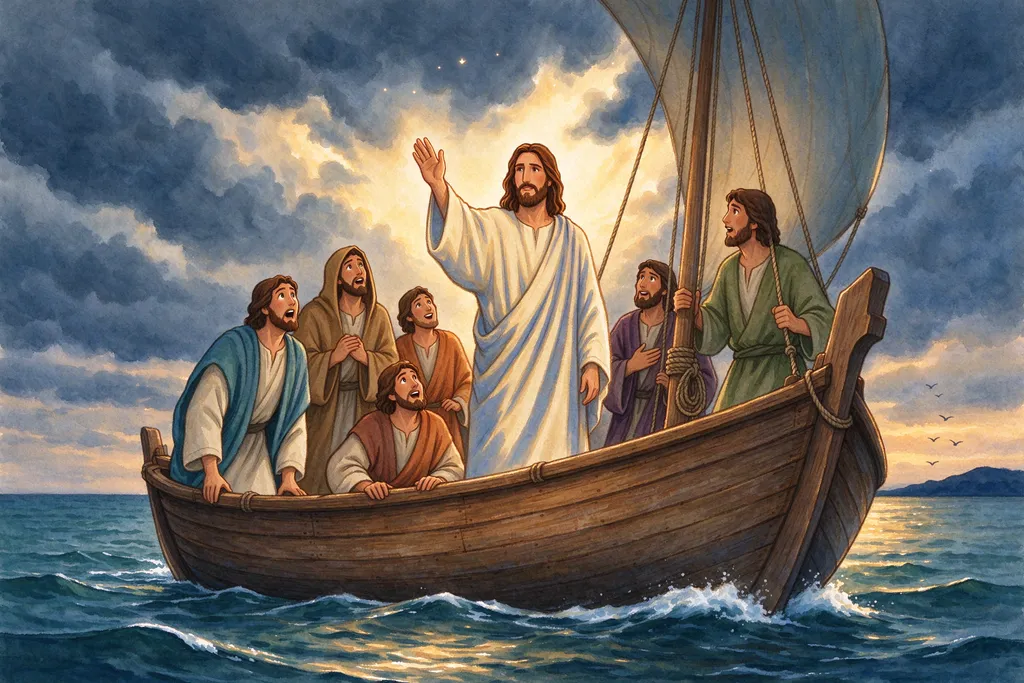
- Jesus calms the storm: wind and waves, then "shhh," and all is calm. Great for actions.
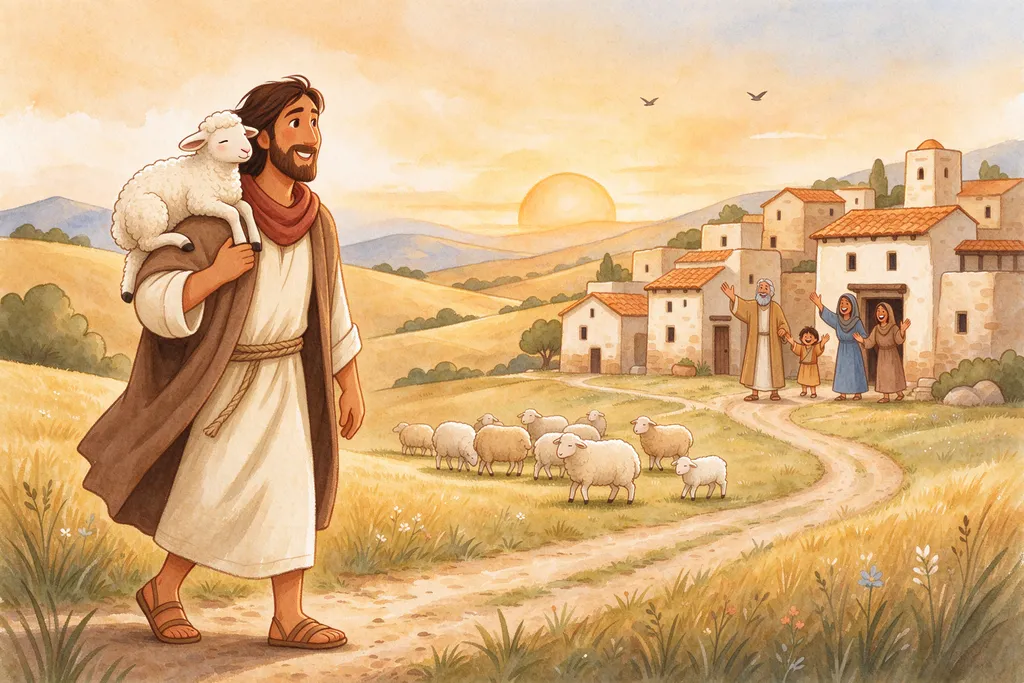
- The lost sheep: a shepherd looks and looks until he finds his one lost sheep. Toddlers love the finding.
- Jesus and the children: Jesus welcomes little children. A story about them.
- Feeding the five thousand: a boy's lunch, a big crowd, and lots of leftovers.
Biblelings stories are written for ages 3 to 8, so for younger toddlers you may want to paraphrase or just read the first chapter and talk about the picture. Every story has a printable coloring page with bold, simple shapes that toddlers can scribble on.
What about the scary parts?
The Bible includes hard things: the flood, battles, death. Toddler Bibles generally leave the frightening details out, and that is appropriate at this age. You do not need to explain why the flood happened to a two-year-old. "It rained and rained, and God kept Noah and the animals safe in the ark" is true and enough.
As children grow, you will add more of the story. If a toddler asks a hard question ("Did the other animals die?"), answer simply and honestly and bring it back to God's care: "Yes, the flood was very sad. But God kept Noah's family safe, and he promised never to flood the whole earth again." Where a story has hard parts, our Biblelings retellings include a short note for parents on how they are handled.
Beyond the book
Bible time with toddlers does not have to happen only with a book.
- Sing. Simple songs like "Jesus Loves Me" teach truth through melody. Scripture songs (word-for-word verses set to music) are great too.
- Play. A toy Noah's ark or a nativity set made for little hands lets toddlers retell stories with their own hands.
- Notice God's world. On a walk: "Look at the flower! God made flowers." Connects creation to everyday life.
- Color. Print a Bible coloring page and talk about it while they scribble.
- Pray through the day. "Thank you, God, for the yummy banana." Short, natural and constant.
Moses told parents to talk about God's words "when you sit in your house, and when you walk by the way, and when you lie down, and when you rise up" (from Deuteronomy 6:7). With toddlers, that is exactly how it works: little moments, all day long.
If you feel like it is not working
Some toddlers sit happily for a story; others will not stay still for ten seconds. Both are normal. If Bible time keeps ending in frustration:
- Shorten it to a single picture and a single sentence.
- Change the time to when they are calmer, like during a meal.
- Change the format: a song, a toy, or acting out a story instead of reading.
- Keep going anyway, lightly. Toddlers change fast. The child who would not sit at two often loves stories at three.
For more on building a family rhythm, see our guide to family devotions with little kids.
A sample two-minute Bible time
Here is what a whole Bible time might look like with a two-year-old, start to finish:
- Snuggle on the sofa or bed with a board-book Bible. "Let's read our Bible story!"
- Your toddler chooses the page (it is Noah again).
- Read the few sentences on the page, slowly, with expression.
- Point and name: "Where's the elephant? Where's Noah? Can you find the rainbow?"
- Do an action together: make a big rainbow with your arms.
- Say one truth: "God kept Noah safe. God keeps you safe too."
- Pray: "Thank you, God, for keeping us safe. Amen." Your toddler shouts "Amen!"
- Close the book. Done.
Two minutes, every day, for a year, adds up to hundreds of Bible moments. And the toddler who shouted "Amen!" at two is the preschooler who asks "Can we read another one?" at three.
Involving older siblings
If you have older children, Bible time with a toddler can become a family moment. A five- to eight-year-old can read the board book to the toddler (wonderful reading practice), do the sound effects, or show the toddler the matching coloring page. Older siblings often love being the teacher, and toddlers adore copying them. Just keep the toddler's part short, and give the older child their own, longer story afterwards.
Questions parents ask
Frequently asked questions
At what age should I start reading the Bible to my child?
From birth if you like. Babies benefit from hearing your voice and seeing pictures, and a board-book Bible can become part of the routine from the very beginning.
How long should Bible time be for a toddler?
One to three minutes is plenty. One story, or even one page, read warmly every day is far better than a long session that ends in tears.
What is the best first Bible story for a toddler?
Noah's Ark is the classic, with animals, a boat and a rainbow. Creation, baby Moses, the birth of Jesus and the lost sheep are also great first stories.
My toddler won't sit still for Bible stories. What should I do?
Let them move, hold a toy, or turn the pages. Keep it very short, add sound effects and actions, and try reading during a meal when they are already sitting.
Should I read the scary parts of Bible stories to a toddler?
Toddler Bibles usually leave frightening details out, which is appropriate. Tell the story truthfully but simply, focusing on God's care, and add more detail as they grow.