

Parables for Kids
Jesus was a wonderful storyteller. Instead of long lectures, he told short stories about everyday things: sheep, seeds, houses, coins and families. People remembered them, talked about them and came back for more. These stories are called parables.
Parables are perfect for children because they're already simple and full of pictures. A shepherd leaves 99 sheep to find one. A man builds his house on sand and watches it wash away. A father runs down the road to hug his son.
Our retellings tell each parable the way Jesus did, then give you one gentle question to help your child think about what it means.
4 stories
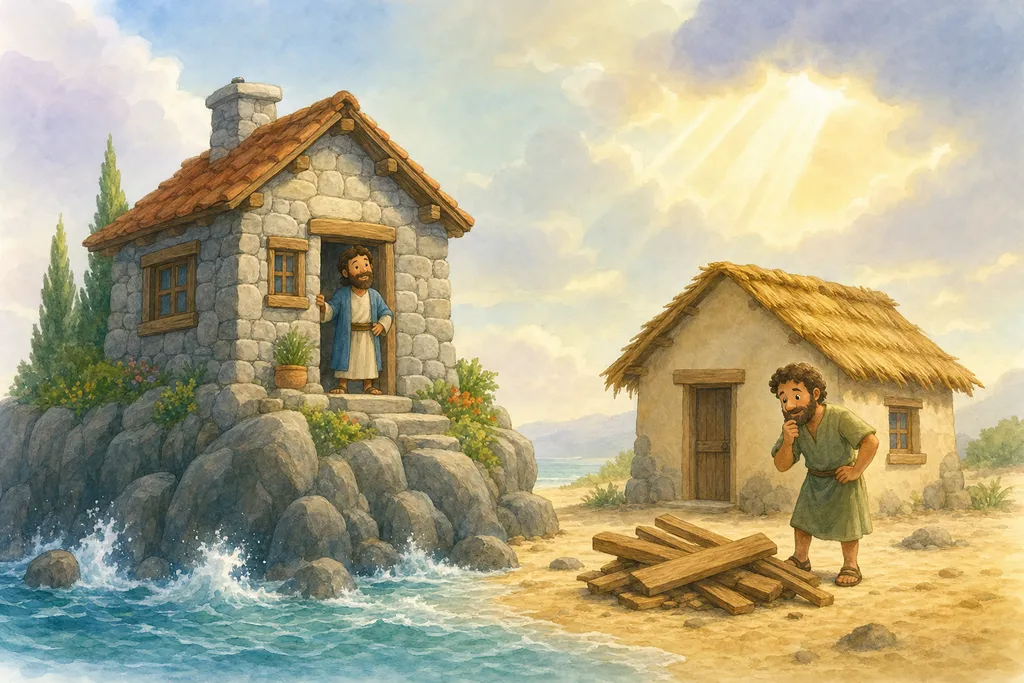
New Testament · Matthew 7:24–29 (see also Luke 6:46–49)
The Wise and Foolish Builders
Jesus told a story about two builders. One built his house on solid rock, and one built on soft sand. When the storm came, only one house stood strong.
6 min read-aloudAges 2–8
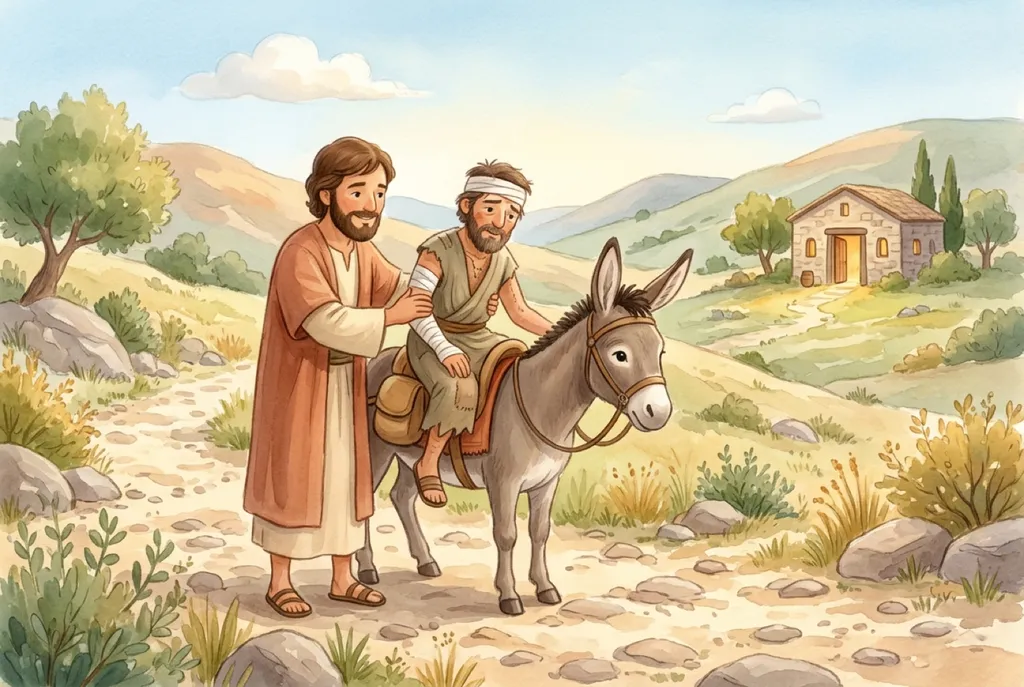
New Testament · Luke 10:25–37
The Good Samaritan
A man asked Jesus, “Who is my neighbor?” Jesus answered with a story about a hurt traveler, two people who walked right past him, and a Samaritan who stopped to help.
6 min read-aloudAges 3–8
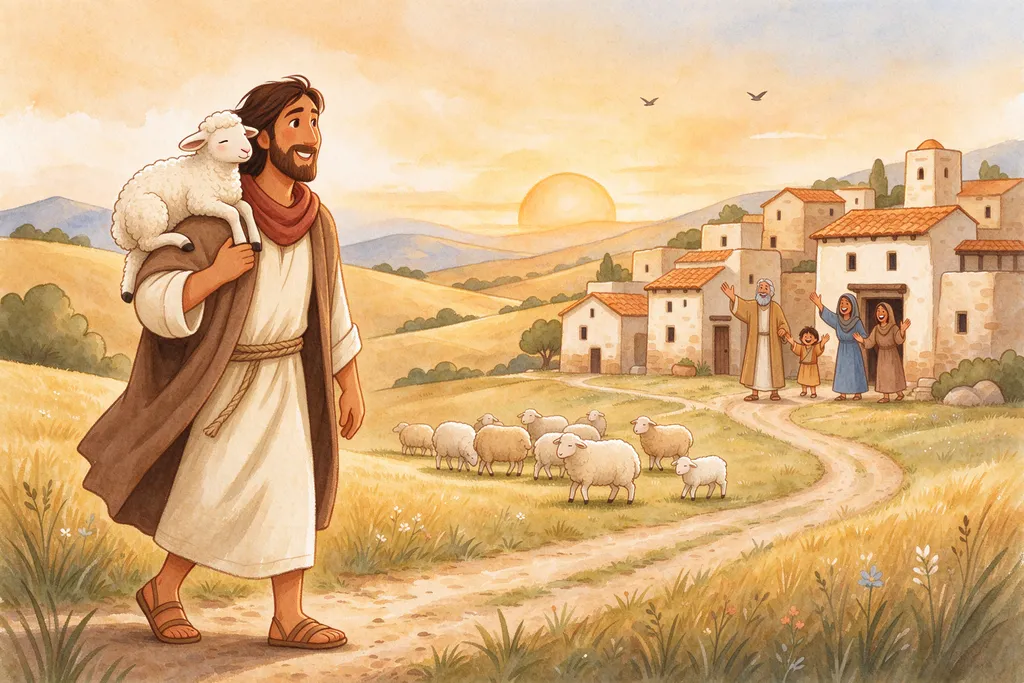
New Testament · Luke 15:1–7 (see also Matthew 18:12–14)
The Lost Sheep
Jesus told a story about a shepherd with one hundred sheep. When just one went missing, he searched until he found it, carried it home on his shoulders and called his friends to celebrate.
6 min read-aloudAges 2–8
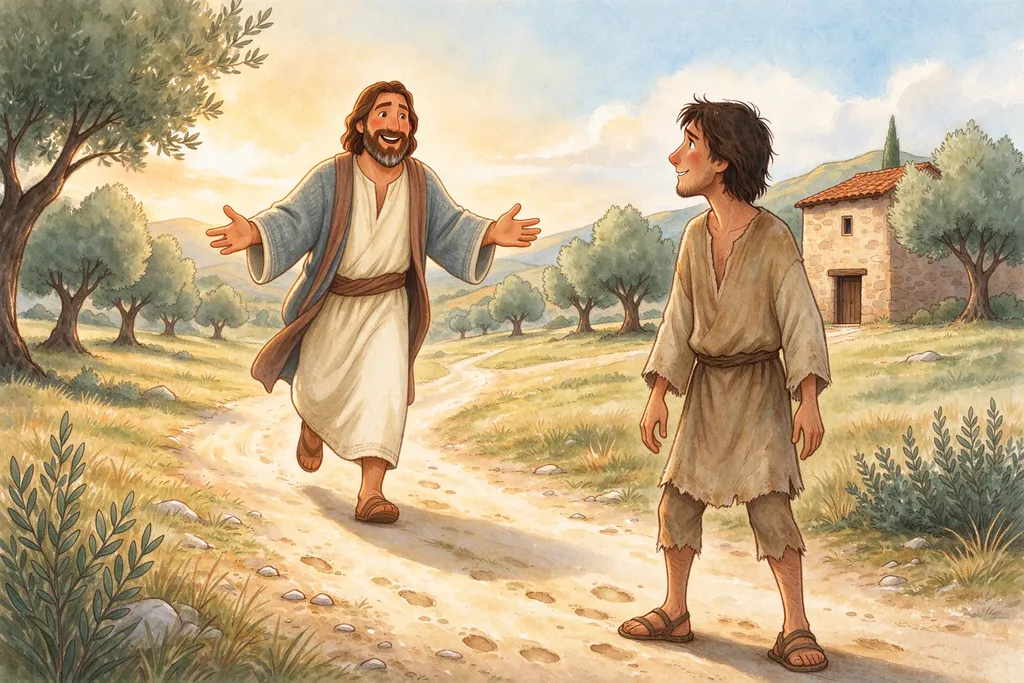
New Testament · Luke 15:1–2, 11–32
The Prodigal Son
Jesus told a story about a son who ran far from home and a father who never stopped watching for him. When the son came back, the father ran to meet him with open arms.
7 min read-aloudAges 3–8

Get a new illustrated Bible story every week, free
A gentle read-aloud retelling, a matching coloring page and one question to talk about, in your inbox each week. Made for ages 3 to 8. Unsubscribe any time.
Parables to read together
- The Lost Sheep: God searches for every one of us
- The Good Samaritan: who is my neighbor?
- The Prodigal Son: God welcomes us home
- The Wise and Foolish Builders: build your life on Jesus' words
- The Good Shepherd: Jesus cares for his sheep
How to talk about a parable
Parables work best when children discover the meaning themselves. Rather than explaining, ask:
- "Who do you think the shepherd is like?"
- "Which character would you want to be?"
- "Why do you think Jesus told this story?"
You'll often be surprised by what they come up with.
Questions parents ask
Good to know
What is a parable, in simple words?
A parable is a short story Jesus told about ordinary things, like sheep, seeds or houses, to teach something about God.
What's the best parable for young kids?
The lost sheep is usually the best first parable. It's short, easy to picture and carries a big, comforting message: God never stops looking for us.
How many parables did Jesus tell?
The Gospels record around 30 to 40, depending on how you count. Some are only a sentence long, like the mustard seed. We've retold the ones that work best for young children.
Should I explain the meaning of each parable?
Ask a question first and let your child try. Then add a simple sentence if they need it. Jesus often left his listeners to think, and children can think more deeply than we expect.