
How-to guides
How to Teach Kids to Pray (Ages 2 to 8)
Children learn to pray the way they learn to talk: by hearing it, copying it and being delighted in when they try. Here is a simple, age-by-age approach for families, with patterns and prayers you can start tonight.
By the Biblelings team · Updated
Start with what prayer is
For a young child, the simplest true definition of prayer is: talking with God, who loves us and listens. That is enough. You do not need to explain theology before a three-year-old can pray. You need to show them, warmly and often, that God is someone we can talk to about anything, at any time, in our own words.
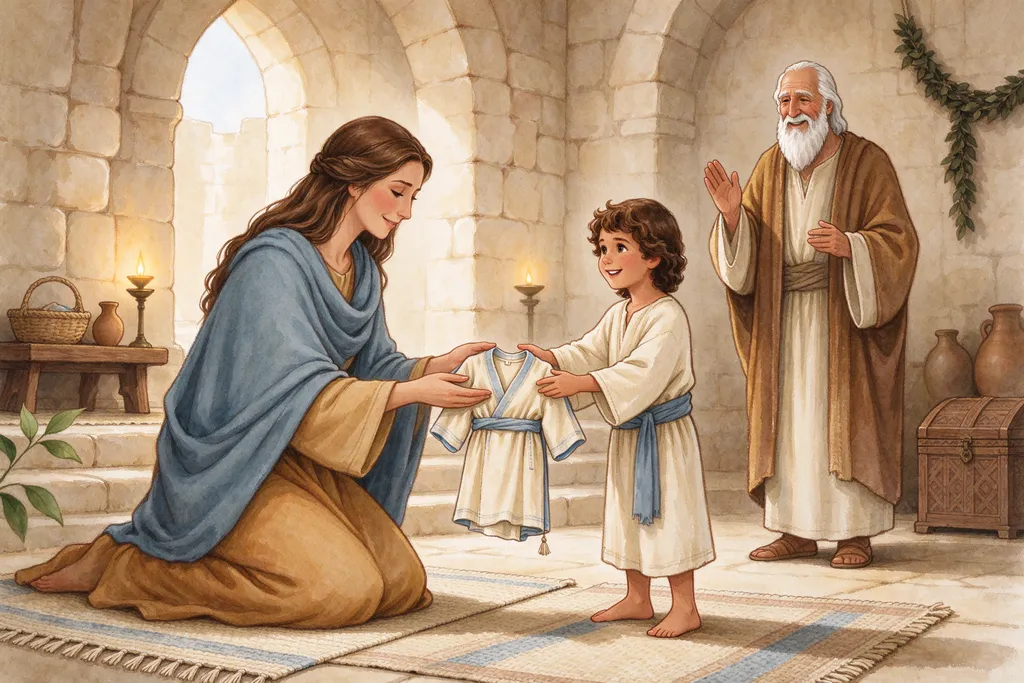
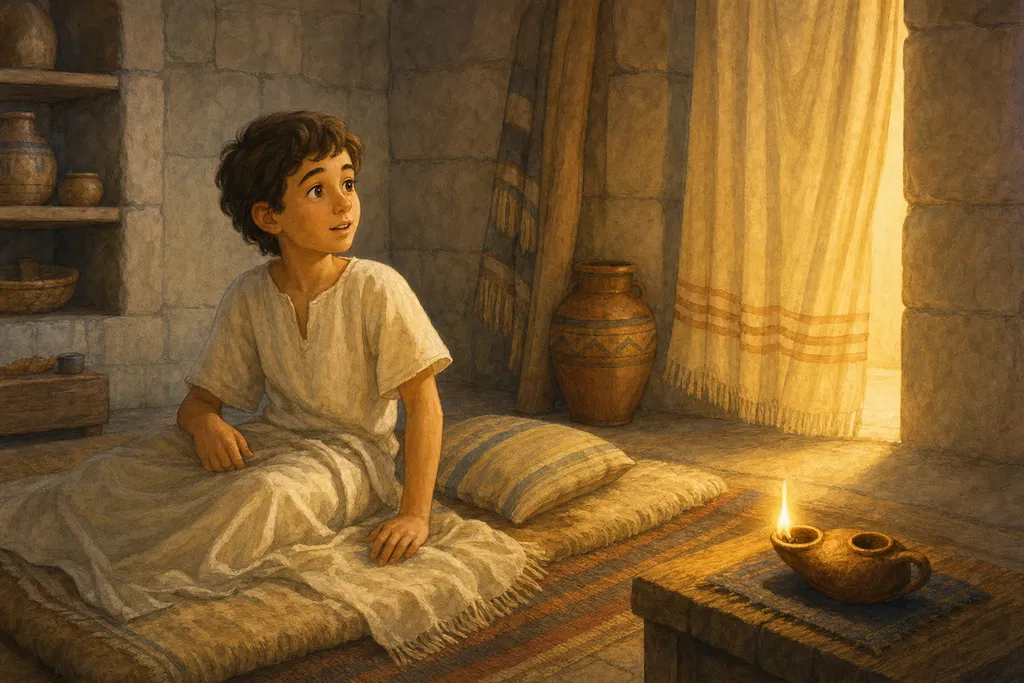
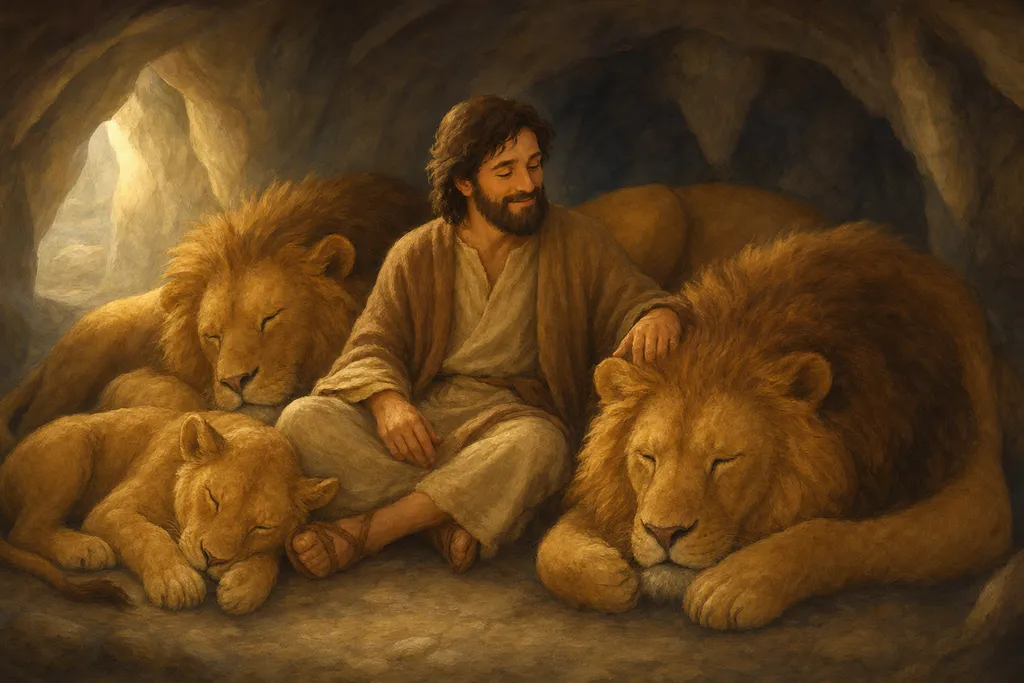
The Bible is full of people doing exactly that: Hannah pouring out her heart for a baby (read Hannah prays), young Samuel answering "Speak; for your servant hears" in the night (Samuel hears God), Solomon asking for wisdom (Solomon asks for wisdom), Daniel praying at his window (Daniel and the lions). Those stories are a wonderful way to show children that prayer is something real people do.
And Jesus welcomed children. When the disciples tried to send them away, he said, "Allow the little children to come to me! Don’t forbid them, for God’s Kingdom belongs to such as these." (from Mark 10:14) Children do not have to wait until they are older to talk with God.
The most important thing: let them hear you pray
Children copy what they see. If they hear you pray simply and naturally, at meals, at bedtime, in the car when you hear an ambulance, they will learn that prayer is a normal part of life. If prayer only happens in church in a special voice, they will learn that too.
So pray out loud, briefly and in plain words:
- "Thank you, God, for this sunny day."
- "Jesus, please help Grandma's knee get better."
- "God, I'm feeling grumpy. Please help me be patient."
That last kind matters. When children hear a parent bring their own feelings to God, they learn they can bring theirs.
Simple patterns children can learn
Patterns are not a cage; they are training wheels. They give children something to hold on to until praying in their own words feels natural.
Thank you, Sorry, Please. The simplest pattern of all, and great from about age three:
- Thank you for something good today.
- Sorry for something I did wrong.
- Please help someone (or me).
The five-finger prayer. Hold up a hand and pray for one group on each finger:
- Thumb (closest to you): family and friends.
- Pointer: people who teach and help us (teachers, doctors, pastors).
- Middle (tallest): leaders.
- Ring (weakest): people who are sick, sad or in need.
- Little finger: yourself.
High and low. At dinner or bedtime, each person shares a high point and a low point of the day, then you thank God for the highs and ask for help with the lows. Children who are reluctant to "pray" often open up this way.
Echo prayer. For toddlers and new prayers: you say a short phrase, they repeat it. "Dear God..." "Dear God..." "Thank you for my bed..." "Thank you for my bed..."
Prayers to learn by heart
Memorized prayers are a gift. They give children words when they cannot find their own, connect them with Christians all over the world and through history, and stay with them for life.
The Lord's Prayer is the prayer Jesus taught his disciples. From about age four, many children can learn it a line at a time. In the World English Bible it reads:
"Our Father in heaven, may your name be kept holy. Let your Kingdom come. Let your will be done, as in heaven, so on earth. Give us today our daily bread. Forgive us our debts, as we also forgive our debtors. Bring us not into temptation, but deliver us from the evil one. For yours is the Kingdom, the power, and the glory forever. Amen." (Matthew 6:9-13)
Your church may use a slightly different wording, often with "trespasses" or "sins"; use whichever version your child will hear on Sunday so it becomes familiar.
A simple mealtime prayer, such as "Thank you, God, for this food, and for the hands that made it. Amen."
A simple bedtime prayer, such as "Dear God, thank you for today. Please keep us safe tonight, and help us to love you more tomorrow. Amen."
Catholic, Orthodox, Anglican and Lutheran families may also teach traditional prayers from their own tradition, such as the Hail Mary, the Jesus Prayer or Luther's evening prayer.
Age by age
Ages 2 to 3: Keep it to a sentence or two. Fold hands or hold hands. Let them say "Amen" (they love this). Echo prayers work well. Thank God for concrete things they can see: the dog, the banana, Daddy.
Ages 3 to 5: Introduce "Thank you, Sorry, Please." Let them choose who to pray for. Start learning the Lord's Prayer a line at a time. Expect very funny prayers ("Thank you for my toes and for dinosaurs"). That is real prayer; God delights in it.
Ages 5 to 8: Introduce the five-finger prayer. Keep a simple prayer list or jar of names. Encourage them to pray on their own, quietly, as well as aloud with you. Start noticing answers to prayer together ("Remember we prayed for Grandma? She's home now!").
When and where to pray
Attach prayer to things that already happen every day, so it does not depend on remembering:
- Meals. The easiest place to start.
- Bedtime. After a Bible story, before lights out. See our guide to Bible stories at bedtime.
- The school run. Pray for the day in the car or on the walk.
- When something happens. A siren, a storm, a scraped knee, a friend's news. These "arrow prayers" teach children that God is with us all the time. Paul's instruction to "Pray without ceasing" (1 Thessalonians 5:17) is a big idea, but children understand "we can talk to God anytime."
- When they are scared. Teach them a short verse to pray: "When I am afraid, I will put my trust in you." (Psalm 56:3)
Common worries (and gentle answers)
"My child gets silly when we pray." Very normal. Keep prayers short, try praying with eyes open while holding hands, or let them hold a small object (a cross, a stone) to help them focus. Do not make prayer a battle; a short, happy prayer is better than a long, tense one.
"They just say the same thing every night." Repetition is how children learn. Over time, gently add one new thing: "Who else could we pray for tonight?"
"What if God doesn't answer?" Be honest: God always hears us, and he answers in his way and time. Sometimes the answer is yes, sometimes no, sometimes wait. Tell stories of times God answered your prayers.
"I don't feel confident praying out loud." Your child is not grading you. Simple, honest words are perfect. Many parents find their own prayer life grows by praying with their children.
"Do they have to close their eyes?" No. Closing eyes and folding hands help some children focus, but God hears prayers with eyes open, while walking, or while lying on the floor.
Making prayer visible
- A prayer jar. Write names of people on craft sticks; pull one out each night to pray for.
- A photo prayer wall. Stick photos of family and friends on the fridge and pray for one each day.
- A prayer journal. Older children can draw or write prayers and later note answers.
- Prayer stories. Every Biblelings story ends with a short prayer a child can say, written in simple words. Browse them on our stories page.
Paul wrote: "In nothing be anxious, but in everything, by prayer and petition with thanksgiving, let your requests be made known to God." (Philippians 4:6) That is a lovely verse to learn as a family. More in our Bible verses for kids.
Questions parents ask
Frequently asked questions
At what age should a child start praying?
You can pray with a baby from birth, and toddlers can say 'Amen' and simple echo prayers from about two. There is no minimum age to talk with God.
How do I teach my toddler to pray?
Pray short, simple prayers out loud where they can hear you, especially at meals and bedtime. Use echo prayers (you say a phrase, they repeat it) and let them say 'Amen.'
What is the five-finger prayer?
A simple way to pray using your hand: thumb for family and friends, pointer for teachers and helpers, middle finger for leaders, ring finger for people who are sick or sad, and little finger for yourself.
When should children learn the Lord's Prayer?
Many children can begin learning it, a line at a time, from about four. Use the version your church uses so it becomes familiar on Sundays.
What if my child refuses to pray?
Don't force it. Keep praying yourself, keep it short and warm, and offer choices: 'Do you want to pray or shall I?' Many children who refuse to pray aloud will happily tell you what to pray for.
Do memorized prayers count as real prayer?
Yes. Jesus himself gave his disciples words to pray. Memorized prayers give children words when they don't have their own, and they grow into them over time.