The Wedding at Cana Bible Story for Kids
At a happy wedding in the village of Cana, the wine ran out. Mary told the servants to do whatever Jesus said, and Jesus turned plain water into the very best wine.
John 2:1–11Retold by the Biblelings teamUpdated
Read aloud together
The Story of The Wedding at Cana
Chapter 1: A wedding party
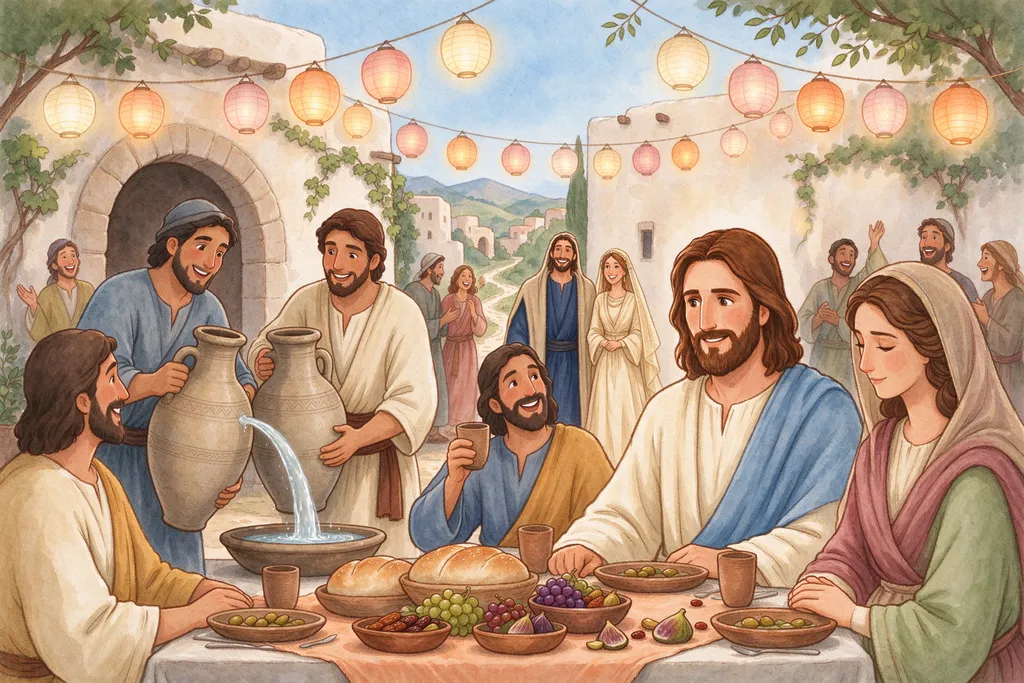
In the hills of Galilee there was a little village called Cana. It had small stone houses, dusty paths, and olive trees growing nearby. And one day in Cana, there was going to be a wedding!
A bride and a bridegroom were getting married. Their family and friends and neighbors were all coming to celebrate with them. Weddings in those days were big, happy parties. They could go on for days! There was music and laughter, good food to eat and wine to drink.
Jesus' mother, Mary, was there at the wedding. Jesus was invited too, and so were his disciples, the friends who had just begun to follow him.
Everyone was glad to be together. The tables were full of food. The guests were smiling and talking. And the party went happily on.
Children played and ran between the tables. Grown-ups clapped and sang. The bride and bridegroom smiled at each other. It was a joyful, wonderful day.
Chapter 2: The wine runs out
But then something went wrong. The wine ran out! The jugs were empty. There was no more to give the guests. Oh no!
At a wedding in those days, running out of wine was a big problem. The family was supposed to take good care of all their guests. If the wine ran out, the bride and bridegroom and their family would be embarrassed in front of everyone. Their happy day might be spoiled.
Jesus' mother found out what had happened. She went to Jesus and told him, “They have no wine.”
Jesus answered his mother, “What does that have to do with you and me? My hour has not yet come.” Jesus knew that God had a plan and a right time for everything he would do.
Meanwhile, the guests kept talking and laughing. Most of them had no idea anything was wrong. Only a few people knew about the problem.
Chapter 3: Whatever he says
Then Mary turned to the servants who were helping at the party. These were the people who carried the food and poured the drinks for the guests. They worked hard to make sure everyone had what they needed.
Mary said to them, “Whatever he says to you, do it.”
Mary trusted Jesus. She did not know exactly what he would do. But she knew her son, and she knew she could bring the problem to him. So she told the servants to be ready to listen and to obey.
And the servants waited, to see what Jesus would ask them to do.
What would Jesus do? The servants did not know. They had never seen Jesus do a miracle before. Nobody had! But they were ready to listen, and ready to do whatever he said.
Chapter 4: Six big jars of water
Standing nearby were six big jars made of stone. They were used to hold water, so people could wash in the special way their Jewish tradition taught. Each jar was huge. It could hold twenty or thirty gallons! That's a lot of water!
Jesus said to the servants, “Fill the water pots with water.”
So the servants did. They carried water, bucket after bucket, back and forth, back and forth. They poured it in, splash after splash, until every one of the six stone jars was filled right up to the very brim. Not a drop more could fit. It was hard work, but they did just what Jesus said.
Then Jesus said, “Now draw some out, and take it to the ruler of the feast.” The ruler of the feast was the person in charge of the whole party.
The servants dipped some out, and they carried it over to him, just as Jesus had said.
Chapter 5: The best for last
The ruler of the feast took a sip. It wasn't water anymore. It had become wine! He didn't know where it had come from. But the servants who had drawn the water knew. They had seen it all. They had poured in plain water with their own hands, and now it was wine!
The ruler called the bridegroom over. He said, “Everyone serves the good wine first, and when the guests have drunk freely, then that which is worse. You have kept the good wine until now!” Usually the best was served first. But this time, the very best came last.
Jesus had not only made wine. He had made the very best wine, and plenty of it. The party could go on, and the family's happy day was saved.
This was the first of the signs Jesus did, there in Cana of Galilee. A sign is a miracle that points to who Jesus is. It showed his glory, the wonderful power that belonged to him. And when his disciples saw it, they believed in him.
Jesus had cared about a family's happy day. He had helped them quietly, when they needed it most. And he had shown his friends a little of who he really was.
From the Bible itself
Read it in the Bible
This retelling follows John 2:1–11. Read the passage alongside it with older children, and choose this memory verse to learn together this week.
Memory verse
“His mother said to the servants, “Whatever he says to you, do it.””
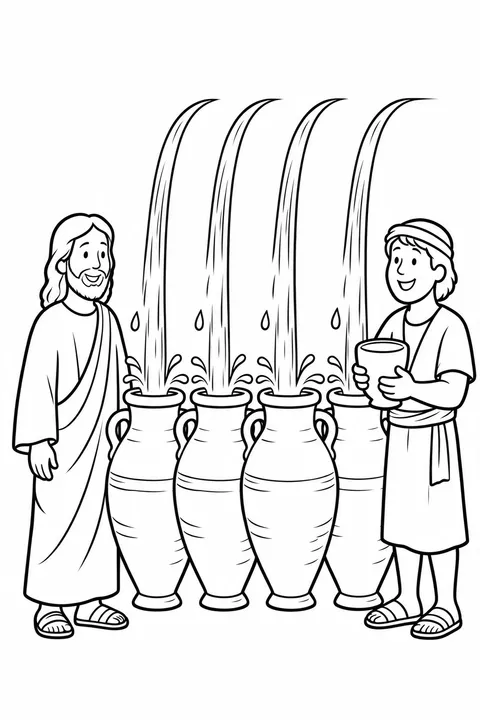
Free printable
The Wedding at Cana coloring page
Print it for quiet time after the story. Bold, simple lines for little hands, no sign-up needed.
Print the coloring pageTeaching this? Free lesson plan and printables
- Free lesson plan →45 minutes for Sunday school or home
- Word search and verse cards →Print-ready, with an answer key
People in this story: Who was Jesus?, Who was Mary, Mother of Jesus?
The lesson, in one breath
The big idea
Jesus cares about our needs, and we can do whatever he says.
A prayer to say together
Dear Jesus, thank you that you care about big things and small things too. Help me trust you like Mary did, and do whatever you say. Thank you for all the good gifts you give. Amen.
Conversation starters
Talk about it together
- 1Mary noticed a problem and told Jesus about it. What problems can we tell Jesus about?
- 2The servants filled the jars right to the top. Why do you think that matters?
- 3Have you ever been asked to do something without knowing why? How did it turn out?
- 4Jesus saved the best for last. What is the best part of your day?
- 5This was Jesus' first sign. What do you think it showed the disciples about him?
For home, homeschool and Sunday school
Teach The Wedding at Cana in 15 minutes
Goal
Children will learn that Jesus did his first miracle at a wedding and that we can trust him and do what he says.
- 1 · Open
Ask: Have you ever been to a wedding or a big party? What happens there? Say: Today Jesus goes to a wedding, and something runs out. Let's see what he does. (2 minutes)
- 2 · Talk
- Read chapters 1 and 2. Ask: What ran out at the party? Who told Jesus?
- Ask: What did Mary say to the servants? Say it together: “Whatever he says to you, do it.”
- Read chapter 3. Ask: What did Jesus tell the servants to do? Did they do it?
- Read chapter 4. Ask: What happened to the water? What did the disciples do when they saw it?
- Play a quick game: the leader says “Whatever Jesus says, do it!” and then gives simple kind actions (shake a hand, give a high five, say thank you).
- 3 · Close
Remind children that Jesus cares about our needs, big and small. Invite them to name one thing they want to tell Jesus about this week, then pray together. (4 minutes)
Teaching a full class? Get the free 45-minute lesson plan with a craft, game and take-home note.
Hands-on
Activities for home
About 10 minutes
Water-to-color surprise
You will need
- Three or six clear cups
- Water
- Red or purple food coloring (or a drink powder)
- A pitcher
Steps
- Before you start, put one drop of food coloring in the bottom of each cup where it's hard to see.
- Line up the cups and call them the stone jars.
- Let your child be the servant and pour plain water from the pitcher into each cup, filling them to the brim.
- Watch the water change color. Explain that our trick has a secret, but Jesus really changed water into wine with no trick at all.
About 15 minutes
Wedding party celebration
You will need
- Paper
- Crayons
- Tape
- Juice or water
- A simple snack
Steps
- Draw and cut out simple paper garlands or hearts to decorate a table.
- Set the table for a pretend wedding party.
- Pour juice and share the snack while you retell the story together.
- Each person names one good gift God has given them, and everyone cheers.
The things parents wonder
Questions parents ask about The Wedding at Cana
Was it real wine?
John calls it wine, and the ruler of the feast says it was better than the wine served first. Christians have different views about drinking alcohol today, but the story itself is about Jesus providing generously at a celebration. With young children, you can simply say Jesus turned the water into a special drink that grown-ups had at weddings, the best they had ever tasted.
Was Jesus being rude to his mother?
No. In John's Gospel, Jesus begins his answer with “Woman,” which in his language and time was a respectful way to speak, not a rude one. This retelling leaves that word out because it sounds harsh to modern ears. His reply, “My hour has not yet come,” points to the bigger plan God had for his life. Mary clearly understood that he would help, because she told the servants to do whatever he said.
Why was running out of wine such a big deal?
In that culture, weddings could last for days, and the family was expected to host guests generously. Running out would have been embarrassing for the bride and bridegroom's family. Jesus quietly saved the day.
What were the stone jars for?
John says they were set there “after the Jews’ way of purifying,” the ceremonial washing that Jewish people did before meals and at other times. Each held about two or three metretes, roughly 20 to 30 gallons (75 to 115 liters), so six jars held a lot of water.
Why is this called Jesus' first miracle?
John calls it “this beginning of his signs.” John uses the word sign because each miracle points to who Jesus is. This one showed his glory, and his disciples believed in him.
What is the lesson for kids?
Two simple ideas: Jesus cares about the things that matter to us, even at a party, and we can trust him like Mary did and do whatever he says.