Through the year
Advent for Kids: What It Is and Simple Family Traditions
Advent is the season of waiting and getting ready for Jesus. Here is how to explain it to young children, and simple traditions that help a family slow down and look forward to Christmas together.
By the Biblelings team · Updated
What is Advent? (The simple version)
Advent is the four weeks before Christmas, when Christians get ready to celebrate Jesus' birth. The word comes from a Latin word meaning "coming" or "arrival." During Advent we remember how God's people waited a very long time for the Savior God had promised, and we get our hearts ready to celebrate that he came.
Here is a way to explain it to a three- to six-year-old:
"A long, long time ago, God promised to send a special King to rescue his people. They waited and waited, for hundreds and hundreds of years. Then one night, baby Jesus was born! Advent is when we remember that waiting, and get ready for Christmas, Jesus' birthday."
For older children you can add that Christians also look forward to Jesus coming again one day, so Advent is about waiting with hope.
Advent begins on the fourth Sunday before Christmas. In 2026 the first Sunday of Advent is November 29, and Advent runs until Christmas Eve. In the church calendar, Christmas then lasts twelve days, to Epiphany on January 6.
Why Advent is good for children
December can be a blur of shopping, parties and presents, and children absorb that Christmas is mostly about getting things. Advent offers another rhythm:
- It slows things down. One candle, one story, one ornament a day.
- It builds anticipation the right way. Children are already counting down to Christmas. Advent gives that excitement a story.
- It tells the whole story. Advent traditions often walk through the Old Testament promises, so children see that Jesus' birth was the answer to a very long wait.
- It creates memories. The traditions you keep each year become part of your children's Christmas forever.
You do not need to do everything below. One small, daily tradition kept all December is better than five started with enthusiasm and dropped by the 8th.
The Advent wreath
An Advent wreath is a ring of evergreen with four candles, one for each Sunday of Advent, and often a fifth white candle in the middle for Christmas Day. Each Sunday you light one more candle, so the light grows as Christmas gets closer.
Traditions vary between churches, but a common pattern is:
- Week 1: Hope (often a purple or blue candle). God promised a Savior.
- Week 2: Peace (purple or blue). Jesus is the Prince of Peace.
- Week 3: Joy (often pink). The waiting is nearly over.
- Week 4: Love (purple or blue). God loved us so much he sent Jesus.
- Christmas: Christ candle (white). Jesus, the light of the world, has come.
Some churches name the candles differently (prophets, Bethlehem, shepherds, angels), so follow your own tradition if you have one.
With little children: light the candles at dinner, read a short Bible verse or story, sing one verse of an Advent carol like "O Come, O Come, Emmanuel," and let a child blow the candles out (carefully). Battery candles are a good choice with toddlers. Isaiah 9:6 is a lovely verse for the wreath: "For to us a child is born. To us a son is given; and the government will be on his shoulders. His name will be called Wonderful, Counselor, Mighty God, Everlasting Father, Prince of Peace."
A Bible story every day
A daily Bible story is the heart of Advent for many families. You can read through the story of God's promises from creation to Bethlehem, or simply read the Christmas stories slowly over the month.
Our free Biblelings Advent journey does this for you: one day for each day of Advent, each with a short Bible reading, a story to read where one fits, a two- or three-sentence reflection for little ones, a Jesse Tree symbol, a simple activity and a prayer. It is designed to take about ten minutes.
You might read, for example:
- Creation and Adam and Eve, where the story of God's promise begins
- Noah's Ark and Abraham and the stars, God's promises to his people
- David is chosen, the shepherd boy who became king, from whose family Jesus would come
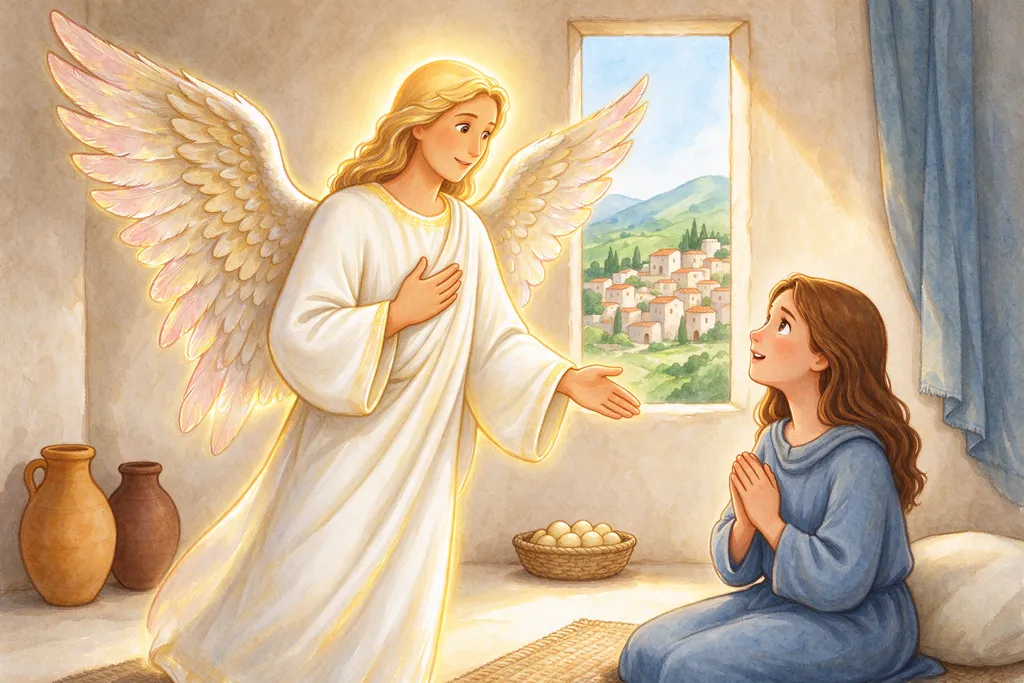
- The angel visits Mary
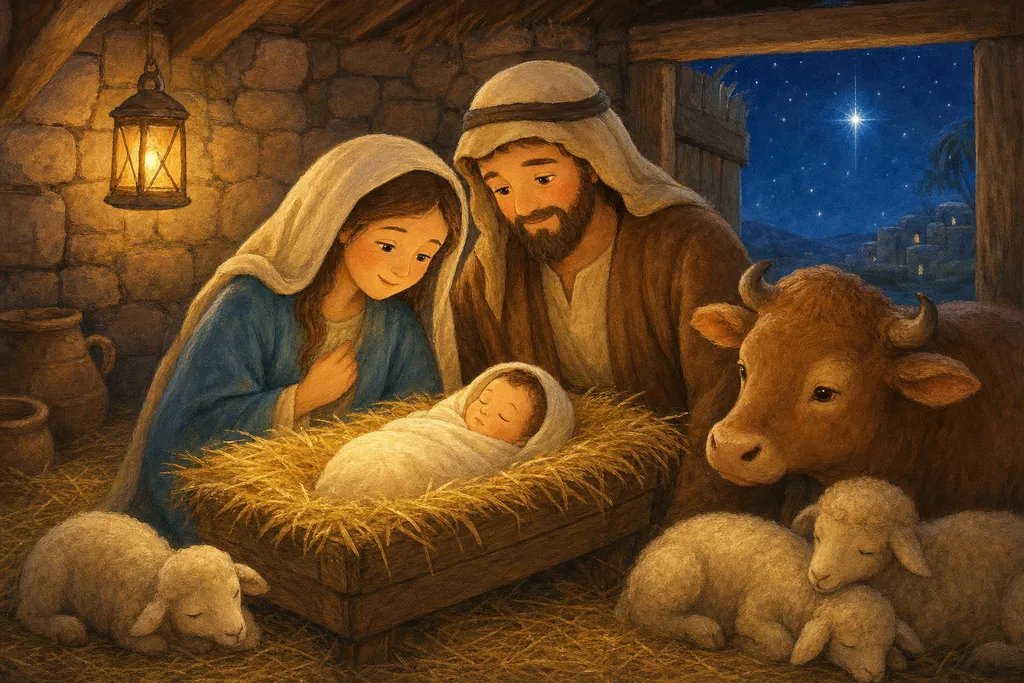
- The birth of Jesus and the shepherds and the angels on Christmas Eve and Christmas Day
Every story comes with a printable coloring page, which makes a lovely daily activity for little hands.
More simple Advent traditions
A Jesse Tree. A small tree or branch with an ornament for each day, each one a symbol of a Bible story leading to Jesus (an apple for Adam and Eve, an ark for Noah, a star for Abraham). It is named after Jesse, King David's father, from Isaiah 11:1. See our full Jesse Tree guide.
A traveling nativity. Set up the stable, but keep Mary and Joseph across the room. Move them a little closer each day until they arrive on Christmas Eve, when baby Jesus appears. Then start the wise men on their journey to arrive on January 6.
An Advent calendar with a difference. Instead of (or as well as) chocolate, put a Bible verse, a small act of kindness or a family activity behind each door.
Kindness countdown. Each day of Advent, do one small kind thing as a family: bake for a neighbor, make a card for a grandparent, donate a toy.
Advent books. A basket of Christmas books brought out on the first Sunday of Advent. See our guide to Christmas books for Christian kids.
Advent carols. Learn one carol together each week. "O Come, O Come, Emmanuel" is the classic Advent hymn, all about waiting.
Advent by age
Toddlers (1 to 3): Keep it sensory and very short. Light (battery) candles, look at a nativity set, read a board book, sing a song. A traveling nativity is perfect for this age.
Preschoolers (3 to 5): Add a daily story, a coloring page and a simple Jesse Tree ornament. Let them blow out the candle and say the prayer. They will remember the routine more than the content, and that is fine.
Early school age (5 to 8): Read the stories in more detail, let them make ornaments, help them find verses in a real Bible, and give them a role leading part of the family time. They can also understand the bigger idea of waiting for God's promises.
If you are starting late (or falling behind)
Missed the first week? Start today. Advent traditions are not a test. If you fall behind on a Jesse Tree or daily readings, double up one evening, skip a day, or just pick up where you are. Children will not remember the days you missed; they will remember the candle, the story and the feeling of getting ready for Jesus together.
And if this year is simply too full, choose one thing: light a candle at dinner and read one short story. That is Advent.
A sample Advent week with little ones
Here is what one ordinary week of Advent might look like for a family with a three-year-old and a six-year-old. None of it takes more than fifteen minutes a day.
- Sunday: Light the first candle on the wreath at dinner. Read Isaiah 9:6 and talk about what a "Prince of Peace" might be. Sing one verse of "O Come, O Come, Emmanuel."
- Monday: Read the day's story from the Advent journey at bedtime and hang the Jesse Tree ornament.
- Tuesday: Color the story's coloring page after school. Move Mary and Joseph a little closer to the stable.
- Wednesday: Story and ornament. Choose a kindness for the week: perhaps baking cookies for a neighbor.
- Thursday: Bake the cookies together and deliver them.
- Friday: A busy night, so just the ornament and a one-sentence prayer.
- Saturday: Catch up on any missed stories, or read a Christmas picture book together.
Notice how much is repeated, and how little is required on any single day. That is the secret of keeping Advent with small children: a small, steady rhythm that adds up to a month of getting ready for Jesus.
Talking about waiting
Waiting is hard for young children, and that is exactly why Advent is such a good teacher. When your child asks, for the tenth time, how many sleeps until Christmas, you have a natural opening:
"Waiting is hard, isn't it? God's people had to wait a very, very long time for Jesus. Hundreds of years! But God kept his promise. He always does."
You can connect this to stories of people who waited on God: Abraham, who waited years for the son God promised; Hannah, who prayed for a baby; and Mary and Joseph on the long road to Bethlehem. Children learn that waiting is not wasted time. It is part of how God works, and it makes the celebration sweeter when it comes.
Questions parents ask
Frequently asked questions
How do you explain Advent to a child?
Advent is the four weeks before Christmas when we get ready to celebrate Jesus' birthday. We remember how God's people waited a long time for the Savior God promised, and we wait for Christmas with excitement too.
When does Advent start in 2026?
The first Sunday of Advent in 2026 is November 29. Advent always begins on the fourth Sunday before Christmas.
What do the Advent candles mean?
A common pattern is hope, peace, joy and love for the four Sundays, with a white Christ candle on Christmas Day. Traditions vary, so follow your church's practice if it differs.
Why is one Advent candle pink?
In many traditions the third Sunday of Advent is a Sunday of joy (sometimes called Gaudete Sunday), marked with a pink or rose candle because the waiting is nearly over.
What is the difference between Advent and Christmas?
Advent is the season of waiting and preparing before Christmas. Christmas is the celebration of Jesus' birth, which in the church calendar lasts twelve days, from December 25 to Epiphany on January 6.
What are easy Advent activities for toddlers?
Lighting battery candles on a wreath, moving Mary and Joseph closer to the stable each day, reading a short board book and coloring a simple Bible picture.