
Through the year
How to Explain Christmas to a Toddler
A toddler can't follow the whole nativity story yet, but they can know that Christmas is baby Jesus' birthday and that God loves them. Here are words to use at each age from one to three, hands-on activities, and how to play with a nativity set so the story becomes theirs.
By the Biblelings team · Updated
What a toddler can understand about Christmas
A one-year-old understands baby, Mama, sheep and star. A two-year-old can follow a three-step story if they can see it. A three-year-old loves knowing what comes next and saying it before you do. None of them can grasp "incarnation" or "Savior" yet, and they don't need to.
What they can hold onto is one true, warm idea: Christmas is when we celebrate baby Jesus being born, because God loves us. Everything else, the angels, the shepherds, the long journey, gets added a little more each year.
So aim small. If, by Christmas Day, your toddler points at the manger and says "Baby Jesus!", that is a wonderful start. For the fuller version you'll grow into, see our guide on how to tell the Christmas story to kids.
What to say: simple scripts by age
Repeat the same few words every day in December. Toddlers learn through repetition, and familiar words feel safe.
Ages 1 to 2: one sentence. Point at a picture or a nativity figure as you say it.
- "Baby Jesus! God gave us baby Jesus."
- "Mary loves baby Jesus. God loves you."
- "Look, a star! The star shines for baby Jesus."
Ages 2 to 3: three short steps. Use the same words each time.
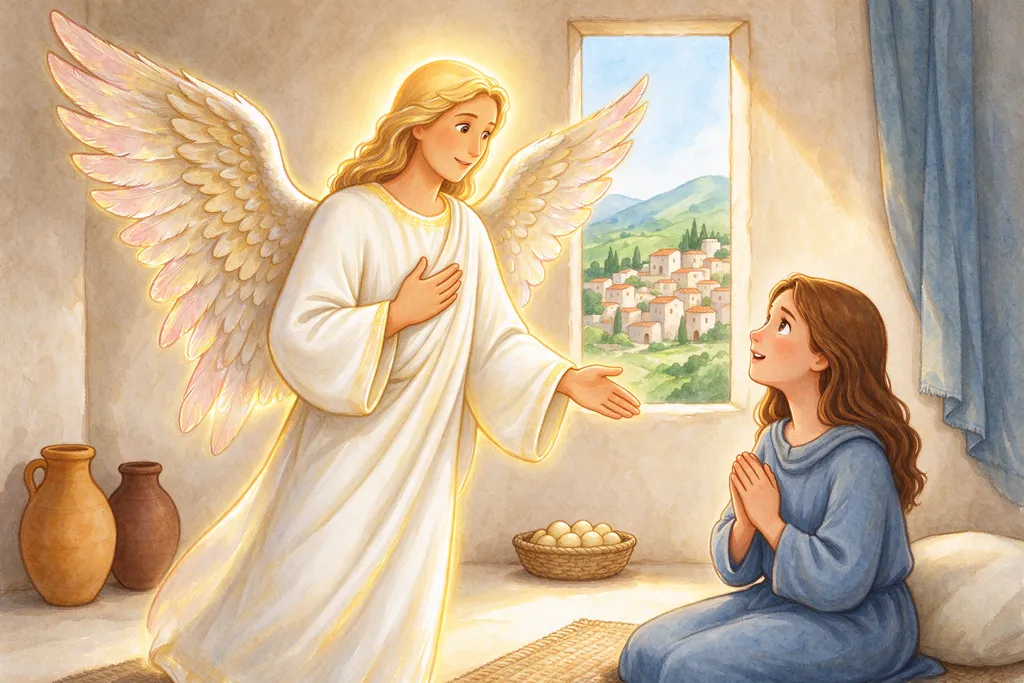
- "An angel said to Mary, 'You will have a baby.' Baby Jesus was born. Mary laid him in a manger, a bed for animals' food."
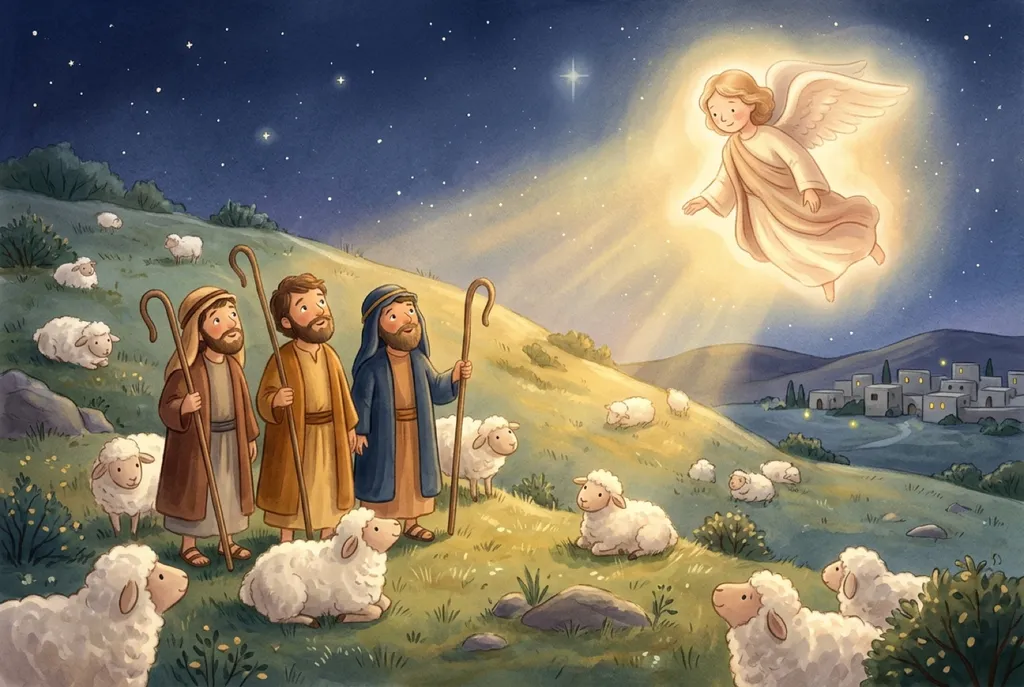
- "The shepherds were looking after their sheep. Angels sang, 'Good news!' The shepherds ran to see baby Jesus."
Age 3: a one-minute story with a question.
"A long time ago, God sent an angel to Mary. The angel said, 'Don't be afraid. You will have a baby boy, and you will call him Jesus.' Mary and Joseph went on a long trip to Bethlehem. There was no room for them, so when Jesus was born, Mary wrapped him up warm and laid him in a manger. Angels told some shepherds the good news, and they hurried to see him. Jesus is God's best present to the whole world. Who came to see baby Jesus?"
When the questions come ("Where's Jesus now?"), answer short and true: "Jesus grew up. He's alive, and he loves you. Christmas is his birthday party."
Play with a nativity set
A nativity set your toddler is allowed to touch is the single best tool for explaining Christmas at this age. Choose one made of wood, fabric or sturdy plastic, with no small breakable parts, and keep it low enough to reach.
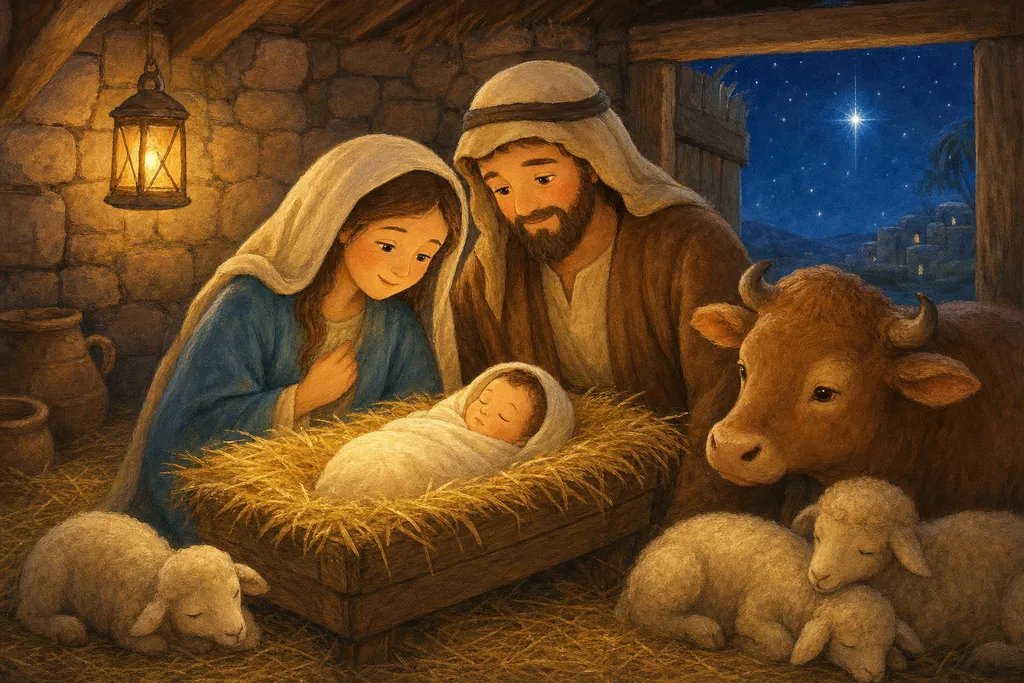
- Name the figures. Hold each one and say its name and one thing about it: "Mary. Mary is Jesus' mommy." "A sheep. Baa! The shepherds looked after the sheep."
- Hide baby Jesus until Christmas morning. Leave the manger empty through December and ask, "Who's missing?" On Christmas morning, let your toddler put him in.
- Let them retell it. Toddlers will walk the sheep onto the roof and give the camel a bath. That's play, and play is how they make the story their own. Join in, and gently say the story words as they go.
- Rock baby Jesus to sleep. Wrap the baby figure in a scrap of cloth, sing "Away in a Manger" softly and lay him in the manger. It turns Luke 2:7 into something they can do with their hands.
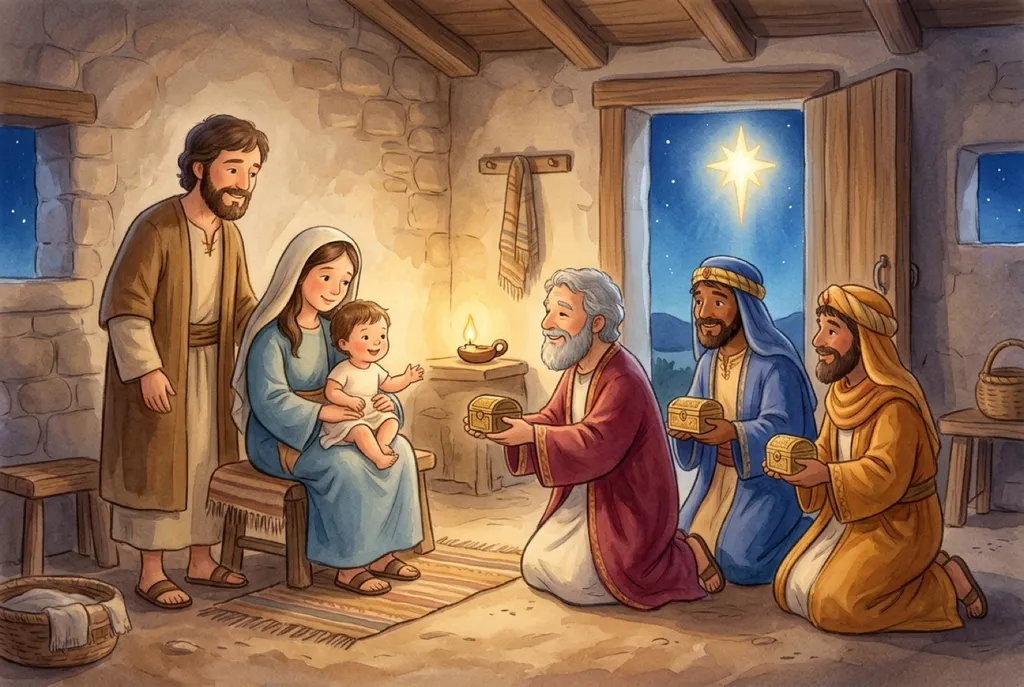
- Keep the wise men traveling. Put them on the other side of the room and move them a little closer each day. They can arrive in January, as Matthew's account suggests.
No set? Make one: draw faces on wooden spoons or toilet-paper tubes, use a shoebox stable, and tuck a doll into a laundry-basket manger.
Sensory activities for little hands
Toddlers learn with their whole bodies. Each of these takes a few minutes and links one thing they can feel, hear or see to one piece of the story.
- Hay and a manger. Fill a small box with hay, straw or shredded brown paper. Let your toddler feel how scratchy it is, then lay a baby doll in a soft blanket on top. "Jesus slept in a manger, a bed for animals' food."
- Swaddling. Wrap a doll snugly in a cloth together. "Mary wrapped baby Jesus up warm."
- Animal sounds. Moo, baa and hee-haw your way through the nativity animals. You don't need to know which animals were there; toddlers just love the noises.
- Starry night. Turn off the lights and shine a flashlight on the ceiling. "God made the stars. A big star shone for baby Jesus." Peel-and-stick stars on a dark paper sky work too.
- Angel wings. Trace your toddler's hands on white paper, cut them out and tape them on as wings. Then sing "Glory to God!" and flap.
- Smell the gifts. For a three-year-old, let them sniff a little cinnamon or a scented candle (unlit, held by you). "The wise men brought presents that smelled lovely."
- Color together. Print our birth of Jesus coloring page and let them scribble on it while you point out Mary, Joseph and the baby.
Keep anything small, like hay, cinnamon or star stickers, out of reach afterward. Toddlers put everything in their mouths.
Little December routines
Rhythm helps toddlers more than big events. Pick one or two of these, not all of them.
- A two-minute bedtime story. Read one short Christmas story a night, the same one for a week. Start with the birth of Jesus, then the angel visits Mary, the shepherds and the angels and, after Christmas, the wise men. Read only a page or two if that's all they'll sit for.
- Light a candle at dinner. "Jesus is the light of the world." Let them blow it out at the end, with help.
- Sing one carol all month. "Away in a Manger" is short, gentle and full of words toddlers know.
- A Christmas verse on the fridge. Print our Christmas verse cards and pick one short line, like Luke 2:11, to say together before meals. A two-year-old won't memorize it, but they'll hear it thirty times, and some of it will stick.
- Color a calendar square. For a three-year-old, our printable Advent calendar gives a big square to color each day. Do the coloring, skip the reading if it's too long, and talk about the picture.
- Say a one-line prayer. "Thank you, God, for baby Jesus. Amen." Same words every night.
Older siblings can do the Jesse Tree ornaments or the full Advent journey while the toddler colors alongside.
Presents, Santa and the busy days
Toddlers understand birthdays, so lean on that: "Christmas is Jesus' birthday. We give presents because God gave us the best present, Jesus." Singing "Happy Birthday" to Jesus with a cupcake on Christmas morning makes it concrete in a way nothing else does.
Families handle Santa in different ways, and at one or two your toddler won't ask. If Santa is part of your Christmas, you can simply keep the manger at the center of your home and the story at the center of your words.
On the busiest days, keep it tiny. Putting baby Jesus in the manger and saying "Thank you, God, for Jesus" counts. You are planting a seed that will keep growing for years.
Questions parents ask
Frequently asked questions
At what age can a child understand Christmas?
From about 18 months, a toddler can link Christmas with baby Jesus if you use the same simple words and show them a nativity figure. By three, most children can retell a three-step version of the story. Fuller understanding grows through the preschool years.
What is the simplest way to explain Christmas to a 2-year-old?
Say one sentence while pointing to a nativity figure or picture: "Christmas is baby Jesus' birthday. God gave us Jesus because he loves us." Repeat it every day in December.
What kind of nativity set is best for a toddler?
One made to be played with: wood, fabric or sturdy plastic, with chunky figures and no small or breakable pieces. Keep a fragile heirloom set up high and give your toddler their own to hold, move and talk about.
Should I tell my toddler about the cross at Christmas?
There's no need yet. At one to three, the joy of Jesus being born and God's love is plenty. The rest of Jesus' story comes in the years ahead, gently and a piece at a time.