The Good Shepherd Bible Story for Kids
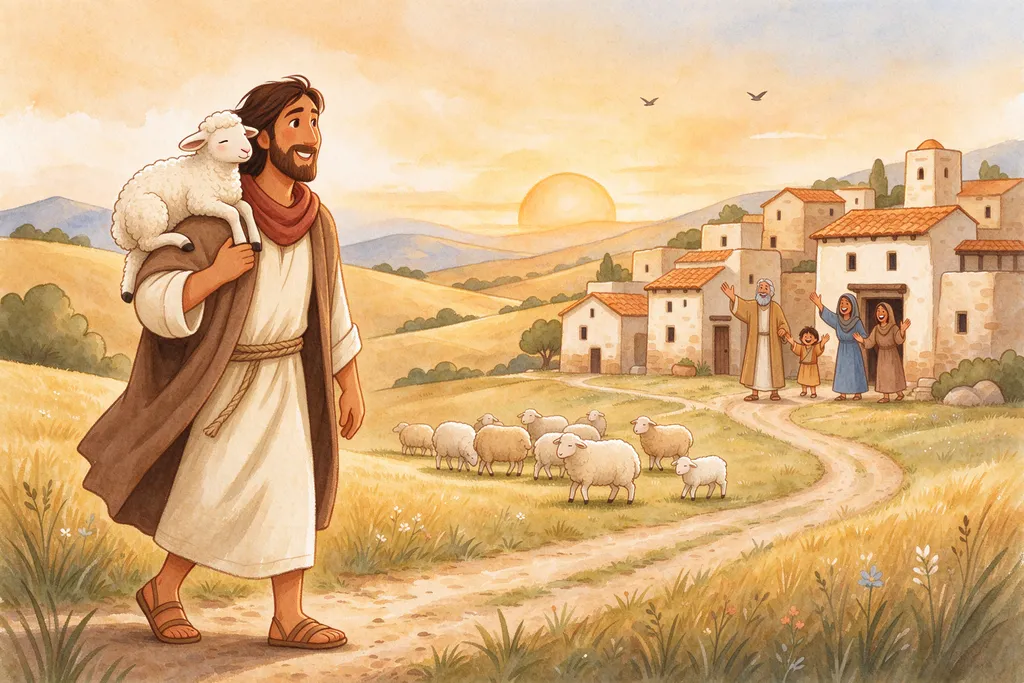
Jesus told his friends a beautiful picture of a shepherd and his sheep. “I am the good shepherd,” he said. He knows each of his sheep by name, and he loves them so much that he would give his life for them.
John 10:1–18Retold by the Biblelings teamUpdated
Read aloud together
The Story of The Good Shepherd
Chapter 1: The shepherd at the gate
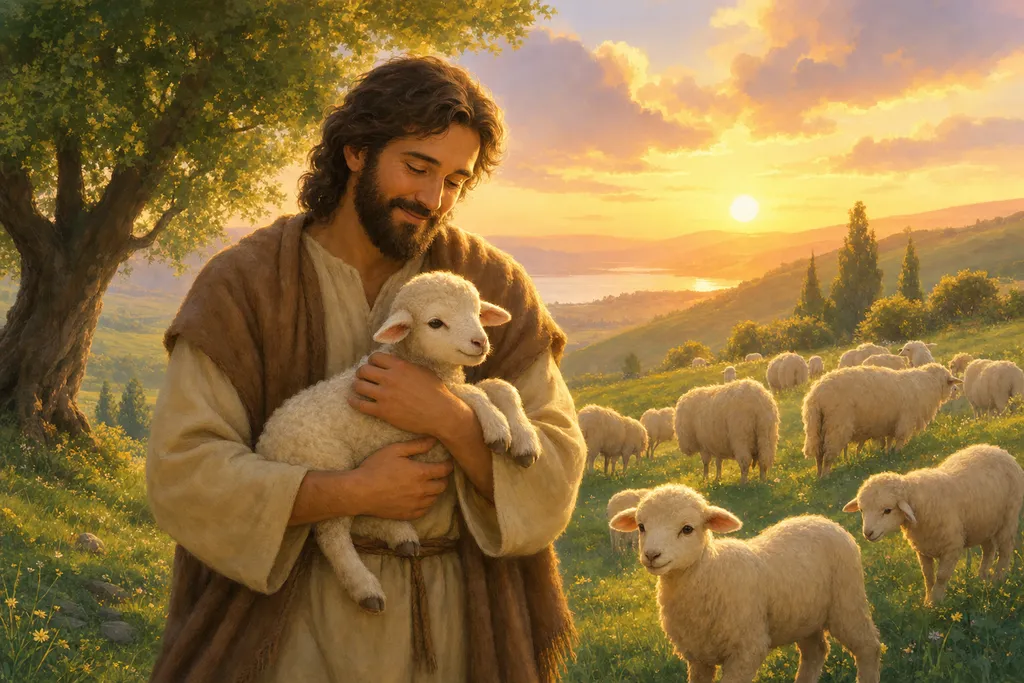
Jesus told his friends a story about a shepherd and his sheep. Everyone listening knew all about sheep. Every day they saw shepherds caring for their flocks on the green hillsides. They heard the sheep saying baa, and saw the little lambs skipping in the grass.
At night, the sheep slept safe inside a sheepfold. A sheepfold was like a big yard with a stone wall all around it, and just one gate to go in and out. Sometimes several flocks slept in the same fold together. A gatekeeper stayed by the gate and watched over them all night long.
In the morning, the shepherd came for his sheep. He didn't sneak in or climb over the wall. Only a thief would do that! The shepherd came right up to the gate, the proper way, and the gatekeeper opened it for him.
The sheep looked up. Their ears twitched. They knew who it was. It was their shepherd!
Some of the sheep stood up and stretched. Some of the little lambs gave a happy baa. A new day was beginning, and their shepherd had come to lead them out.
Chapter 2: He calls them by name
The shepherd called out to his sheep. And he didn't just call, “Here, sheep!” He called each one by its very own name. Maybe one was called Snowy, and one was called Little One, and one was called Curly. The shepherd knew them all.
The sheep listened to his voice. They knew that voice. They had heard it every single day. One by one, his sheep came trotting out through the gate.
The shepherd didn't push them from behind. He walked out in front, leading the way, and the sheep followed him, because they knew his voice.
If a stranger called to them, the sheep would not follow. They would run away, because they didn't know a stranger's voice. They only followed their own shepherd, the one who loved them.
All day long, the sheep stayed close to their shepherd. Wherever he went, they went too. They trusted him to lead them to good places.
Chapter 3: I am the door
The people listening didn't understand what Jesus meant by his story. So Jesus explained it to them.
He said, “I am the door.” A door is the way in. Jesus was saying that he is the way to be safe with God. Anyone who comes in through him will be saved. They will go in and go out and find good pasture, which means fresh green grass to eat. They will have everything they need.
Jesus said that a thief only comes to steal and to hurt. But Jesus came for a very different reason. He didn't come to take anything away. He came to give.
Jesus said, “I came that they may have life, and may have it abundantly.” Abundantly means more than enough, overflowing. Jesus came to give a full, rich, wonderful life with God.
Chapter 4: I am the good shepherd
Then Jesus said, “I am the good shepherd. The good shepherd lays down his life for the sheep.”
Jesus told them about a hired helper. A hired helper looks after sheep only because he is paid to. The sheep aren't really his. When the hired helper sees a wolf coming, he runs away and leaves the sheep, because he doesn't really care about them.
But a good shepherd is different. The sheep belong to him, and he loves them. A good shepherd stays. He loves his sheep so much that he would even give his own life to keep them safe.
Jesus said, “I am the good shepherd. I know my own, and I'm known by my own.” Jesus knows each of his sheep, every single one. And they know him. He said it is just like the way his Father knows him, and he knows his Father.
Chapter 5: One flock, one shepherd
Jesus said he had other sheep too, sheep that were not in this fold yet. He would bring them also. They would hear his voice, and they would all be one flock with one shepherd.
Jesus was talking about people. People everywhere, near and far, in every land, who would come to know him and follow him. All of them together would be one big flock, with Jesus as their shepherd.
Jesus said that he would lay down his life, and that he had the power to take it up again. And that is just what happened. Later, Jesus did lay down his life on the cross, because he loved his sheep so much. Then, on Easter morning, he rose again, alive, just as he had said.
Jesus truly is the Good Shepherd. He knows his sheep by name. He leads them, and he loves them, and he keeps them safe forever.
And Jesus still calls his sheep today. When we listen to his words and follow him, we are part of his flock, and he is our Good Shepherd.
From the Bible itself
Read it in the Bible
This retelling follows John 10:1–18. Read the passage alongside it with older children, and choose this memory verse to learn together this week.
Memory verse
“I am the good shepherd. The good shepherd lays down his life for the sheep.”
Free printable
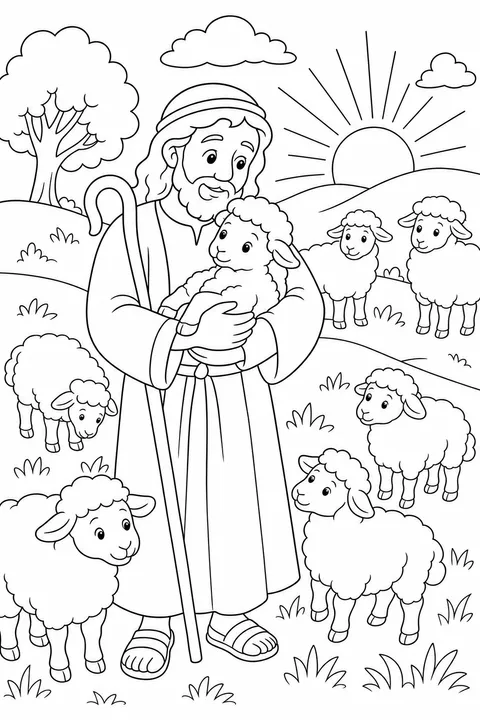
The Good Shepherd coloring page
Print it for quiet time after the story. Bold, simple lines for little hands, no sign-up needed.
Print the coloring pageTeaching this? Free lesson plan and printables
- Free lesson plan →45 minutes for Sunday school or home
- Word search and verse cards →Print-ready, with an answer key
People in this story: Who was Jesus?
The lesson, in one breath
The big idea
Jesus is our Good Shepherd who knows us and loves us.
A prayer to say together
Dear Jesus, thank you for being my Good Shepherd. Thank you that you know my name and love me so much. Help me listen for your voice and follow you every day. Amen.
Conversation starters
Talk about it together
- 1The shepherd called each sheep by name. Why do you think that matters?
- 2How do the sheep know which voice to follow?
- 3Whose voice do you know really well? How do you know it's them?
- 4What does a good shepherd do that a hired helper doesn't?
- 5How can we listen for Jesus' voice? (Reading the Bible, praying, learning about him.)
For home, homeschool and Sunday school
Teach The Good Shepherd in 15 minutes
Goal
Children will learn that Jesus is the Good Shepherd who knows them by name, loves them and keeps them safe.
- 1 · Open
Make a sheep sound together. Ask: What does a shepherd do? (Feeds, leads and protects sheep.) Say: Jesus said he is like a shepherd. Let's find out why. (2 minutes)
- 2 · Talk
- Read chapters 1 and 2. Ask: How did the shepherd call his sheep? Why did they follow him?
- Play a quick round of the voice game: call each child's name and have them stand up.
- Read chapter 3. Ask: What did Jesus say he came to give? (Life to the full.)
- Read chapter 4. Ask: What did the hired helper do when the wolf came? What does the good shepherd do?
- Read chapter 5. Talk gently about how Jesus showed his love by giving his life and rising again at Easter.
- 3 · Close
Give each child a cotton ball to hold as their 'sheep'. Say the memory verse together, then pray, thanking Jesus for knowing each child's name. (4 minutes)
Teaching a full class? Get the free 45-minute lesson plan with a craft, game and take-home note.
Hands-on
Activities for home
About 10 minutes
Know my voice game
You will need
- A blindfold or scarf (optional)
- Two or more people
Steps
- One child is the sheep and closes their eyes or wears a blindfold.
- A parent (the shepherd) and one or two others (strangers) stand in different spots in the room.
- Everyone calls the sheep's name at the same time.
- The sheep walks toward the voice they know best.
- Talk about how Jesus' sheep know his voice and follow him.
About 15 minutes
Cotton ball sheep with names
You will need
- Paper
- Cotton balls
- Glue
- A black marker or black paper
- Crayons
Steps
- Draw a simple oval sheep body on paper for each family member.
- Glue cotton balls all over the body.
- Add a black face and legs with marker or cut paper.
- Write a family member's name on each sheep.
- Line them up and read the verse: “I am the good shepherd,” then remind each other that Jesus knows every name.
The things parents wonder
Questions parents ask about The Good Shepherd
What does “lays down his life for the sheep” mean?
It means giving up your own life to save someone else. Jesus was pointing ahead to the cross. For young children, you can say: Jesus loved us so much that he gave his life for us, and then God raised him to life again. He is alive and still cares for us today.
How is this connected to Psalm 23?
Psalm 23, written by David, begins “Yahweh is my shepherd.” Jewish listeners knew God as the shepherd of his people. When Jesus said “I am the good shepherd,” he was using that picture of himself. Many families read Psalm 23 alongside this story.
Is this the same as the parable of the lost sheep?
They're related but different. The Lost Sheep (Luke 15) is a short story about a shepherd who leaves 99 sheep to find one that wandered off. The Good Shepherd (John 10) is Jesus describing himself: he knows his sheep, leads them and lays down his life for them.
Who are the “other sheep” Jesus mentions?
Most Christians understand this to mean people beyond the Jewish nation, such as people from every country who would come to follow Jesus and become one family with one shepherd.
Is the wolf part scary for little kids?
This retelling mentions the wolf only briefly, as the reason a hired helper runs away. Nothing happens to the sheep in the telling. The focus is on the good shepherd who stays and protects.
Did shepherds really call sheep by name?
Yes. Shepherds in that region often knew each sheep, and sheep learned to recognize their own shepherd's voice. Several flocks could share a fold at night, and each would come out only when its own shepherd called.