
Through the year
How to Explain Easter to a Preschooler
How do you tell a three-year-old that Jesus died, without frightening them, and help them feel the joy of the resurrection? Here are simple words to use, answers to the questions preschoolers really ask, and ways to make Easter tangible.
By the Biblelings team · Updated
The heart of it in one breath
If you only have thirty seconds, here is a way to tell the Easter story to a preschooler that is true, simple and gentle:
"Jesus loves us very much. Some people didn't like Jesus, and they put him on a cross, and he died. His friends were very, very sad. They put his body in a tomb, a cave with a big stone in front. But on Sunday morning, the stone was rolled away and Jesus was alive again! God made him alive. Now Jesus is alive forever, and he still loves us. That's why we celebrate Easter!"
That is the whole gospel at a three-year-old's level: love, death, sadness, resurrection, joy. Everything else is detail you can add over the years.
What preschoolers can understand
Children aged 3 to 5 are concrete thinkers. They understand people, feelings, places and events: Jesus, a donkey, a meal, a cave, a stone, sad friends, happy friends. They do not yet grasp abstract ideas like substitution or atonement, and that is fine.
What they can understand:
- Jesus is a real person who loves them.
- Something very sad happened to Jesus.
- Then something wonderful happened: he came back to life.
- Jesus did this because he loves us.
- Jesus is alive today.
What can wait until they are older:
- Detailed descriptions of the crucifixion.
- Theological explanations of how the cross saves us.
- Who was to blame. (With young children, avoid presenting any group of people as villains.)
You are planting seeds. The fuller meaning will grow as they do.
Should I tell them Jesus died?
Yes. Many parents are tempted to skip straight from Palm Sunday to Easter morning, and it is understandable. But Easter does not make sense without Good Friday: you cannot come back to life unless you have died. Preschoolers can handle the fact of Jesus' death when it is told calmly and followed quickly by the resurrection.
A few principles:
- Use the real word. Say "died," not "went to sleep" or "went away." Euphemisms can confuse or frighten children (they may become afraid of sleeping).
- Keep it brief. One or two sentences about the cross is enough.
- Name the feelings. "Jesus' friends were very sad. Sometimes we feel sad too."
- Do not linger. Move on to Sunday.
- Lead with love. "Jesus let this happen because he loves us so much."
Pictures matter as much as words at this age. Choose children's Bibles and books that show the cross without graphic detail. See our guide to Christian Easter books for kids.
Questions preschoolers actually ask (and simple answers)
"Did it hurt?" "Yes, it did hurt. But Jesus isn't hurting anymore. He's alive and happy, and he will never hurt again."
"Why did the people do that?" "Some people didn't believe Jesus was God's Son, and they were angry with him. But God had a plan, and Jesus chose to let it happen, because he loves us."
"Why didn't Jesus stop them?" "Jesus could have stopped them, but he chose not to. He knew that by dying and coming back to life, he could make a way for us to be close to God forever."
"Will I die? Will you die?" This is a big one, and common after the Easter story. Answer honestly and reassuringly: "Everybody dies one day, but usually not until they are very, very old. And because Jesus came back to life, people who love Jesus will live with him forever." Then give a hug.
"Is Jesus a ghost?" "No. When Jesus came back to life, he had a real body. His friends could hug him and he ate fish with them! He was really, truly alive."
"Where is Jesus now?" "Jesus went back to be with God in heaven. But he's still with us too, by his Spirit, and he hears us when we pray."
"What about the Easter bunny?" Families handle this differently. One simple answer: "The bunny and eggs are fun spring things people enjoy at Easter. But the real reason for Easter is that Jesus is alive!"
If you do not know an answer, it is fine to say "That's a great question. I'm not sure. Let's find out together."
Tell it across Holy Week
Preschoolers understand stories better in small pieces. Spreading the Easter story across the week before Easter gives each part room to breathe:
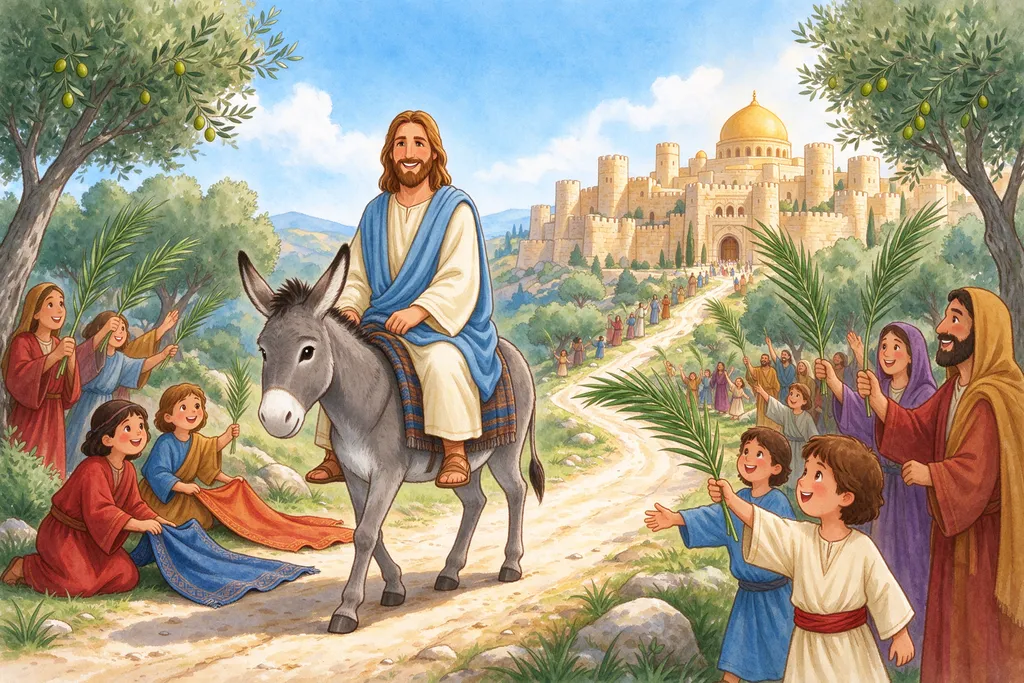
- Palm Sunday: Jesus rides into Jerusalem on a donkey and people wave palm branches and shout for joy. (Palm Sunday)
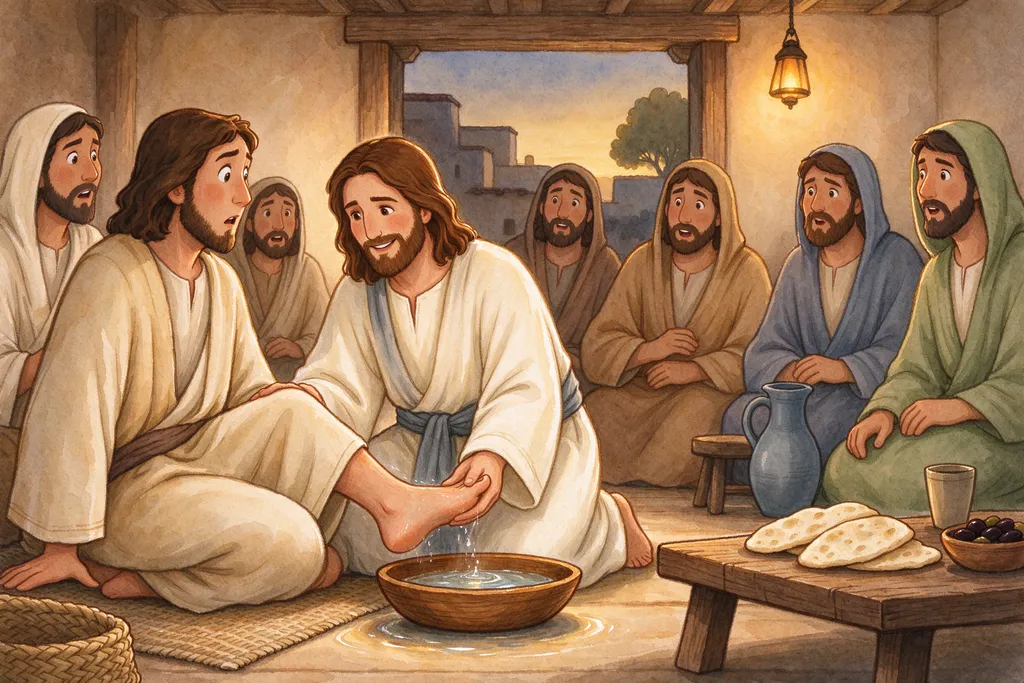
- Thursday: Jesus shares a special meal with his friends. (The Last Supper)
- Friday: Jesus dies on the cross; his friends are very sad; he is laid in the tomb. (Keep it short.)
- Saturday: A quiet day of waiting. You might say, "Jesus' friends were sad and waiting. But they didn't know what would happen tomorrow!"
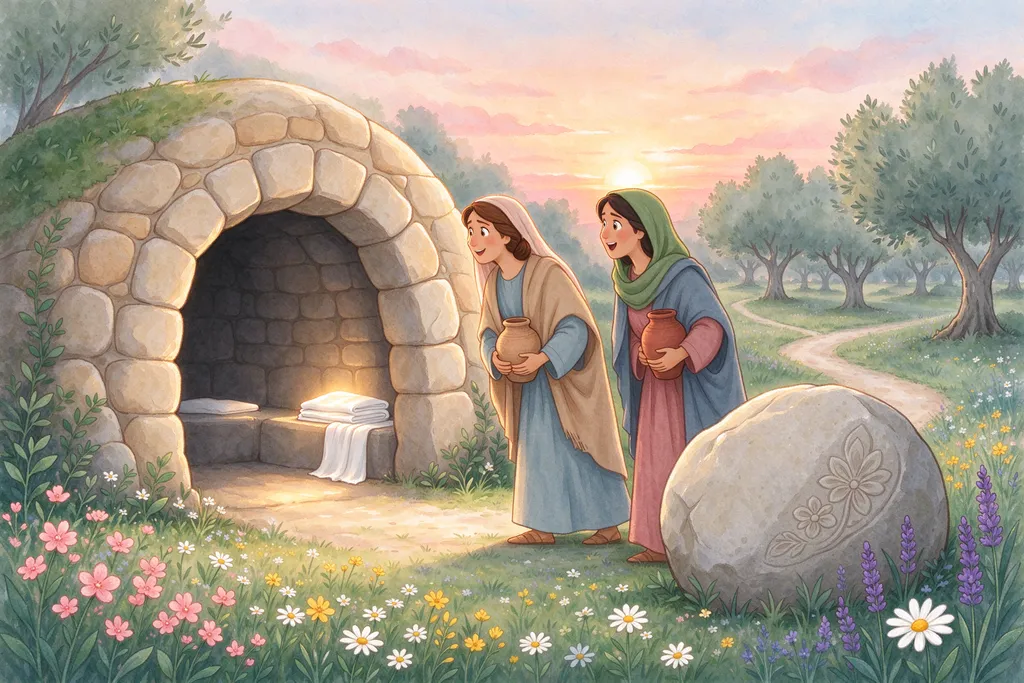
- Sunday: The stone is rolled away. Jesus is alive! (Jesus is Risen)
Reading the angel's words from the Bible on Easter morning is powerful even for little ones: "He is not here, for he has risen, just like he said. Come, see the place where the Lord was lying." (Matthew 28:6)
Make it hands-on
Preschoolers learn through their senses. A few simple ways to make Easter tangible:
- Resurrection Eggs. Twelve plastic eggs, each with a small object from the story (a tiny donkey, a coin, a cross, a stone), with the last egg empty for the empty tomb. Open one a day before Easter, or all at once on Easter afternoon.
- An empty tomb garden. Plant grass seed in a pot with a small flower pot on its side as a tomb and a flat stone for the door. On Easter morning, roll the stone away.
- Wave palms. Cut green paper leaves and parade around the house shouting "Hosanna!"
- Act it out. A blanket over a table makes a tomb. Let your child be an angel announcing "He's not here!"
- A sunrise moment. On Easter morning, look at the sunrise or turn on a light: "Jesus' friends came to the tomb early in the morning, and found he was alive!"
- Coloring pages. Print our Easter coloring pages for each part of the story.
End with joy
The most important thing a preschooler can take from Easter is joy. However much or little they understand about the cross, let them feel that Easter is the happiest day of the year, because Jesus is alive.
- Teach them to say "He is risen!" and answer "He is risen indeed!"
- Sing a simple Easter song with lots of "Alleluias."
- Have a special breakfast.
- Keep celebrating for a while. In the church calendar, Easter is a fifty-day season.
Jesus said, "I am the resurrection and the life." (from John 11:25) Easter is the day we celebrate that it is true. For more ideas, see our guides to Lent for kids and Christian Easter basket ideas.
If your child is grieving
Sometimes Easter comes at a time when a family is grieving the death of a grandparent, a friend or a pet. Children may connect Jesus' death with the person they have lost, and they may have harder questions than usual.
That connection can actually be a gift. The Easter story speaks directly to grief: Jesus' friends were heartbroken, and then God did something no one expected. You might say, "Jesus' friends were so sad when he died, just like we're sad about Grandpa. But Jesus came back to life, and he promised that one day he will make everything new, and there won't be any more sadness."
Let your child be sad, and be sad with them. Do not rush to the happy ending to make the feelings go away. But do tell them the ending, because it is true, and it is the reason Christians have hope even at funerals. A gentle picture book about loss, like The Moon Is Always Round, can help; see our guide to Christian picture books.
Questions parents ask
Frequently asked questions
How do I explain Easter to a 3-year-old?
Keep it short and simple: Jesus loves us; he died on a cross and his friends were sad; on Sunday God made him alive again, and now he is alive forever. That is why we celebrate.
Is it okay to tell a preschooler that Jesus died?
Yes. Use the real word 'died,' keep it brief and calm, name the sadness, and move quickly to the good news that he came back to life. Avoid graphic detail.
What if my child gets scared about dying after hearing the Easter story?
Reassure them honestly: most people die when they are very old, and because Jesus came back to life, people who love him will live with him forever. Then offer comfort and a hug.
What is the best Easter book for preschoolers?
The Garden, the Curtain and the Cross by Carl Laferton explains why Jesus died and rose in a clear, joyful way that preschoolers understand. See our Easter books guide for more.
How do I explain the difference between Jesus and the Easter bunny?
Many families say the bunny and eggs are fun spring traditions, but the real reason for Easter is that Jesus is alive. Keep the story of Jesus at the center of the day.