Through the year
Lent for Kids: What It Means and Simple Family Ideas
Lent is the forty days of getting ready for Easter. For young children it can be a gentle season of growing closer to Jesus through simple acts of praying, giving and kindness. Here is how to explain it and keep it.
By the Biblelings team · Updated
What is Lent? (The simple version)
Lent is the season of about forty days before Easter when Christians get their hearts ready to remember Jesus' death and celebrate his resurrection. It begins on Ash Wednesday and ends at Easter, with the final week, Holy Week, remembering Jesus' last days.
The forty days remind Christians of the forty days Jesus spent in the wilderness praying and fasting before he began his work (the Sundays are traditionally not counted, which is why Lent is actually a little longer than forty days on the calendar). Traditionally, Christians mark Lent with three practices: praying more, fasting (giving something up) and giving to people in need.
Here is a way to explain it to a child of three to six:
"Easter is the most important day of the year for Christians, because it's the day Jesus came back to life! Lent is the time before Easter when we get ready. We pray, we try to be extra kind, and sometimes we give up something we like, to help us remember Jesus and how much he loves us."
In 2027, Ash Wednesday falls on February 10 and Easter Sunday on March 28. Not every church keeps Lent; it is most common in Catholic, Orthodox, Anglican, Lutheran and Methodist churches, though many other Christians observe it too. (Orthodox churches follow a different calendar, so their dates usually differ.)
Keeping Lent gentle for little ones
Lent has a reputation for being somber, and for adults it can be a serious season of repentance. For young children, the emphasis should be different. They do not need to feel guilty or gloomy for six weeks. What they can learn is:
- Jesus loves us so much that he chose to give his life for us.
- We can get ready for Easter, like we get ready for a birthday.
- Small choices matter: being kind, sharing, praying, saying sorry.
- Easter is coming, and it is the happiest day of all.
So keep the practices small, concrete and positive, and keep pointing ahead to Easter joy.
Ash Wednesday and Holy Week, explained simply
Ash Wednesday. In many churches, people receive a cross of ashes on their forehead on the first day of Lent. For a child: "The ashes remind us that we need God, and that we're sorry for the wrong things we've done. The cross reminds us that Jesus forgives us." Some children find the ashes interesting; others find them odd. Either is fine. If your child is worried, let them watch first.
Palm Sunday. The Sunday before Easter remembers Jesus riding into Jerusalem on a donkey while crowds waved palm branches and shouted for joy. Children love waving palms in church. Read our Palm Sunday story.
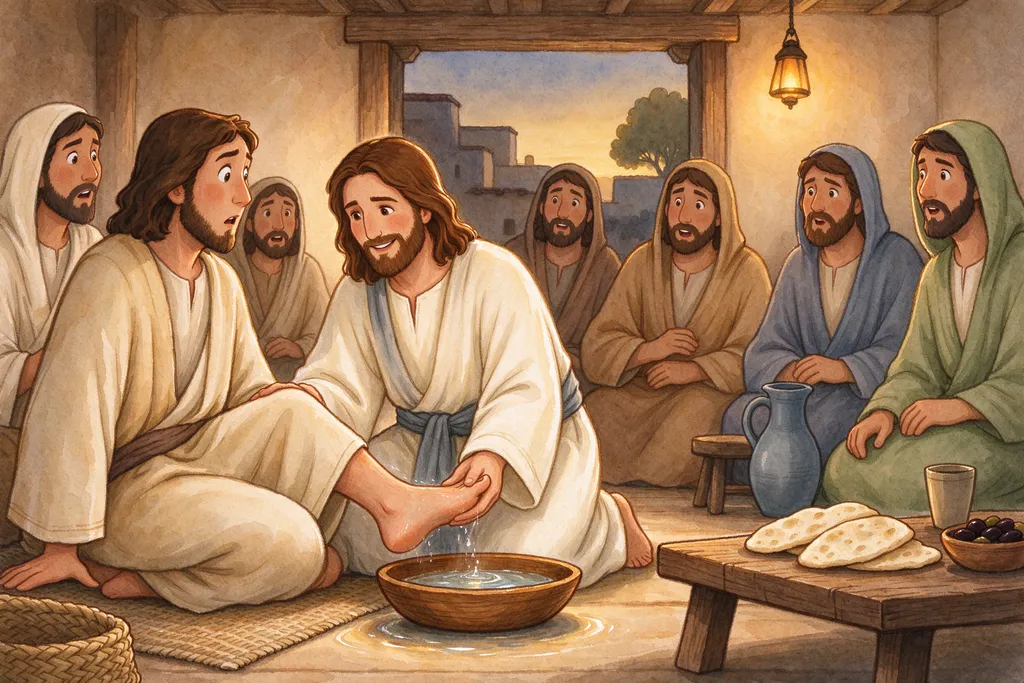
Maundy Thursday. Remembers the Last Supper, when Jesus shared bread and wine with his friends and washed their feet. Read the Last Supper.
Good Friday. The day Jesus died on the cross. With young children, keep it simple and calm: Jesus died, his friends were very sad, and he was laid in a tomb. Then wait. For help with this, see our guide to explaining Easter to a preschooler.
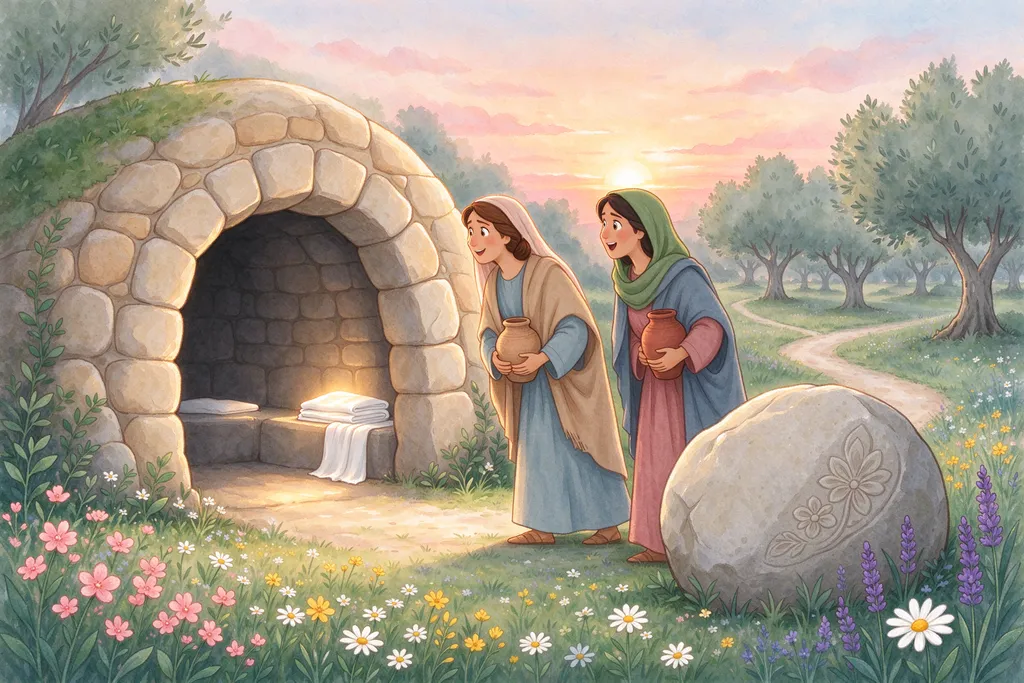
Easter Sunday. Jesus is alive! Read Jesus is Risen and celebrate.
Simple Lent activities for families
Pray
- A Lent prayer jar. Write names of people to pray for on slips of paper; pull one out each day.
- A prayer candle at dinner. Light it and say a short prayer together each evening of Lent. See our guide to teaching kids to pray.
- Read through Jesus' life. A Bible story about Jesus each day or each week of Lent, from his baptism to Palm Sunday. Try Jesus is baptized, Jesus calls the fishermen, Zacchaeus, Blind Bartimaeus and the prodigal son.
Give up (fast)
- For young children, giving something up should be small and their own choice: one sweet treat a day, a favorite show once a week, dessert on Fridays. Some families give up as a family, which is easier than a child going it alone.
- Explain why: "When I want that treat and remember I gave it up, I can say a little prayer and remember Jesus."
- Never make a child's fast about food in a way that feels like a punishment, and adjust for any health needs.
- For forty age-by-age ideas, see What can kids give up for Lent?
Give
- A Lent giving box. Put loose change in a box or jar through Lent and choose together where to give it at Easter.
- Kindness challenges. One small kind act a day: help set the table, draw a card for a neighbor, let a sibling go first.
- Clear out and give. Choose toys or clothes to give away together.
Add something Instead of only giving something up, many families "take up" something good: an extra Bible story at breakfast, a weekly visit to a grandparent, learning a verse together.
Visual countdowns to Easter
Young children understand time better when they can see it. A few ideas:
- A Lent paper chain. Forty links, one torn off each day (or written with a prayer or kind act). On Easter morning, it is gone.
- A Lenten path. Draw a path of squares to a picture of an empty tomb; move a figure one square each day.
- A bare branch. Put a bare branch in a vase on Ash Wednesday. On Easter morning, add flowers or paper blossoms to show new life.
- Resurrection Eggs. A set of twelve eggs from FamilyLife, each holding a small symbol of the Easter story, opened one a day in the last twelve days before Easter.
- Coloring pages. Print a different Bible coloring page each week of Lent and make a display that grows toward Easter.
Lent by age
Toddlers (1 to 3): Keep it very simple. A short story about Jesus, a candle at dinner, waving palms on Palm Sunday, flowers on Easter morning. They will not understand fasting, and do not need to.
Preschoolers (3 to 5): Add a visual countdown, a giving jar and a few simple kindness challenges. Let them choose one small thing to give up if they want to, but keep it optional and light.
Early school age (5 to 8): They can understand the three practices (pray, fast, give), choose their own Lenten commitment, and follow the stories of Holy Week day by day. Talk about how it is going: "Was it hard to give up sweets today? What did you think about?"
Ending Lent with joy
However you keep Lent, make sure Easter feels like a celebration. If you gave something up, enjoy it again on Easter Sunday. Decorate with flowers. Greet each other with "He is risen!" Have a special breakfast. In the church year, Easter is not just a day but a fifty-day season, so keep celebrating.
The contrast is part of the lesson. Children who have waited and prepared through Lent feel the joy of Easter in a way that a single Sunday cannot give. For Easter ideas, see our guides to Christian Easter books and Easter basket ideas.
A simple Lenten week at home
Lent can feel long to a young child. Breaking it into weekly themes helps. Here is a sample week that combines praying, giving and a Bible story without taking much time:
- Sunday: Talk about the week's theme, such as "Jesus helps people who are sick." Light the prayer candle at dinner.
- Monday: Read Blind Bartimaeus at bedtime. Pray for someone who is unwell.
- Tuesday: Make a card for that person together.
- Wednesday: Add coins to the Lent giving jar. Talk about who the money might help.
- Thursday: Read Naaman is healed. Ask, "How did God help Naaman?"
- Friday: If your family is giving something up, talk about how it is going. Remember that Jesus gave everything for us.
- Saturday: Deliver the card, or do a kind job for a neighbor.
Other weekly themes could be "Jesus forgives" (the prodigal son, Zacchaeus), "Jesus teaches us to pray," or "Jesus is the Good Shepherd." By Holy Week, children will have a rich sense of who Jesus is before they hear what he did for them.
Questions parents ask
Frequently asked questions
How do you explain Lent to a child?
Lent is the time before Easter when we get ready to remember how much Jesus loves us. We pray, try to be extra kind and sometimes give up something we like, so that Easter, when Jesus came back to life, feels extra special.
Should young children give something up for Lent?
Only if they want to, and only something small, like one treat a day or a favorite show once a week. Many families give something up together, or 'take up' a good habit instead.
When does Lent start in 2027?
Ash Wednesday is February 10, 2027, and Easter Sunday is March 28, 2027, for churches that follow the Western calendar. Orthodox dates usually differ.
Why is Lent forty days?
It remembers the forty days Jesus spent praying and fasting in the wilderness before his ministry. Sundays are traditionally not counted, so the season runs a little longer on the calendar.
How do I explain Good Friday to a preschooler?
Simply and calmly: Jesus died on the cross because he loves us, his friends were very sad, and he was put in a tomb. Then the good news: on Sunday, God made him alive again.