
Faith at home
How to Explain Communion to a Child
"What are they eating? Why can't I have some?" Communion is one of the first things young children notice in church. Here is how to explain it simply, starting with the Last Supper, along with a fair guide to how churches understand and practice it differently.
By the Biblelings team · Updated
The heart of it in one breath
If your child tugs your sleeve during the service and whispers "What is that?" here is a short answer that fits most churches:
"That's Communion. On the night before Jesus died, he shared a special meal with his friends. He took bread and said, 'This is my body, given for you,' and he shared a cup and said it was a sign of God's promise. He asked his friends to keep doing it to remember him. So Christians all over the world share bread and wine, or juice, to remember Jesus and be close to him."
The shared core: Communion comes from Jesus' Last Supper, Christians do it because Jesus asked us to, and it is about Jesus giving himself for us and being united with him and each other. Churches understand some things about it differently, and we'll look at that kindly below.
Many names for one meal
Children may hear different names depending on where they go to church, and it can be confusing. It helps to know they all point back to the same meal Jesus shared:
- Holy Communion or Communion: "communion" means sharing or being together.
- The Lord's Supper: the meal Jesus, our Lord, shared with his friends.
- The Eucharist: from a Greek word for "giving thanks," because Jesus gave thanks for the bread.
- Mass: the Catholic name for the whole service in which the Eucharist is celebrated.
- The Divine Liturgy: the Orthodox name for the service.
- Breaking of bread: a phrase from the book of Acts, used by some churches.
You might say: "Different churches have different names for it, but they're all remembering the meal Jesus shared with his friends."
Start with the Last Supper
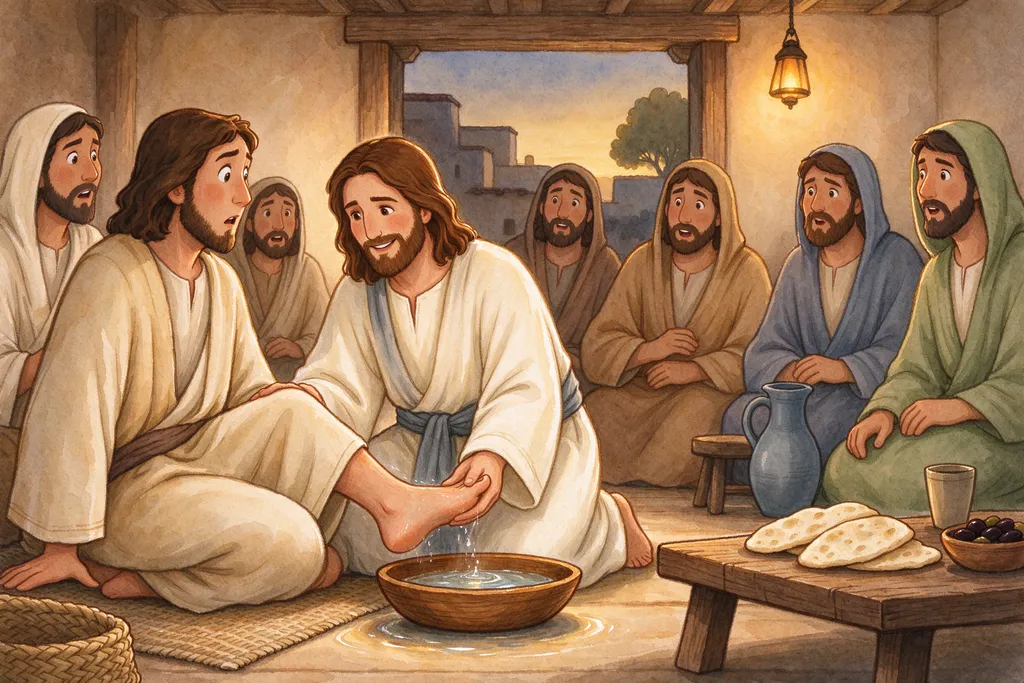
The best way to explain Communion is to tell the story it comes from. On the night before he died, Jesus ate the Passover meal with his twelve friends. Luke tells us:
"He took bread, and when he had given thanks, he broke, and gave it to them, saying, “This is my body which is given for you. Do this in memory of me.”" (Luke 22:19)
Read The Last Supper together. Then ask: "What did Jesus ask his friends to do? Why do you think he wanted them to remember him?"
Children understand that meals matter. Birthdays have cake; holidays have special food; families eat together. You can say: "Jesus gave his friends a special meal to remember him by, a bit like how we have special food on someone's birthday to celebrate them. But this meal is even more special, because Jesus is part of it."
Paul wrote that whenever Christians share this meal, "you proclaim the Lord’s death until he comes." (from 1 Corinthians 11:26) Communion looks back to the cross and forward to the day Jesus returns.
How churches understand Communion
Christians have thought and prayed about Communion for two thousand years, and they understand it in different ways. It's helpful to know the main views so you can answer your child in a way that fits your church, and speak respectfully about others.
- Catholic and Orthodox Christians believe that the bread and wine truly become the body and blood of Jesus, while still looking like bread and wine. Receiving Communion is receiving Jesus himself. (Catholic teaching calls this change transubstantiation; Orthodox Christians usually speak of it as a holy mystery.)
- Lutheran Christians believe Jesus' body and blood are truly present "in, with and under" the bread and wine.
- Anglican and Episcopal Christians hold a range of views, many affirming Jesus' real presence in the sacrament.
- Presbyterian, Reformed and many Methodist Christians often speak of Jesus being truly and spiritually present, so that believers are fed by him by faith as they share the bread and cup.
- Baptist and many evangelical and free churches usually understand the Lord's Supper mainly as a remembrance: a meal Jesus commanded, in which we remember his death, give thanks and renew our trust in him.
Your child doesn't need to sort out these differences. For young children, a simple explanation that fits your church is enough. For example:
- "When we receive Communion, we believe we're receiving Jesus himself. It's the most special gift there is."
- "When we share the bread and juice, we remember that Jesus loves us and gave himself for us, and we thank him."
"Why can't I have some?"
This is the question most parents get asked. The answer depends on your church, because practices around children and Communion vary widely, even between congregations of the same denomination.
- Orthodox churches give Communion to baptized babies and children.
- Catholic children usually receive their first Holy Communion around age seven or eight, after preparation and their first confession. Until then, many come forward with crossed arms to receive a blessing.
- Some Anglican, Episcopal, Lutheran and Methodist congregations welcome baptized children to Communion; others ask children to wait until confirmation or a first Communion class.
- Many Baptist, evangelical and Reformed churches invite people to share the Lord's Supper once they have put their trust in Jesus, and sometimes after baptism.
Whatever your church's practice, make sure your child hears that they belong. A disappointed child might hear: "You're part of God's family right now, and Jesus loves you just as much as anyone at that table. In our church, children [wait until _ / prepare in a class first], because we want you to understand how special it is. I can't wait for that day."
If your child is old enough to ask seriously about joining in, talk with your pastor or priest. Many churches have a class or conversation for children.
Simple words, age by age
Ages 3 to 4. Keep it to the story and to love. "Jesus had a special supper with his friends. He shared bread and said, 'Remember me.' At church we share bread to remember that Jesus loves us."
Ages 5 to 6. Connect the bread and cup to the cross. "Jesus said the bread was his body, given for us, and the cup was about his blood, which he gave when he died on the cross. Communion helps us remember that Jesus gave everything because he loves us, and it brings us close to him." Adjust the wording to fit your church's understanding.
Ages 7 to 8. Children can understand more, including why Christians take Communion seriously and why your church does it the way it does. Read the Last Supper in a Gospel together. If your church has a first Communion program, this is often the age for it.
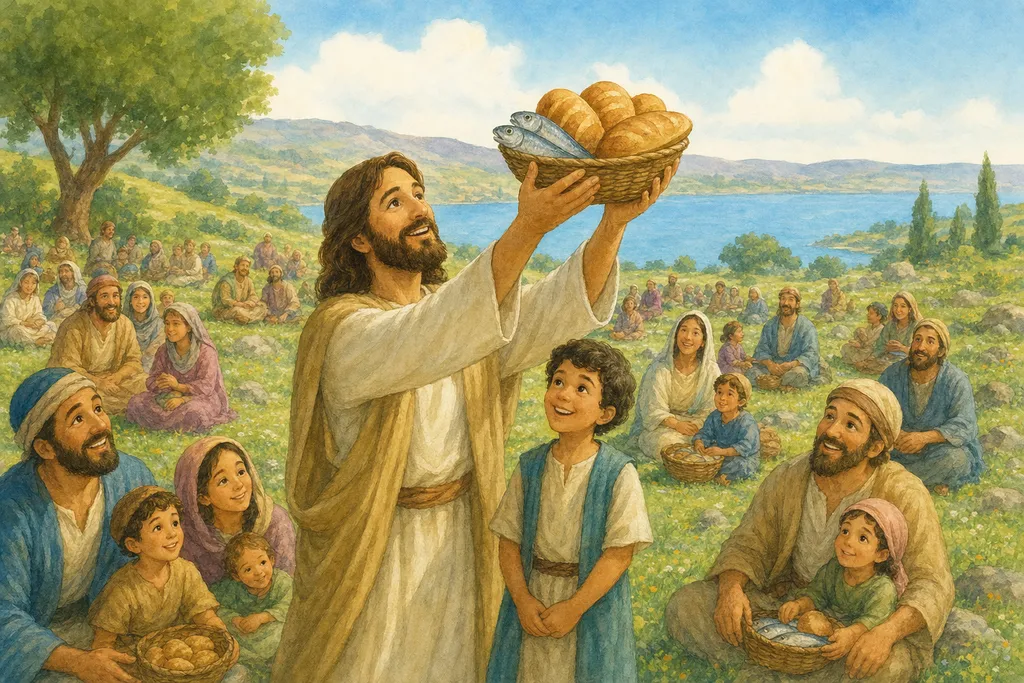
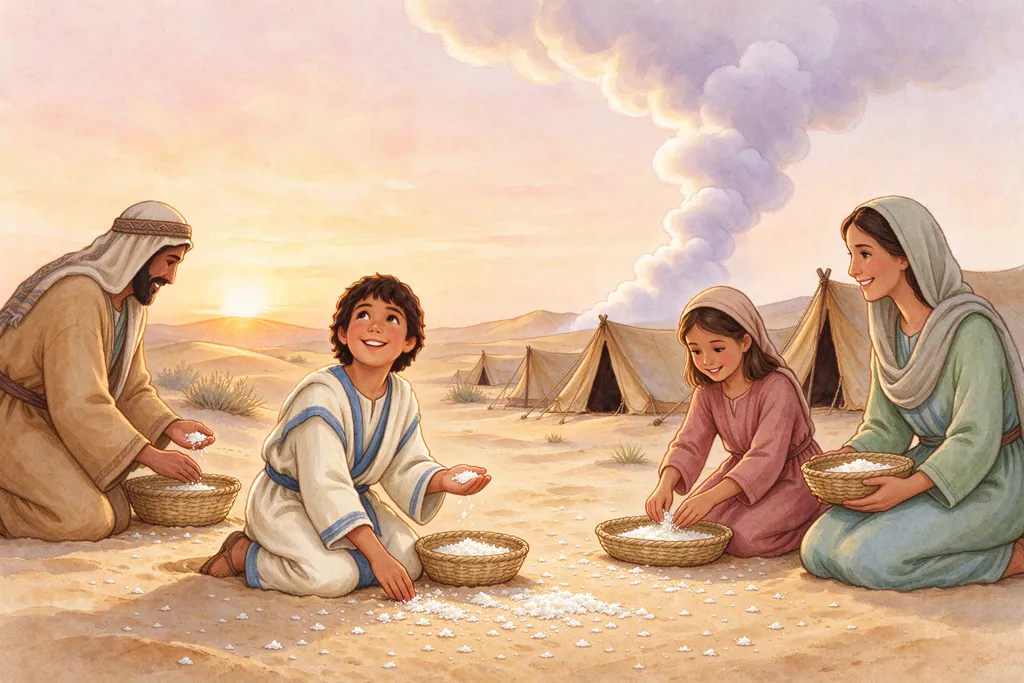
Jesus also said: "I am the bread of life. He who comes to me will not be hungry, and he who believes in me will never be thirsty." (from John 6:35) Older children may enjoy connecting this to Feeding the Five Thousand and Manna from Heaven, where God fed his people bread.
Helping children take part, wherever they are
Even before they receive Communion, children can join in meaningfully:
- Watch together. Quietly narrate what's happening: "Now the pastor is saying Jesus' words from the Last Supper."
- Learn the words. Many churches use the same words every week. Children love joining in with "Amen" or a familiar response.
- Pray while others receive. "Thank you, Jesus, for loving us. Amen."
- Come forward for a blessing, if your church offers one.
- Bake bread at home. Talk about how Jesus took ordinary bread and made it part of something holy.
- Read the story before church. The Last Supper is a good choice for the night before.
If your child is preparing for first Communion, see our guide to first Communion gifts for meaningful ways to mark the day. And our guide to explaining the cross to a child can help with the question of why Jesus gave his body for us.
Questions parents ask
Frequently asked questions
How do I explain Communion to a young child?
Tell the story of the Last Supper: on the night before he died, Jesus shared bread and a cup with his friends and asked them to keep doing it to remember him. Christians share Communion because Jesus asked us to, to remember his love and be close to him.
At what age can children take Communion?
It depends on the church. Orthodox churches give Communion to baptized infants; Catholic children usually receive first Communion around seven or eight; and many Protestant churches welcome children once they are baptized, confirmed or have professed faith. Ask your pastor or priest.
What do I say when my child asks why they can't have Communion?
Reassure them that they already belong to God's family and that Jesus loves them as much as anyone. Explain simply what your church asks children to do first, and say you look forward to the day they take part.
Is Communion the same as the Eucharist and the Lord's Supper?
Yes. Holy Communion, the Lord's Supper, the Eucharist and the breaking of bread are different names, used by different churches, for the meal that comes from Jesus' Last Supper. Mass and the Divine Liturgy are the names of the services in which it is celebrated.
Why do churches believe different things about Communion?
Christians have understood Jesus' words 'This is my body' in different ways over the centuries. Some believe Jesus is truly present in the bread and wine, others see the meal mainly as a remembrance. All agree it comes from Jesus and points to his love.