
Faith at home
How to Explain the Cross to a Child, Age by Age
The cross is at the center of the Christian faith, and it is also the hardest part of the story to tell a small child. Here is how much to say at each age from three to eight, the words to use, answers to the questions children ask, and how to keep the story pointing to Easter joy.
By the Biblelings team · Updated
The heart of it in one breath
If your child asks "Why is there a cross in church?" or "What happened to Jesus?" here is a short answer that is true, gentle and complete:
"Jesus loves us so much. Some people didn't believe he was God's Son, and they were angry with him. They put him on a cross, a big wooden post, and he died. His friends were very, very sad. Jesus let it happen because he was doing something wonderful: he was taking away all the wrong things we've ever done, so we could be close to God forever. And three days later, God made him alive again!"
Notice the shape: love, what happened, sadness, why, and the resurrection. Never tell the cross without telling Easter. For children, the cross and the empty tomb belong together.
Should little children hear about the cross at all?
Many parents wonder whether to wait. It's an understandable instinct; nobody wants to frighten a three-year-old. But most Christian families find that children can hear about Jesus' death, gently and briefly, from a young age, especially when it's held inside the bigger story of his love and his resurrection.
Children already see crosses: on churches, on necklaces, in their children's Bible. They will ask. A calm, simple answer from you is far better than a confusing one picked up elsewhere.
A few principles hold at every age:
- Use the real word "died." Gentle, but clear.
- Lead with love. "Jesus chose to do this because he loves us."
- Keep detail in proportion to age. More below.
- Name the feelings. "His friends were very sad."
- Always finish with Sunday. "But that's not the end!"
- Don't present any group of people as villains. The Bible shows that people from many backgrounds were involved, and Christians have long understood that Jesus died for the sins of the whole world, including ours.
Ages 3 to 4: love, sadness and joy
Preschoolers understand people, feelings and events. They don't need the mechanics of crucifixion or any explanation of how the cross saves us. They need to know Jesus loves them, something very sad happened, and then something wonderful happened.
What to say: "Some people were unkind to Jesus, and he died on a cross. His friends were so sad. But on Sunday morning, Jesus was alive again! God made him alive. Now he's alive forever, and he loves you."
What to leave out: Nails, whipping, the crown of thorns, blood, and long descriptions of suffering. If they ask "Did it hurt?" answer honestly but briefly: "Yes, it hurt. But Jesus isn't hurting anymore. He's alive and happy, and he'll never hurt again."
What helps: Pictures that show the cross without graphic detail. Acting out the empty tomb with a blanket over a table. Rolling a stone away on Easter morning. See our guide to explaining Easter to a preschooler for more ideas for this age.
Ages 5 to 6: why Jesus died
Children this age begin to ask why. They have a strong sense of fairness, which can actually help: they understand that wrong things matter, and that someone loving might take a punishment or a cost in someone else's place.
What to say: "Everybody does wrong things, called sin. Sin spoils things between us and God. Jesus never did anything wrong, but he chose to die on the cross to take away our sin, like a rescue. That's how much he loves us. And then God raised him to life, to show that Jesus had won, and that sin and death don't get the last word."
Jesus used a picture children love: "The good shepherd lays down his life for the sheep." (from John 10:11) Read The Good Shepherd and ask, "What would a good shepherd do if a wolf came?"
About detail: You can say Jesus was nailed to the cross if they ask, calmly and without lingering. Most children this age are reassured by your tone more than anything.
Questions they may ask: "Why didn't God stop it?" "God could have, but this was God's rescue plan. Jesus chose it, because he loves us."
Ages 7 to 8: the bigger picture
Older children can understand more of the story's meaning and more of its events. They can read the account in a children's Bible or even in a Gospel with you, and they can begin to see how the whole Bible points to the cross.
What to say: "Jesus was arrested, even though he hadn't done anything wrong. Leaders who were afraid of him wanted him gone, and the Roman governor agreed to have him crucified, which was how the Romans punished people back then. Jesus could have stopped it, but he didn't. Even on the cross he prayed for the people hurting him. The Bible says he died for our sins, the righteous for the unrighteous, to bring us to God. Then on the third day, God raised him from the dead."
Paul put the wonder of it like this: "But God commends his own love toward us, in that while we were yet sinners, Christ died for us." (Romans 5:8) Ask: "Did Jesus wait for us to be good first?"
Jesus also said: "Greater love has no one than this, that someone lay down his life for his friends." (John 15:13) Children this age can grasp that the cross is, above all, a story of love.
The Bible's many pictures. The Bible describes what Jesus did on the cross in many ways: a rescue, a victory over evil, a sacrifice, paying a debt, a shepherd giving his life, a way back home. Different churches emphasize different pictures. Rather than choosing one, let older children hear several. Each shows a facet of something too big for one picture.
Hard questions (and gentle answers)
"Who killed Jesus?" "Some leaders and soldiers did, a long time ago. But the Bible says Jesus gave his life on purpose. Nobody could take it from him unless he let them. And Christians believe he died because of everyone's sin, so it's not about blaming one group of people."
"Why did God let his own Son die?" "Because God loves us so much. The Bible says 'God so loved the world, that he gave his one and only Son.' It cost God a lot. And God knew Jesus would come back to life."
"Is Jesus still on the cross?" Some children ask this after seeing a crucifix. "No, Jesus isn't on the cross anymore. He came back to life and he's alive now. The cross helps us remember how much he loves us." Some churches use a crucifix (a cross with Jesus on it) to remember his suffering and love; others use an empty cross to remember he is risen. Both point to the same Jesus.
"Will that happen to me?" Some children worry. "No. That happened to Jesus a long, long time ago, and he did it so we wouldn't have to be far from God. You are safe."
"Why do we call it Good Friday if it was so sad?" "Because something sad turned out to be the best news ever. Jesus' death and coming back to life means we can be forgiven and close to God forever. That's good!"
"Did Jesus forgive the people who hurt him?" "Yes. He even prayed for them from the cross, asking God to forgive them." This can lead into a conversation about forgiveness; see our guide to explaining sin and forgiveness.
Good Friday with young children
Holy Week gives you a natural way to tell the story in small pieces, a day at a time:
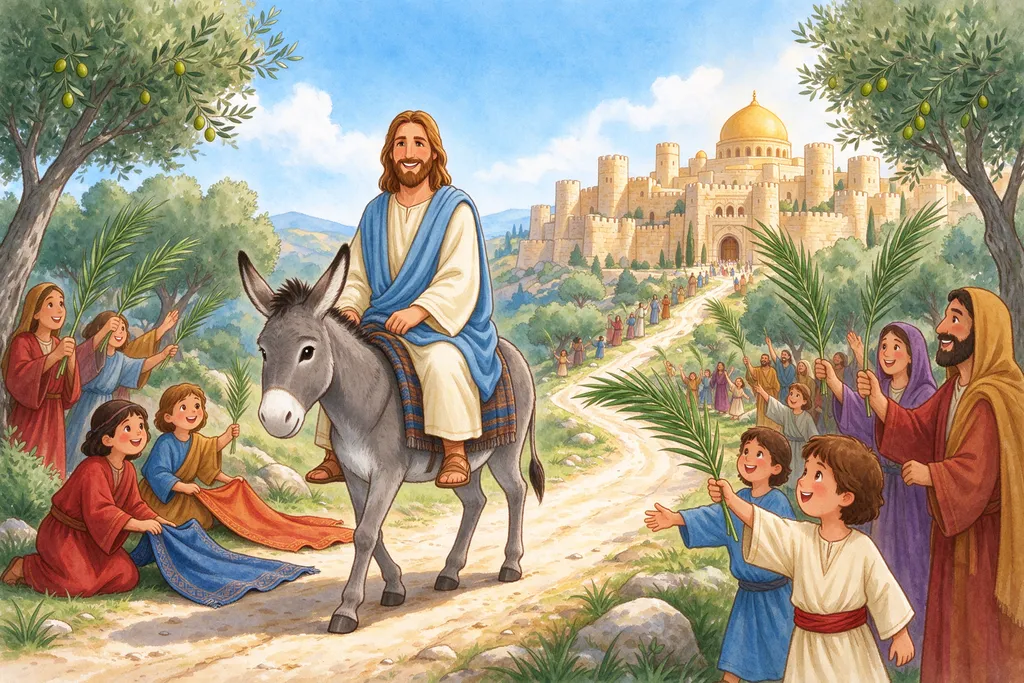
- Palm Sunday: Jesus rides into Jerusalem. (Palm Sunday)
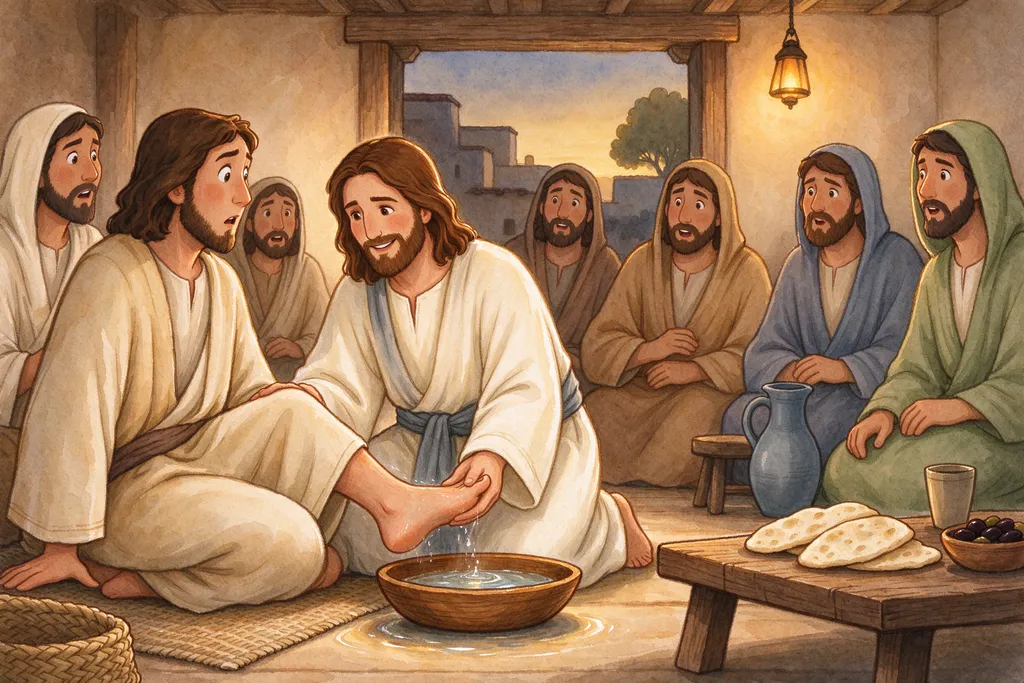
- Thursday: Jesus shares a special meal with his friends. (The Last Supper)
- Friday: A short, quiet telling of the cross. Light a candle and blow it out. "Jesus died, and everything felt dark and sad."
- Saturday: A quiet day of waiting. "His friends didn't know what would happen tomorrow!"
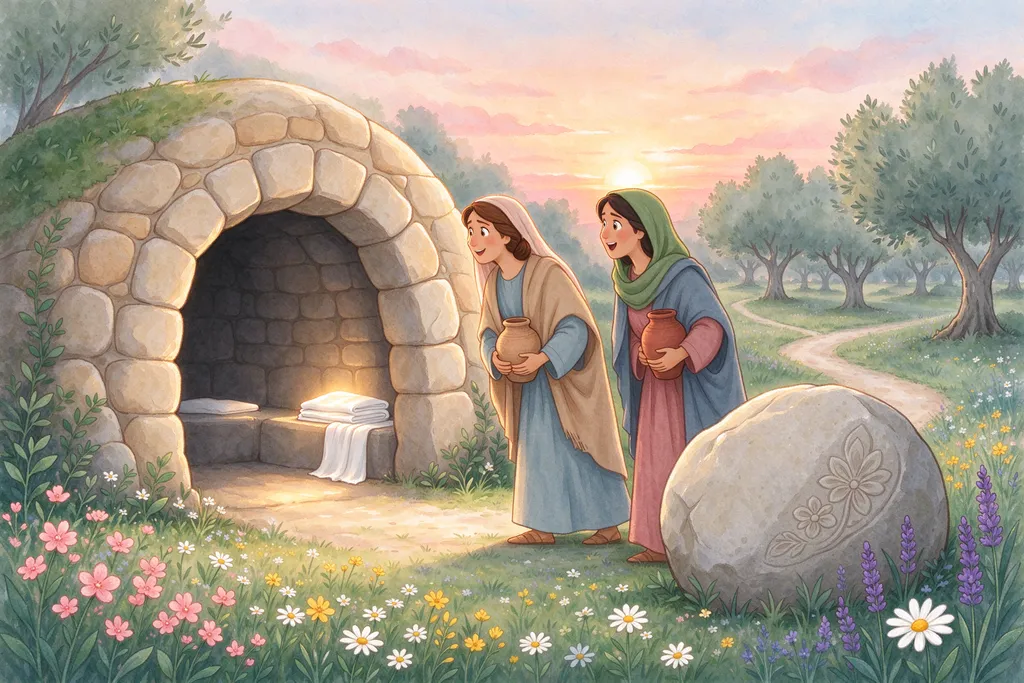
- Sunday: Relight the candle, and fling open the curtains. "He's alive!" (Jesus Is Risen)
Other simple ideas: make a small cross from two sticks and string, plant an "empty tomb" garden, or eat hot cross buns and talk about the cross on top. Some churches hold short Good Friday services or Stations of the Cross suitable for families; ask yours. See our guide to Lent for kids for the weeks before, and our Easter Bible stories collection.
Always end at the empty tomb
However much or little your child understands about the cross, the thing to make sure they take away is this: Jesus did it because he loves them, and he didn't stay dead.
When the women came to the tomb on Sunday morning, the angel said: "He is not here, for he has risen, just like he said." (from Matthew 28:6)
End every conversation about the cross there. Children can live with mystery, and they can carry sadness for a moment. What they need to hear, again and again, is that love won.
For related conversations, see our guides to explaining Jesus to a child and explaining death to a child.
Questions parents ask
Frequently asked questions
How do you explain the crucifixion to a 4-year-old?
Briefly and gently: some people were unkind to Jesus and he died on a cross; his friends were very sad; but on Sunday God made him alive again, and now he's alive forever and loves you. Leave out graphic detail.
How do I explain why Jesus died to a child?
For ages 5 and up: everybody does wrong things, called sin, which spoil things between us and God. Jesus never did wrong, but he chose to die to take away our sin, like a rescue, because he loves us. Then God raised him to life.
How much detail about the crucifixion should I share?
With 3- and 4-year-olds, almost none: just that Jesus died on a cross. From about 5, you can answer honest questions, such as that he was nailed to the cross, calmly and briefly. Older children can read a Gospel account with you.
Why is it called Good Friday?
Because Jesus' death, followed by his resurrection, brought the best news in the world: we can be forgiven and be close to God forever. Something sad became something good.
Who was responsible for Jesus' death?
Some religious leaders and the Roman authorities were involved, but the Bible says Jesus gave his life willingly, and Christians believe he died for the sins of everyone. Avoid presenting any group of people as villains to children.