Faith at home
How to Explain the Holy Spirit to a Child
The Holy Spirit can feel like the hardest part of the Christian faith to explain to a child: you can't draw him, and he doesn't have a story the way Jesus does. But the Bible gives children wonderful pictures to hold onto. Here is how to talk about the Spirit simply, age by age.
By the Biblelings team · Updated
The heart of it in one breath
If your child asks "Who is the Holy Spirit?" here is a simple answer that is true across Christian traditions:
"The Holy Spirit is God, right here with us. We can't see him, a bit like we can't see the wind. Jesus promised to send the Holy Spirit to be our helper. The Holy Spirit helps us know God loves us, helps us pray, and helps us be kind and brave."
The two key ideas: the Spirit is God himself (not a force or a ghost), and the Spirit is God with us and in us, helping us. Everything else builds on those.
Start with Jesus' promise
On the night before he died, Jesus' friends were worried. He was going away, and they didn't understand. So Jesus made them a promise: "I will pray to the Father, and he will give you another Counselor, that he may be with you forever" (from John 14:16).
That word "Counselor" (some Bibles say "Helper," "Comforter" or "Advocate") is a lovely one for children. It means someone who comes alongside to help, comfort and speak up for you.
You might say: "Jesus knew his friends would miss him. So he promised he'd send a Helper who would never leave. That Helper is the Holy Spirit. And he's with everyone who belongs to Jesus, including you and me."
Jesus also said the Spirit would teach his friends and remind them of everything he'd said. (See John 14:26.) Children can understand that: the Holy Spirit helps us remember and understand what Jesus taught.
Pictures the Bible uses
The Bible doesn't describe what the Holy Spirit looks like, but it gives us pictures. Young children think in pictures, so these are a gift. Just be clear they are pictures, not the Spirit himself.
- Wind. Jesus said: "The wind blows where it wants to, and you hear its sound, but don’t know where it comes from and where it is going. So is everyone who is born of the Spirit." (John 3:8) Go outside on a windy day. "Can you see the wind? No! But can you see what it does? Look at the trees! The Holy Spirit is a bit like that. We can't see him, but we can see what he does in people's lives."
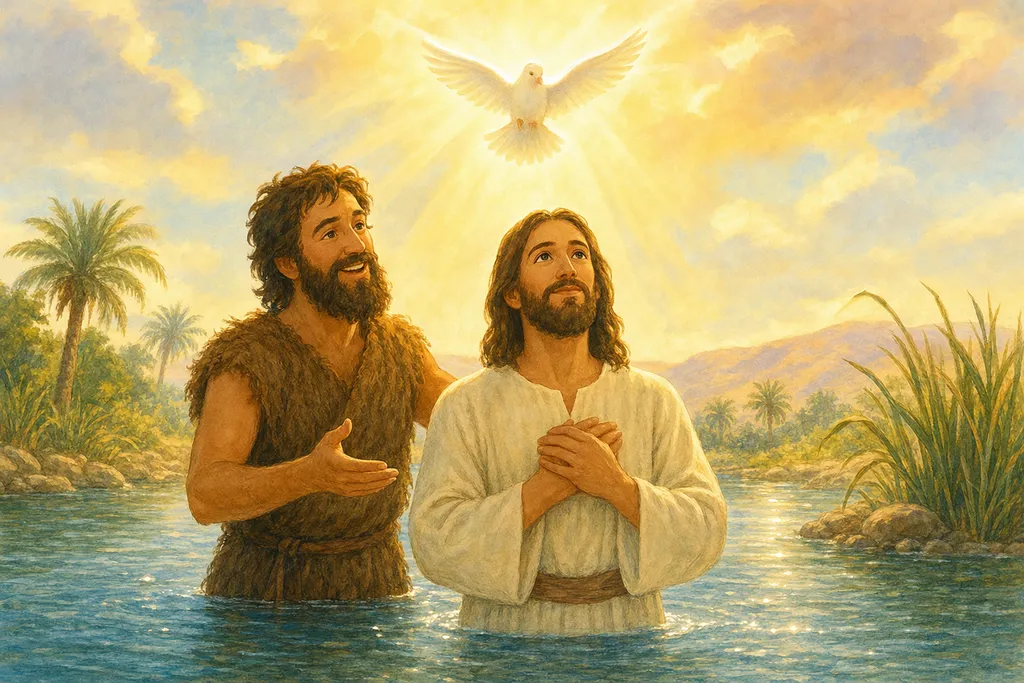
- A dove. When Jesus was baptized, the Spirit came down on him like a dove. (Jesus Is Baptized) Doves are gentle and peaceful.
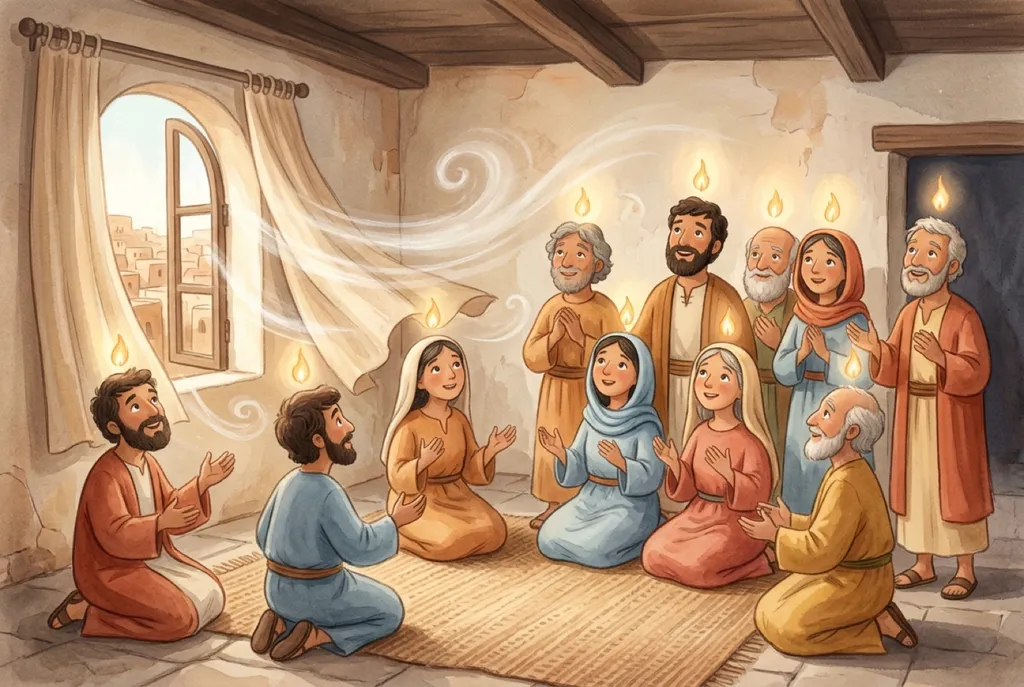
- Fire. At Pentecost, something like flames appeared over Jesus' friends. (Pentecost) Fire gives light and warmth.
- Breath. In both Hebrew and Greek, the Bible's word for "spirit" can also mean "breath" or "wind." Take a big breath together. "You can't see your breath, but it keeps you alive. God's Spirit gives life too."
- Water. Jesus spoke of living water flowing from inside people. Water refreshes and makes things grow.
Children sometimes picture the Holy Spirit as a ghost because of the old phrase "Holy Ghost." It's worth gently explaining: "'Ghost' is an old word for 'spirit.' The Holy Spirit isn't spooky at all. He's God, and he's kind and good."
Simple words, age by age
Ages 3 to 4. Keep it to one or two ideas. "God is always with you. That's the Holy Spirit." "The Holy Spirit helps us be kind." Use the wind picture: blow bubbles or feathers and talk about the invisible air moving them.
Ages 5 to 6. Tell the story of Pentecost. Introduce the idea that the Spirit is God, not just a feeling or a power:
"There's one God, and the Holy Spirit is God. Jesus went back to heaven, but he sent the Holy Spirit so that God could be with all his people, everywhere, all at once. When you pray, the Holy Spirit is helping you. When you're scared, he's with you."
Ages 7 to 8. Children can begin to understand the "fruit of the Spirit," the good things the Spirit grows in people's lives over time:
"But the fruit of the Spirit is love, joy, peace, patience, kindness, goodness, faith, gentleness, and self-control." (from Galatians 5:22-23)
"Just like an apple tree grows apples, the Holy Spirit grows good things in us when we follow Jesus. It's not something we do by trying harder on our own. It's God working in us, slowly, like fruit ripening."
Questions children ask (and gentle answers)
"Is the Holy Spirit a person?" "The Holy Spirit isn't a person like you and me, with a body. But he's not a thing or a force either. The Bible talks about him as someone who helps, teaches, comforts and even feels sad. He's God."
"Where is the Holy Spirit?" "Everywhere! A man named David once wrote, 'Where could I go from your Spirit?' (from Psalm 139:7) The answer is nowhere. The Bible also says the Holy Spirit lives in the hearts of people who belong to Jesus."
"Is the Holy Spirit inside me?" How you answer depends a little on your church's teaching about baptism and faith (see below). A gentle answer many families can use: "The Holy Spirit is with everyone who belongs to Jesus, and he's always close to you. When you want to talk to God, he's right there to help."
"Can I feel the Holy Spirit?" "Sometimes people feel peace or joy or comfort, and that can be the Holy Spirit. But he's with us even when we don't feel anything special. Jesus promised, and Jesus keeps his promises."
"Is the Holy Spirit the same as Jesus?" "They're both God, and they work together perfectly. But they're not the same. Jesus is God the Son, who became a man. The Holy Spirit is the Spirit of God, sent by the Father and Jesus." For more, see our guide to explaining the Trinity to a child.
Where churches emphasize different things
All Christian traditions confess the Holy Spirit as God, the third person of the Trinity. But churches emphasize different aspects of the Spirit's work, and your child will hear about the Spirit in the way your church does.
- Pentecostal and charismatic churches often speak a great deal about being filled with the Spirit and about spiritual gifts, such as speaking in tongues, prophecy and healing, and children may see these in worship.
- Catholic, Orthodox, Anglican and Lutheran churches often connect the gift of the Spirit closely with baptism and with confirmation (called chrismation in Orthodox churches, where it is given to infants with baptism).
- Many evangelical and Baptist churches emphasize the Spirit coming to live in a person when they put their trust in Jesus.
These differences are real, and Christians discuss them carefully. For a young child, the core is shared: the Holy Spirit is God, he is our Helper, and he is with God's people always. If your child asks something specific to your church's practice, your pastor or priest will be glad to help.
Bringing it into everyday life
- Pray for the Spirit's help. "Holy Spirit, please help me be patient with my brother." Short, specific prayers teach children the Spirit is real and practical. See our guide to teaching kids to pray.
- Notice fruit. "That was so gentle with the baby. I think the Holy Spirit is growing gentleness in you."
- Celebrate Pentecost. Seven weeks after Easter, wear red, fly kites or pinwheels, read the Pentecost story, and have a birthday cake for the Church.
- Play with the wind. Pinwheels, bubbles, kites, and feathers all make the "we can't see it, but we see what it does" idea memorable.
- Make a fruit tree. Draw a tree and add a paper fruit each time you notice love, joy, kindness or patience in your family.
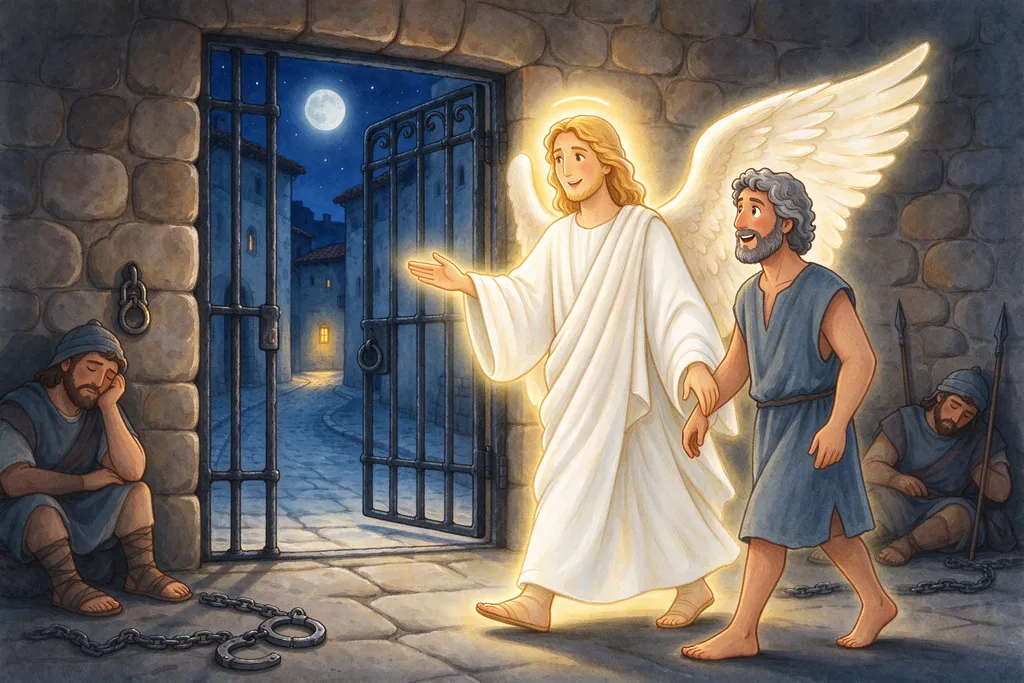
- Read stories of Spirit-filled courage. After Pentecost, frightened disciples became brave. Peter Escapes from Prison and Paul on the Road to Damascus both show God at work in his people.
Questions parents ask
Frequently asked questions
How do I explain the Holy Spirit to a 4-year-old?
Say that the Holy Spirit is God, right here with us. We can't see him, a bit like we can't see the wind, but he helps us know God loves us, helps us pray and helps us be kind and brave. Blowing bubbles or watching trees move is a good way to show the idea.
What symbols represent the Holy Spirit for kids?
The Bible uses wind, breath, a dove, fire and water as pictures of the Holy Spirit. They are helpful images, but make sure children know they are pictures, not what the Spirit actually looks like.
Is the Holy Spirit a ghost?
No. 'Holy Ghost' is an older English way of saying 'Holy Spirit.' The Holy Spirit is God, and he is kind, good and not spooky at all.
What is the fruit of the Spirit for kids?
Galatians 5:22-23 lists nine good things the Holy Spirit grows in people who follow Jesus: love, joy, peace, patience, kindness, goodness, faith, gentleness and self-control. Like fruit on a tree, they grow slowly over time.
Why do churches talk about the Holy Spirit differently?
All Christian traditions believe the Holy Spirit is God. Some emphasize spiritual gifts, some connect the Spirit closely with baptism and confirmation, and others with personal faith. Your pastor or priest can explain your church's view.