How-to guides
Sunday School Ideas for Preschoolers: A Practical Guide for Volunteer Teachers
You said yes to teaching the preschool class, and now it's Saturday night. Here is a practical guide for volunteer teachers: a simple lesson structure that works, four ready-to-teach lessons, and honest tips for wiggles, tears and the child who wants to tell you about their dog.
By the Biblelings team · Updated
What preschoolers need from Sunday school
Three- to five-year-olds are wonderful Sunday school students. They are curious, they love stories, and they believe what you tell them about God with their whole hearts. They are also short on attention, long on energy and new to sitting in groups.
The good news: you don't need to be a trained teacher to give them a great morning. Preschoolers need four things from Sunday school:
- To feel safe and welcome. A smile, their name, a familiar routine.
- One simple truth about God. Not five. One. "God made everything." "Jesus loves children." "God helps us be brave."
- To move. Their bodies are part of how they learn.
- To have fun at church. The feeling they leave with matters as much as the lesson.
Jesus set the tone himself. When his disciples tried to keep children away, he said: "Allow the little children to come to me! Don’t forbid them, for God’s Kingdom belongs to such as these." (from Mark 10:14) Read Jesus Loves the Children on your first Sunday and you'll have taught the most important lesson of the year.
A 45-minute lesson structure that works
Use the same order every week. Routine is calming for preschoolers and makes your prep much easier.
- Welcome activity (5-10 minutes). As children arrive, have something ready on the table: play dough, a coloring page of today's story, or blocks. This avoids the chaos of children waiting with nothing to do.
- Circle time (5 minutes). Gather on a rug. Sing a welcome song and say each child's name. Pray a short opening prayer.
- Bible story (8-10 minutes). Tell or read the story with a picture, props or actions. Our stories each take about five to ten minutes to read aloud and have an illustration you can show on a tablet or print.
- Movement (5 minutes). Act out part of the story, play a quick game, or sing an action song.
- Craft or activity (10 minutes). Something simple that reinforces the one big idea.
- Snack and talk (5-10 minutes). If your church allows snacks, this is a great moment to ask one question about the story.
- Closing (5 minutes). Say the memory verse together, pray, and tidy up with a clean-up song.
When the lesson ends early, have a "back pocket" plan: a game of "Simon Says" with Bible actions, a picture book or another round of the action song. For more ideas, see our list of no-prep Bible games for kids.
Telling a Bible story preschoolers will remember
Use your voice. Whisper when Samuel hears his name in the night. Get loud when the walls of Jericho fall. Slow down for the important parts.
Show something. A picture, a stuffed sheep, a basket, a toy boat. Even one prop helps children follow along.
Give them a job. Assign actions before you start: "Every time I say 'Jesus,' point up. Every time I say 'boat,' rock side to side." Children who have a job are listening for it.
Ask "I wonder" questions. Instead of quiz questions with one right answer, try "I wonder how Noah felt when he saw the rainbow?" Every child can answer an "I wonder" question.
Keep the scary parts gentle. Preschoolers don't need graphic detail. Our stories are written to be faithful to Scripture and gentle with little ones, and many include a note on how they handle the harder moments.
Retell it. Preschoolers love hearing the same story twice. After the craft, ask the children to tell you the story. You'll be surprised what they remember.
Four ready-to-teach preschool lessons
Lesson 1: God made everything
- Story: The Creation Story
- Big idea: God made the whole world, and it is good.
- Verse: "In the beginning, God created the heavens and the earth." (Genesis 1:1)
- Movement: Act out each day: stretch up like trees, swim like fish, flap like birds, stomp like elephants.
- Craft: "God made" collage. Children glue pictures of animals, plants, sun and water (from old magazines or printed clipart) onto a paper plate.
- Question: "What's your favorite thing God made?"
Lesson 2: God keeps his promises
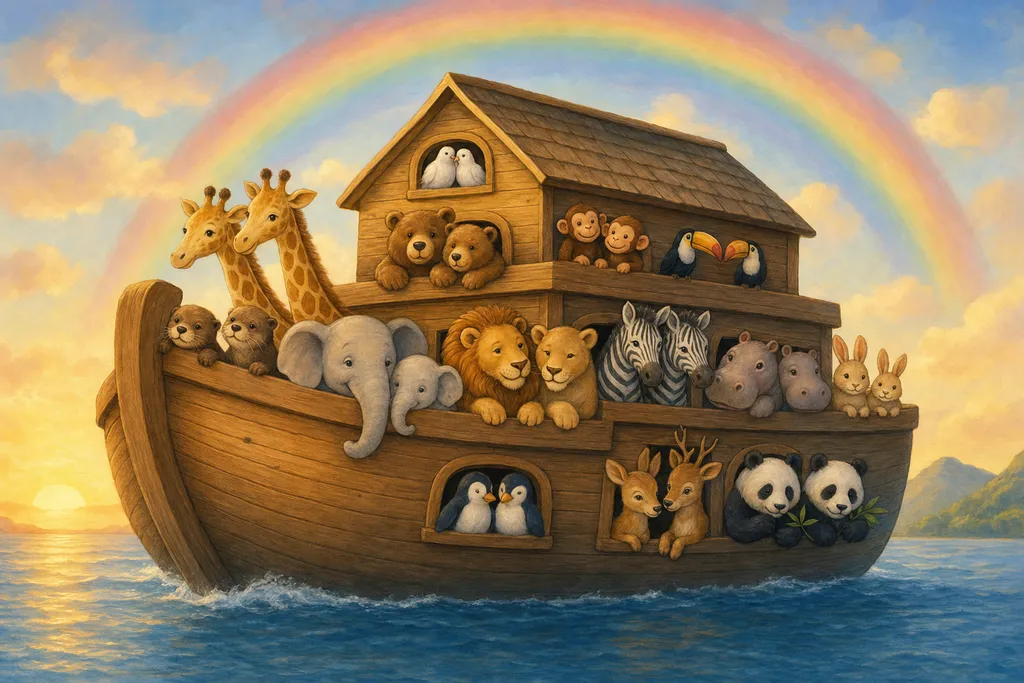
- Story: Noah's Ark
- Big idea: God always keeps his promises.
- Movement: Animals two by two. Pair children up and call out animals for them to walk into the "ark" (a blanket on the floor).
- Craft: Rainbow plates. Children glue strips of colored tissue paper or crepe paper onto half a paper plate.
- Question: "What did God promise Noah?"
Lesson 3: Jesus is my Good Shepherd
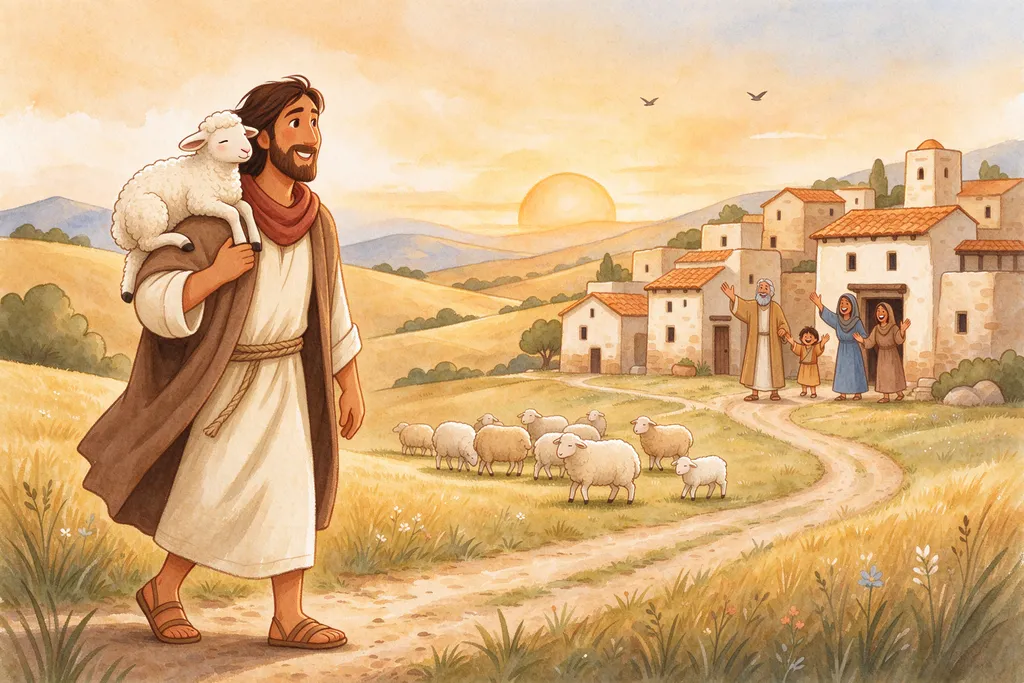
- Story: The Lost Sheep
- Big idea: Jesus loves me and comes to find me.
- Verse: "Yahweh is my shepherd: I shall lack nothing." (Psalm 23:1) Many churches say "The Lord is my shepherd."
- Movement: Hide a toy sheep in the room and let children find it, cheering each time.
- Craft: Cotton-ball sheep with each child's name on it.
- Question: "How did the shepherd feel when he found his sheep?"
Lesson 4: God helps me be brave
- Story: Daniel and the Lions
- Big idea: God is with me when I'm scared.
- Verse: "When I am afraid, I will put my trust in you." (Psalm 56:3)
- Movement: "Sleeping lions." Children lie still like sleeping lions while you try (gently) to make them giggle.
- Craft: Paper plate lion with a mane of torn yellow and orange paper strips.
- Question: "When do you feel scared? Who is with you?"
Every story on our site includes a 15-minute lesson outline, conversation starters and two activities, so you can build a whole term from the preschool Bible stories collection.
Simple crafts that actually work with 3- to 5-year-olds
The best preschool crafts are quick, use few supplies and let children do most of the work themselves. A few that rarely fail:
- Paper plate crafts. Lions, suns, sheep, faces, tambourines (two plates stapled with dried beans inside, taped well).
- Sticker scenes. A printed background (an ark, a manger, a garden) and a sheet of stickers.
- Coloring pages with one extra element to glue on: cotton-ball clouds, tissue-paper flames, a fabric scrap for Joseph's coat. Print free pages from our Bible coloring pages.
- Handprint art. Handprint sheep, handprint palm branches, handprint stars for Abraham.
- Simple puppets. Faces drawn on paper bags or craft sticks for retelling the story.
Tips: pre-cut anything fiddly, use glue sticks rather than liquid glue, write names on everything before you start, and let it be imperfect. The craft is a tool to remember the story, not a product for display.
Transitions, wiggles and tears
Transitions are where classes fall apart. Use the same signals every week: a song to start circle time, a little bell or a clapping pattern to get attention, a clean-up song to end craft time. Preschoolers respond to routine much more than to raised voices.
Expect wiggles. A three-year-old who is wriggling may still be listening. Let them hold a small object, sit on a carpet square, or stand at the back. Build movement into every lesson instead of fighting it.
For the child who won't stop talking, give them a job (holding the picture, passing out crayons). For the child who won't talk at all, let them watch. Participation grows over weeks.
For tears at drop-off, keep goodbyes short, have an inviting activity ready and reassure the parent you'll come and find them if the child doesn't settle. Most children are fine within a few minutes.
For the child with a story about their dog, listen for ten seconds, smile, and say, "I'd love to hear more at snack time!" Then really do listen at snack time.
Pray for your class. Before each Sunday, pray for each child by name. It changes how you see them when they walk in the door.
Safety and practical housekeeping
- Follow your church's child safety policy. Many churches require two approved adults in every classroom, sign-in and sign-out procedures and background checks for volunteers. Ask your children's ministry leader if you're not sure what applies.
- Allergies. Know which children have food allergies before you offer any snack, and check craft supplies too (some play dough contains wheat).
- Choking hazards. Avoid small craft items like beads and small pom-poms with children under three, and supervise closely with older preschoolers.
- Bathroom breaks. Know your church's procedure for taking children to the bathroom.
- Communicate with parents. A quick sentence at pick-up ("Today we learned that God made everything; ask Emma about her favorite animal!") helps parents continue the conversation at home. Some teachers send home the story link so families can read it again.
Helping families take the lesson home
What happens in Sunday school is planted. What happens at home helps it grow. Simple ways to bridge the two:
- Send home the coloring page of the story you taught, with the memory verse written on the back.
- Share the story link in a parent email or church group so families can read it again at bedtime.
- Suggest one question for the car ride home: "What did you learn about Noah today?"
- Point parents to resources like our guides to family devotions with little kids and teaching kids to pray.
Thank you for serving. For many children, their Sunday school teacher is one of the first adults outside their family to tell them that God loves them. That matters more than any craft.
Questions parents ask
Frequently asked questions
How long should a preschool Sunday school lesson be?
Most preschool classes run 45 to 60 minutes, but the Bible story itself should be about 8 to 10 minutes. Break the rest of the time into short blocks of movement, craft, snack and prayer.
What Bible stories are best for preschoolers?
Stories with a clear picture and one simple idea: Creation, Noah's Ark, Baby Moses, David and Goliath, Jonah, the birth of Jesus, the Lost Sheep, Jesus calming the storm and the Easter story. Our preschool collection has gentle retellings of each.
How do I keep preschoolers' attention in Sunday school?
Keep each activity short, use props and actions during the story, build in movement every few minutes and stick to the same routine each week. Ask 'I wonder' questions instead of quiz questions.
What are easy Sunday school crafts for 3-year-olds?
Paper plate crafts, sticker scenes, cotton-ball sheep and coloring pages with one thing to glue on. Pre-cut anything fiddly and use glue sticks.
Do I need teaching experience to lead a preschool class?
No. Warmth, patience and a simple plan matter more than experience. Follow your church's safety policy, prepare one story and one activity, and let the routine do much of the work.