How-to guides
18 No-Prep Bible Games for Kids (Home, Church or Car)
Games are one of the best ways to help a Bible story stick. Here are 18 Bible games that need nothing more than a few household items, each tied to a story your children can read, with notes on which ages they suit best.
By the Biblelings team · Updated
How to use these games
Every game here can be played with things you already have in the house or classroom: cushions, a blanket, a ball, paper, maybe a toy sheep. No printing, no shopping, no laminating.
Each game is tied to a Bible story. The best way to use them is story first, game second: read the story together (every story link below goes to a free illustrated read-aloud), then play the game while the story is fresh. Afterwards, ask one question that connects the two: "Why did the walls fall down?" "How did the shepherd feel when he found the sheep?"
Ages are a guide. Most games work for three- to eight-year-olds with small adjustments: simpler rules for the little ones, a bit of competition or a timer for the older ones.
Games are grouped into active games (for when they need to burn energy), quiet games (for winding down or small spaces) and car and waiting-room games (no equipment at all).
Active games
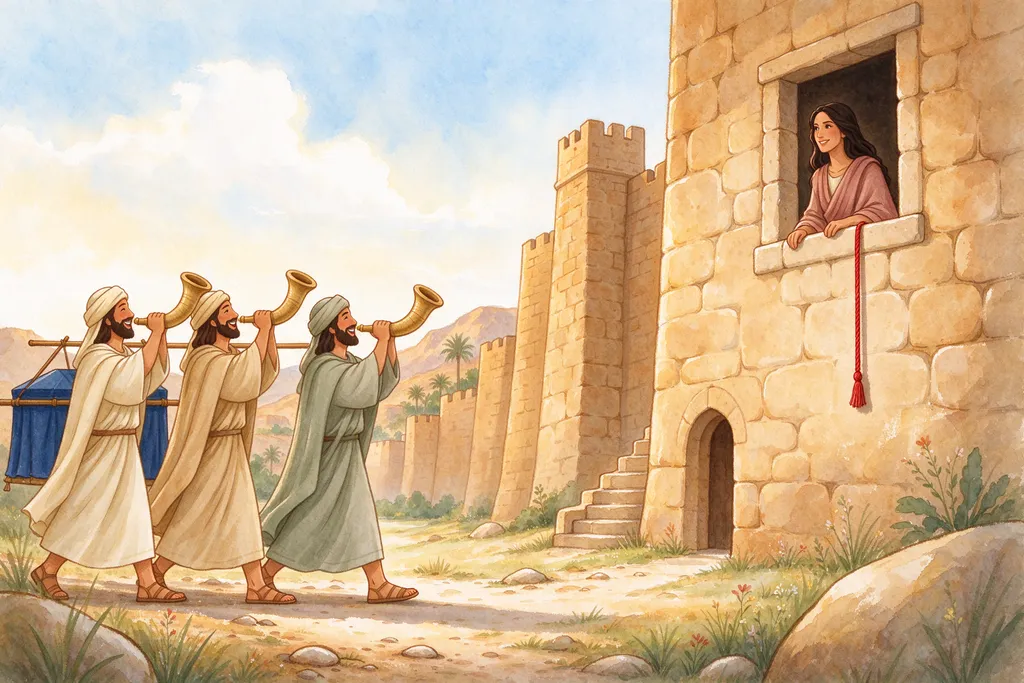
1. The walls of Jericho (ages 3-8) Story: The Walls of Jericho Build a "city wall" from cushions, cardboard boxes or blocks. Children march around it quietly seven times (count out loud together), then on the seventh lap everyone shouts and blows pretend trumpets, and the wall gets knocked down. Rebuild and repeat. Children never tire of this one.
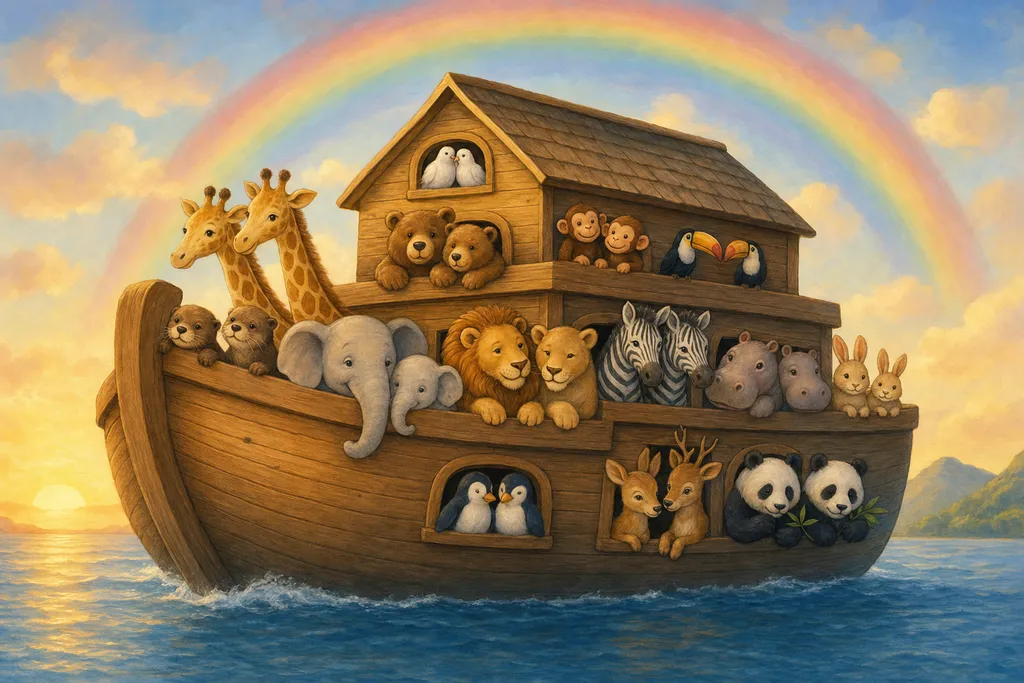
2. Animals two by two (ages 2-6) Story: Noah's Ark Lay a blanket on the floor for the ark. Whisper an animal to each child in pairs. On "Go!" everyone acts out their animal and tries to find their partner without talking. When pairs find each other, they walk into the ark together.
3. Crossing the Red Sea (ages 3-7) Story: Crossing the Red Sea Two adults or older children hold a blanket or sheet low like "water." When the leader says "God made a way!" they lift it high and the children run underneath to the other side before the "water" comes down. Older children can take turns holding the sheet.
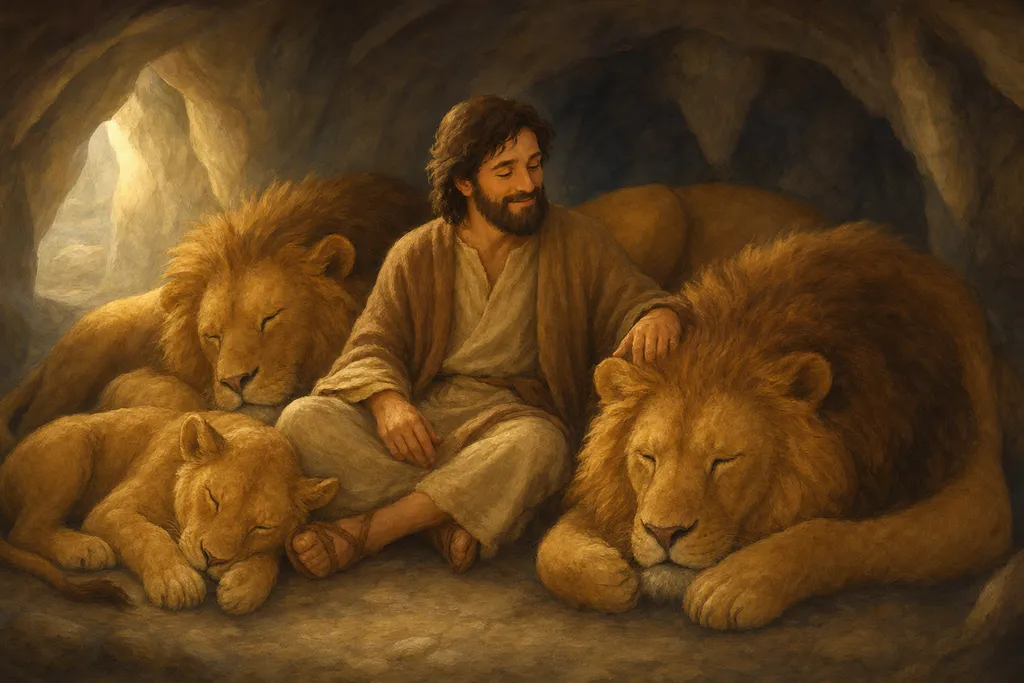
4. Sleeping lions (ages 3-8) Story: Daniel and the Lions Everyone lies down very still as a "sleeping lion." One person is Daniel's angel, walking among the lions and trying to make them move or giggle (no touching). Anyone who moves joins the angel. The last still lion wins, because God kept the lions' mouths shut. A wonderful game for calming down after something busier.
5. David and the giant (ages 3-7) Story: David and Goliath Stack up empty plastic bottles, cups or boxes into a tall "Goliath." Children take turns rolling or throwing a soft ball from a line to knock him down. Five throws each, for David's five smooth stones.
6. Fishers of people (ages 4-8) Story: Jesus Calls the Fishermen A chain-tag game. One child is the "fisher." When they tag someone, the two link arms to make a "net" and catch others together. The net grows until everyone is caught.
7. The Good Samaritan bandage race (ages 4-8) Story: The Good Samaritan In pairs, one child is the "hurt traveler" and the other is the "Samaritan," who wraps the traveler's arm or leg with a roll of toilet paper as a bandage. Gently does it. The pair who finishes most carefully (not fastest) wins. Talk about who in the story stopped to help.
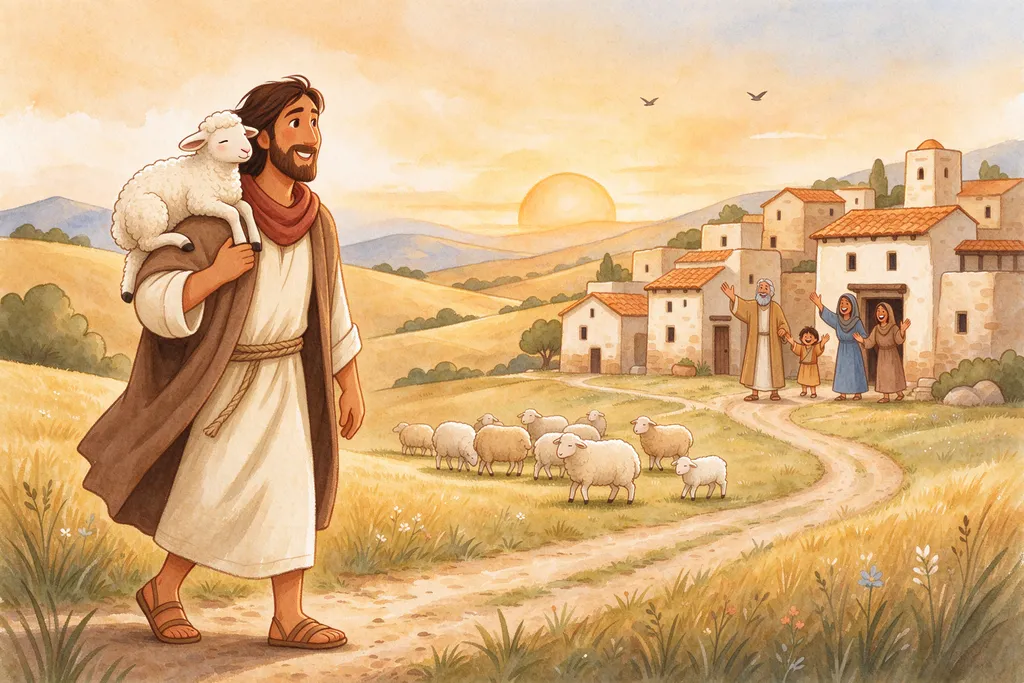
8. Lost sheep hide-and-seek (ages 2-6) Story: The Lost Sheep One person hides a toy sheep (or a sock rolled into a ball) somewhere in the room. Everyone else searches while the hider says "warmer" or "colder." Whoever finds it shouts, "I found my lost sheep!" and everyone cheers, just like in the story.
Quiet games
9. Samuel, Samuel (ages 3-7) Story: Samuel Hears God's Voice One child, "Samuel," lies down with eyes closed. Another child quietly calls "Samuel!" in a whisper. Samuel sits up and says, "Speak, I'm listening," then guesses who called. Swap roles. A sweet, gentle game for winding down before bed.
10. Who am I? (ages 5-8) Stories: any you've read together Think of a Bible person and give one clue at a time: "I had a coat of many colors." "My brothers sold me." "I became a ruler in Egypt." Others guess. With little ones, give big clues and let them answer after the first one. See Joseph's Colorful Coat for that example.
11. Story order line-up (ages 4-8) Story: any longer story, such as Jonah and the Big Fish Each child draws one scene from the story on a sheet of paper (Jonah running away, the storm, the big fish, Nineveh). Mix them up, then work together to put them in order. Younger children can just point to "what happened first?"
12. Building on the rock (ages 3-7) Story: The Wise and Foolish Builders Build two towers with blocks: one on a hard floor or table, one on a cushion or pile of soft blankets. Then make a "storm" by blowing, shaking the cushion or waving a towel. Which house stands? Talk about building our lives on Jesus' words.
13. Moses says (ages 3-6) Story: The Ten Commandments Play "Simon Says" with Bible actions, using "Moses says": "Moses says climb the mountain!" "Moses says hold up the stone tablets!" "Moses says part the sea!" Without "Moses says," don't move. A gentle way to talk about listening carefully to God.
14. The quiet storm (ages 2-6) Story: Jesus Calms the Storm Everyone makes storm noises (patting knees for rain, whooshing for wind, stomping for thunder), getting louder and louder. When the leader stands up and says "Peace! Be still!", everyone stops instantly. The last person to stop becomes the next leader.
Car and waiting-room games (no equipment)
15. Bible I spy (ages 3-8) Spot things you can see out the window that appear in a Bible story: a sheep, a boat, a tree, a star, a donkey, bread, water, a rainbow. Name the story each time: "A boat! Jesus calmed the storm in a boat!"
16. Twenty questions (ages 6-8) One person thinks of a Bible person, animal or object (the big fish, the ark, Zacchaeus' tree). Everyone else asks yes-or-no questions to work it out.
17. Finish the verse (ages 4-8) Start a memory verse your family knows and stop partway: "When I am afraid, I will..." Others finish it. Great for practicing verses from our Bible verses for kids. See also our guide to teaching kids Bible verses.
18. What happened next? (ages 3-8) One person starts telling a Bible story in one sentence. The next person adds the next sentence, and so on around the car. Gently steer it back if it drifts. "Noah built a big boat." "Then the animals came two by two." "Then..."
Bonus games for bigger groups
For Sunday school, VBS or a birthday party, a few games that work well with ten or more children:
- Gideon's trumpets (Gideon and His 300): Divide into groups around the edges of a dark room with flashlights and paper-tube "trumpets." On the signal, everyone shines their light and shouts at once. Simple, loud and memorable.
- Manna collecting (Manna from Heaven): Scatter cotton balls or scrunched white paper around the room. Children collect "manna" in paper cups for a set time, then count together. Talk about how God gave enough for everyone, every day.
- Zacchaeus, come down! (Zacchaeus): One child stands on a sturdy step or chair as "Zacchaeus" (safely, with an adult nearby). The rest walk past in a "crowd." When the leader says "Zacchaeus, come down!", Zacchaeus hops down and joins, and the next child takes a turn.
More group plans in our vacation Bible school at home guide and our Sunday school ideas for preschoolers.
Making games meaningful (not just fun)
Fun is a good enough reason to play. But a few small habits help children connect the game with the story:
- Read first, play second. Even a five-minute story gives the game its meaning.
- Name the connection. "Remember how the walls fell down when God's people obeyed? That's what we're playing!"
- Ask one question afterwards. Keep it open: "What was your favorite part of the story?" "Why do you think God did that?"
- Play favorites again. Children love repetition. The fifth time they play Jericho, they'll be telling you the story.
- Keep competition gentle. For little ones, play cooperative versions where everyone wins together. Save winners and losers for older children who enjoy it.
- End with a short prayer. "Thank you, God, for the story of Daniel. Help us to be brave too. Amen."
For toddlers, simpler games and songs work better; see our ideas for Bible activities for toddlers.
Questions parents ask
Frequently asked questions
What are some easy Bible games for kids?
The Walls of Jericho (march around a cushion wall and knock it down), Sleeping Lions for Daniel, Lost Sheep hide-and-seek, Animals Two by Two for Noah's Ark and Moses Says (a Bible version of Simon Says). All need only household items.
What Bible games work for preschoolers?
Simple, active games tied to a familiar story: Animals Two by Two, Lost Sheep hide-and-seek, the Walls of Jericho and the Quiet Storm. Keep rules simple and play cooperatively so everyone wins together.
What Bible games can we play in the car?
Bible I Spy (spot things from Bible stories out the window), Finish the Verse, Twenty Questions with Bible people and What Happened Next, where you take turns adding one sentence to a Bible story.
How do I connect a game to a Bible lesson?
Read the story first, then play the game while it's fresh, and finish by asking one question that links the two. Naming the connection out loud helps children remember the story behind the game.
Are these games good for Sunday school?
Yes. Most work for groups as well as families. Games like Sleeping Lions and Fishers of People work well with larger groups, and the bonus games are designed for ten or more children.