How-to guides
Vacation Bible School at Home: A Free 5-Day Plan for Kids 3 to 8
No church VBS this summer, or just want to keep the fun going? Here is a complete five-day vacation Bible school you can run at home, in the backyard or with a few neighbor kids, built on our free illustrated Bible stories.
By the Biblelings team · Updated
What VBS at home looks like
Vacation Bible school is a week of Bible stories, songs, crafts, games and snacks, usually run by churches in the summer. Children love it because it feels like a party with a purpose. You can capture most of that magic at home with a little planning and no special curriculum.
This plan gives you five themed days, each about 90 minutes to two hours long. Every day follows the same rhythm, which helps young children settle in and lets you prepare quickly. It works for one child, a family of siblings or a "backyard Bible club" with a handful of neighbor kids.
The big idea for the week: God is with me.
- Day 1: God made me.
- Day 2: God is with me when I'm scared.
- Day 3: God takes care of me.
- Day 4: Jesus finds me.
- Day 5: Jesus is alive!
By Friday, children will have heard five key stories, learned five short verses and made a week's worth of crafts to show off.
A daily schedule you can repeat
Use the same schedule all five days. Times are a guide for ages 3 to 8; shorten everything for younger children.
- Welcome and song (10 minutes). Greet each child by name, put on a name sticker and sing a favorite song or two. Simple, well-known songs like "Jesus Loves Me" and "This Little Light of Mine" work well.
- Bible story (15 minutes). Read the day's story aloud from our site, showing the illustration. Ask the "ask together" question at the end of each chapter.
- Memory verse (5 minutes). Say the day's verse with actions. Repeat it three times, getting quieter or louder each time.
- Craft (20 minutes). A simple craft tied to the story.
- Snack (15 minutes). A themed snack, with a short thank-you prayer first.
- Game (20 minutes). An active game, outside if possible.
- Closing (10 minutes). Review the verse, color the day's coloring page if there's time, and pray together.
Tip: make a simple chart with a picture for each part of the day. Pre-readers love moving a clothespin down the chart to see what's next.
Before the week: what to gather
General supplies: paper plates, construction paper, crayons and markers, glue sticks, safety scissors, tape, cotton balls, paper cups, a large sheet or blanket, a bucket, a few balls, a speaker for music, name stickers and a folder or bag for each child's crafts.
Printables: each day's coloring page (free from our coloring pages) and the day's verse printed in large letters.
Snack shopping list: fruit (including bananas and berries), crackers, small rolls, fish-shaped crackers, cheese, pretzel sticks, whipped cream or yogurt, and juice. Check for allergies with every family before the week begins, and swap foods as needed.
For a group: if you're inviting neighbor children, ask parents for a contact number and any allergy or medical information, keep at least two adults present, and make sure every family knows the start and finish times.
Day 1: God made me
Story: The Creation Story
Memory verse: "In the beginning, God created the heavens and the earth." (Genesis 1:1) Actions: point up for "heavens," down for "earth," and spread arms wide for "created."
Craft: creation plates. Divide a paper plate into sections with a marker. In each section, children draw or glue something God made: sun, water, plants, animals, people. Little ones can use stickers or cut-out pictures.
Snack: creation snack plate. A little of everything God made: a "sun" (orange slice), "plants" (cucumber or celery), "fish" (fish-shaped crackers). Before eating, ask the children to name who made each one.
Game: animal charades. Call out animals God made and everyone acts them out. For older children, let them choose an animal for others to guess.
Closing question: "What's your favorite thing God made?"
Prayer: Thank you, God, for making the whole world, and for making me. Amen.
Day 2: God is with me when I'm scared
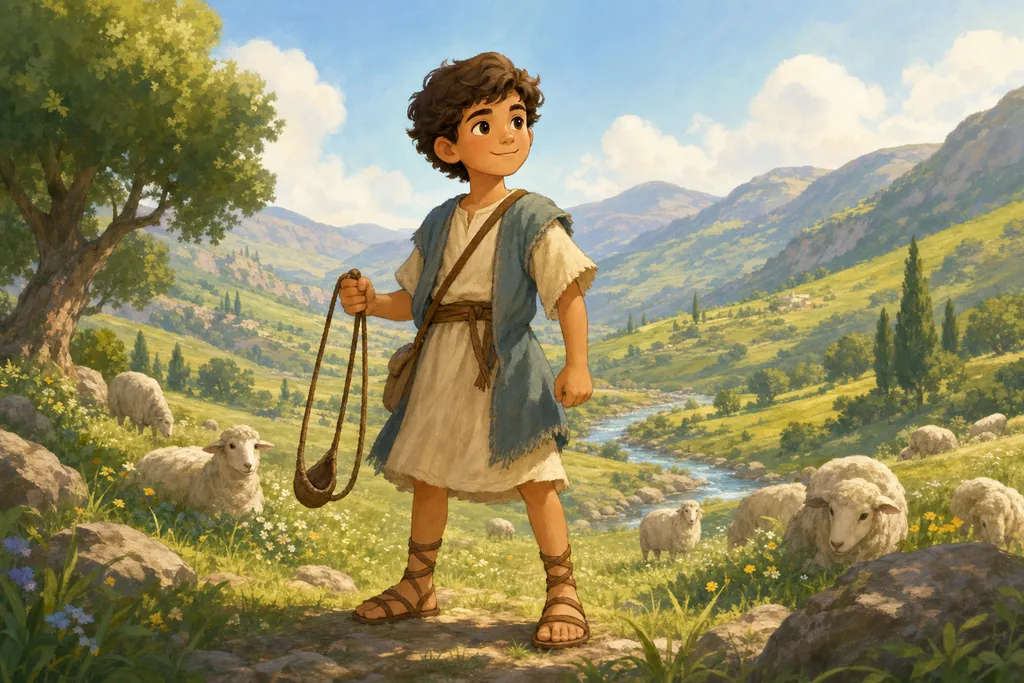
Story: David and Goliath (for children under four, use Jesus Calms the Storm instead).
Memory verse: "When I am afraid, I will put my trust in you." (Psalm 56:3) Actions: hug yourself on "afraid," then point up on "you."
Craft: David's slingshot pouch. Cut a small rectangle of felt or paper, punch a hole at each end and thread yarn through. Each child chooses five "smooth stones" (cotton balls or crumpled paper balls) to keep in their pouch. Talk about how David trusted God, not his size.
Snack: five smooth stones. Five grapes (cut lengthways for little ones), five cheese cubes or five round crackers per child.
Game: Goliath toss. Draw a big, friendly giant on a large sheet of cardboard or paper taped to a wall or fence. Children take turns gently tossing cotton balls or soft balls at it from a line. Cheer every throw.
Closing question: "What's something that feels big and scary to you? How can God help?"
Prayer: Dear God, when I feel scared, help me to remember you are with me. Amen.
Find more stories for this theme in our Bible stories about courage.
Day 3: God takes care of me
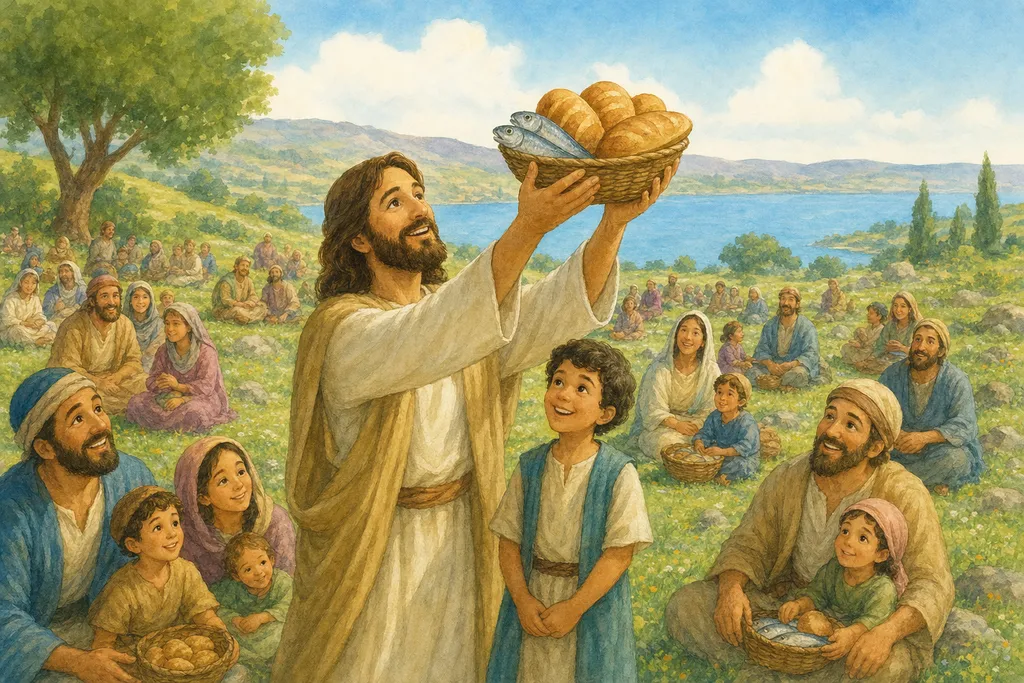
Story: Feeding the Five Thousand
Memory verse: "casting all your worries on him, because he cares for you." (1 Peter 5:7) For little ones, use just the end: "He cares for you." Actions: throw your hands up on "casting," then hug yourself on "cares for you."
Craft: a lunch basket. Fold a paper plate in half and staple the sides to make a basket. Children color or cut out five loaves and two fish and put them in their basket.
Snack: loaves and fishes. Small rolls and fish-shaped crackers. Before eating, let one child "give thanks" like Jesus did, then share the food out. Talk about how one boy's small lunch fed thousands of people.
Game: fill the basket. Scatter balled-up paper "loaves and fish" across the yard or room. On "go," children collect them and race them back to a basket or bucket. Then count together: did we collect more than we started with?
Service idea: collect a few non-perishable foods to give to a local food bank at the end of the week.
Closing question: "What are some ways God takes care of you?"
Prayer: Thank you, God, for taking care of me every day. Help me to share with others. Amen.
Day 4: Jesus finds me
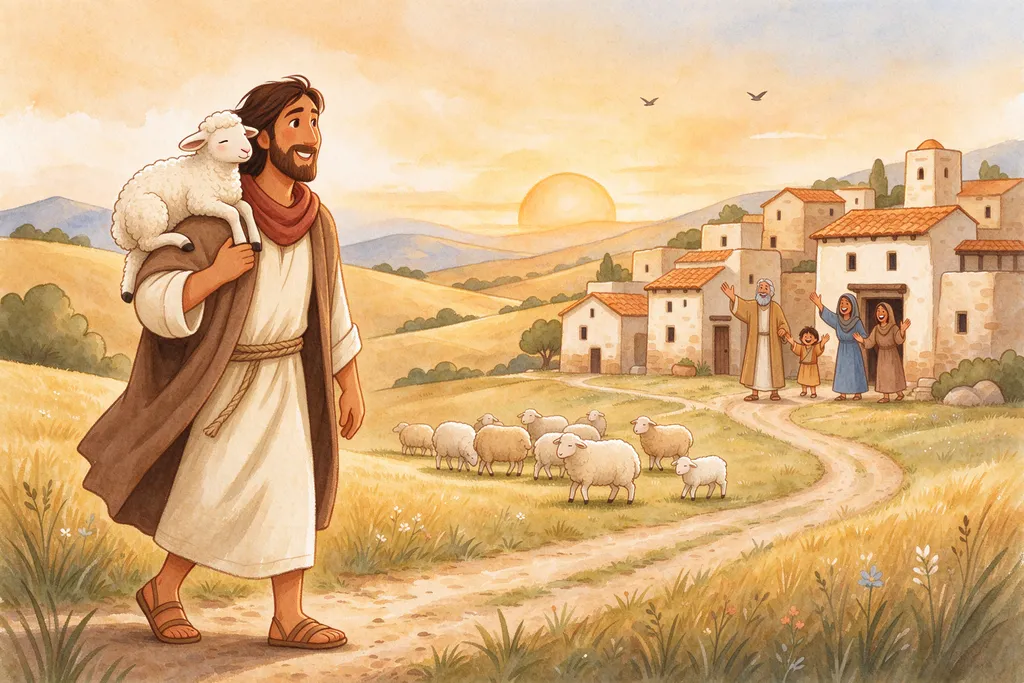
Story: The Lost Sheep
Memory verse: "We love him, because he first loved us." (1 John 4:19) Actions: cross your arms over your chest on "love," point up on "him," point to yourself on "us."
Craft: cotton-ball sheep. Draw a simple cloud shape on paper (or use a paper plate). Children glue cotton balls all over it, then add a black paper head and legs. Write each child's name on their sheep: Jesus knows each one by name.
Snack: sheep snack. Banana slices or crackers with a swirl of whipped cream or yogurt "wool," or a handful of popcorn (for children over four).
Game: find the lost sheep. One adult hides a small toy sheep (or a cotton-ball sheep from the craft). Children search while the hider says "warmer" or "colder." When it's found, everyone cheers, just like the shepherd celebrated. Play several rounds, letting children take turns hiding it.
Closing question: "How do you think the sheep felt when the shepherd found it? How does Jesus feel about you?"
Prayer: Jesus, thank you for being my Good Shepherd. Thank you that you always come to find me. Amen.
For a companion story, read The Good Shepherd.
Day 5: Jesus is alive!
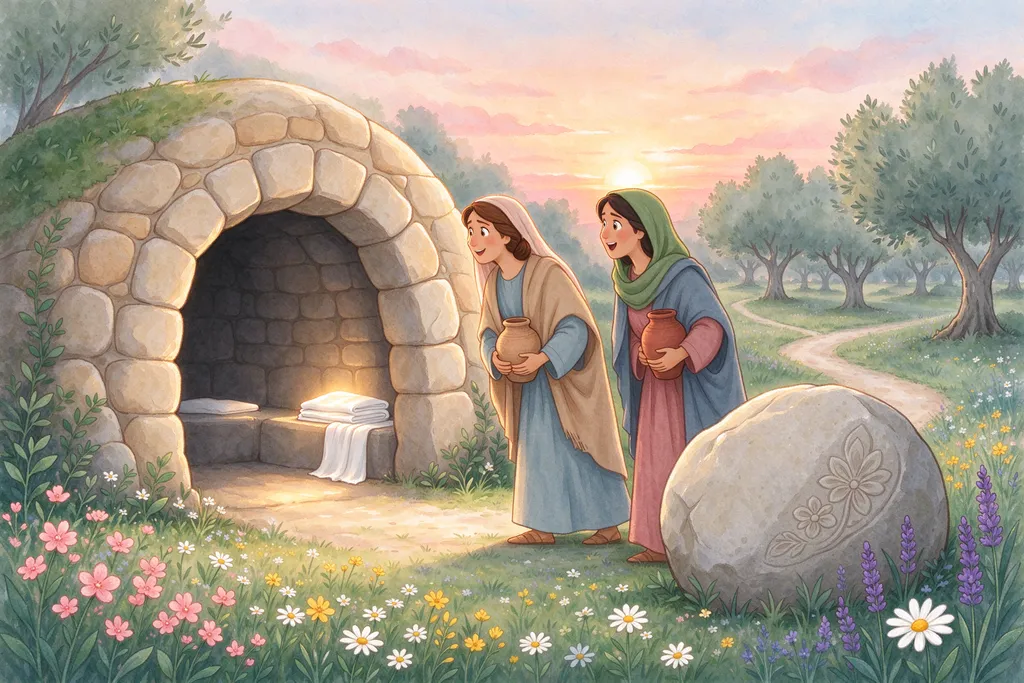
Story: Jesus Is Risen. (For children under five, read the last two chapters and summarize the beginning simply: "Jesus died, and his friends were very sad. But then...")
Memory verse: "He isn’t here, but is risen." (from Luke 24:6) Actions: shake your head on "isn't here," then jump and throw your arms up on "risen!"
Craft: empty tomb. Fold a paper plate in half to make a cave shape and color it gray. Cut a door in the front. Make a "stone" from a smaller paper circle, attach it with a paper fastener so it rolls away, and draw a folded cloth inside.
Snack: celebration party. It's the last day, so make it a party: fruit, juice and a few cupcakes or cookies. Sing a celebration song together before eating.
Game: He is risen relay. Children race to a bucket, pull out a slip of paper with a picture (cross, tomb, stone, angel, women, Jesus) and race back. When all the pictures are collected, the team puts them in story order.
Family showcase: invite parents to the last 20 minutes. Children can show their crafts, say all five memory verses and sing their favorite song.
Prayer: Jesus, you are alive! Thank you for loving us and being with us always. Amen.
Tips for a happy week
- Don't overprepare. Children remember the story, the snack and the game. A perfect craft matters far less than a happy adult.
- Keep stories front and center. Read the story with the picture visible, and let children retell it in their own words the next day.
- Adapt for ages. Toddlers can do a shortened version (story, snack, a song and a short game). Older children can help lead games and read the verse aloud.
- Make a take-home folder. Send home each day's craft, verse and coloring page so parents can continue the conversation.
- Follow up after the week. Keep reading a story a day. Our preschool Bible stories and our guide to family devotions with little kids are good next steps. For more game ideas, see our list of Bible games for kids.
Questions parents ask
Frequently asked questions
How do you do VBS at home?
Pick five themes and a Bible story for each day, then follow the same simple schedule daily: welcome song, story, memory verse, craft, snack, game and closing prayer. About 90 minutes to two hours a day is plenty for ages 3 to 8.
What ages is this VBS plan for?
It's written for children about three to eight. For toddlers, shorten each part and focus on the story, snack and songs. Older children can help lead games and read verses aloud.
Do I need to buy a VBS curriculum?
No. This plan uses free Bible stories, coloring pages and simple household supplies. Packaged VBS programs can be fun, but they aren't necessary for a great week at home.
Can I run this as a backyard Bible club for neighbor kids?
Yes. Get each parent's permission and contact details, ask about allergies and medical needs, keep at least two adults present, and agree start and finish times. Many families find a backyard club a friendly way to get to know their neighbors.
What are good VBS snacks?
Snacks that tie into the day's story work best: fish crackers and rolls for the feeding of the five thousand, five grapes or cheese cubes for David's five stones, or banana slices with whipped-cream wool for the lost sheep. Always check allergies first.