The Prodigal Son Bible Story for Kids
Jesus told a story about a son who ran far from home and a father who never stopped watching for him. When the son came back, the father ran to meet him with open arms.
Luke 15:1–2, 11–32Retold by the Biblelings teamUpdated
Read aloud together
The Story of The Prodigal Son
Chapter 1: A son who wanted to go
Many people came to listen to Jesus. Some of them had done a lot of wrong things, and everyone knew it. Tax collectors came. People who had broken God’s rules came. And Jesus welcomed them all.
Some religious leaders did not like that one bit. They grumbled and muttered. “This man welcomes sinners,” they said, “and he even eats with them!”
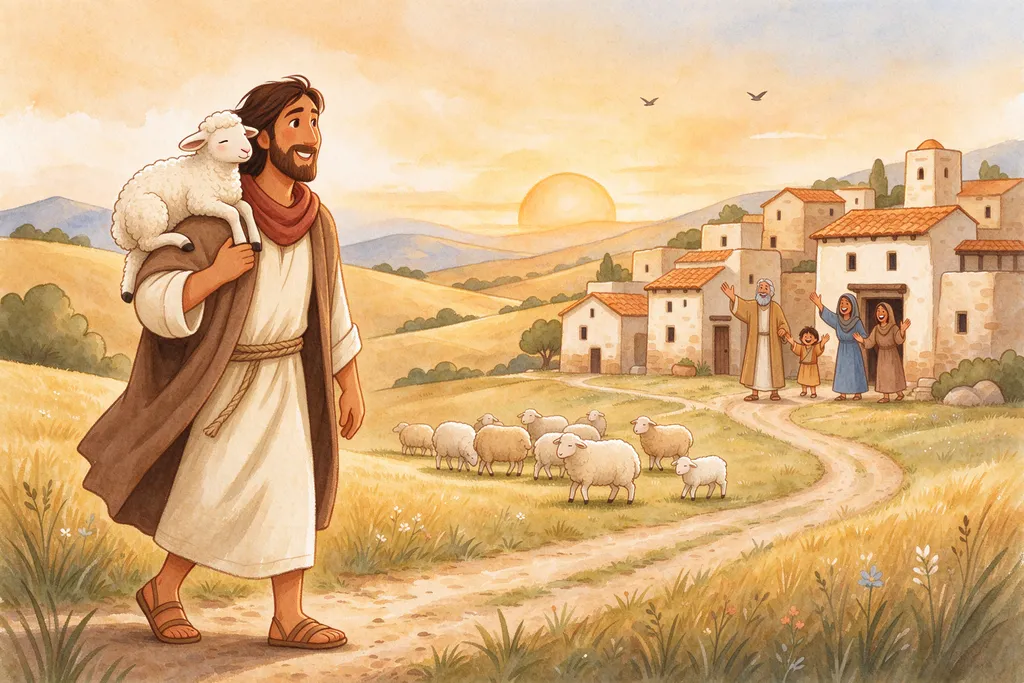
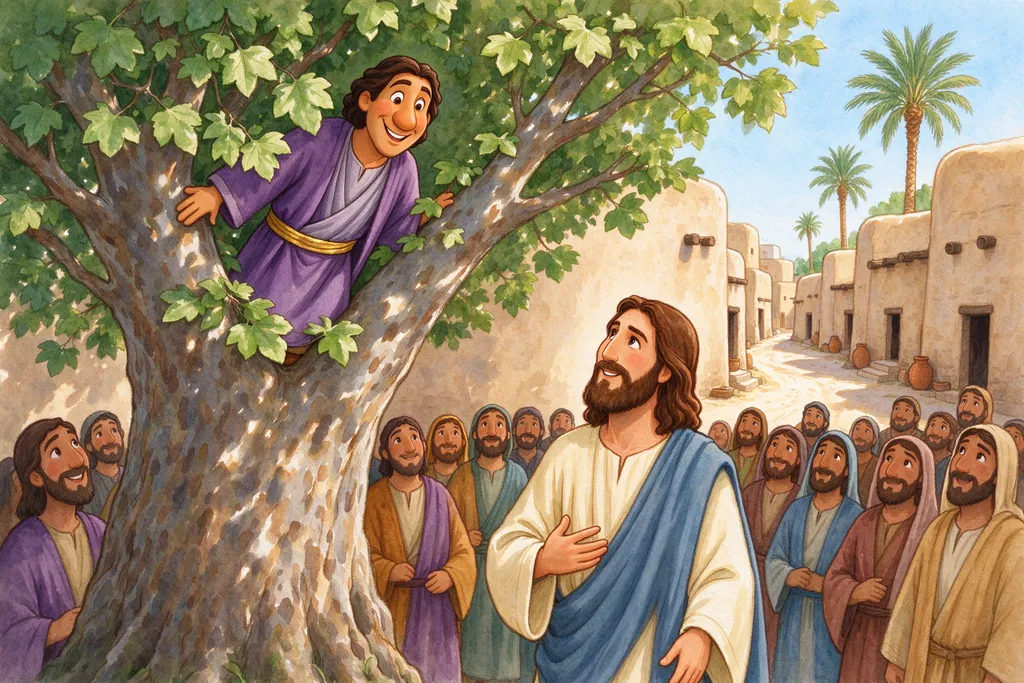
So Jesus told them stories. He told about a shepherd who found his one lost sheep, and about a woman who found her one lost coin. Then he told them a story about something even more precious that was lost.
“There was a man who had two sons,” Jesus said. One day the younger son came to his father. “Father,” he said, “give me my share of everything that will be mine.”
That was a hard thing to ask. But the father divided what he had between his two sons. Not many days later, the younger son packed up everything he owned. He walked away from home, down the long road, to a country far, far away. There he spent all his money on foolish, wasteful living, until there was nothing left at all.
Chapter 2: Hungry and far from home
Just when the son’s money ran out, a terrible famine came to that land. A famine means there is not enough food. The crops would not grow, and the shelves were empty. People were hungry, and so was he.
The son found a job with a man who sent him out into the fields to feed pigs. All day long he tipped out food for the snorting, snuffling pigs. His own tummy rumbled and rumbled. He was so hungry that he wished he could eat the pods the pigs were eating. But no one gave him anything.
Then, one day, out in that muddy field, the son came to his senses. He thought about home. He thought about his father’s house, and the warm bread, and the workers who were always fed. “My father’s hired workers have more than enough bread,” he said to himself, “and here I am, dying of hunger!”
“I will get up and go to my father,” he decided. “I will tell him, ‘Father, I have sinned against heaven and against you. I don’t deserve to be called your son anymore. Please let me be one of your hired workers.’” He said the words over and over, so he would not forget them.
So he got up, and he started the long walk home.
Chapter 3: The father runs
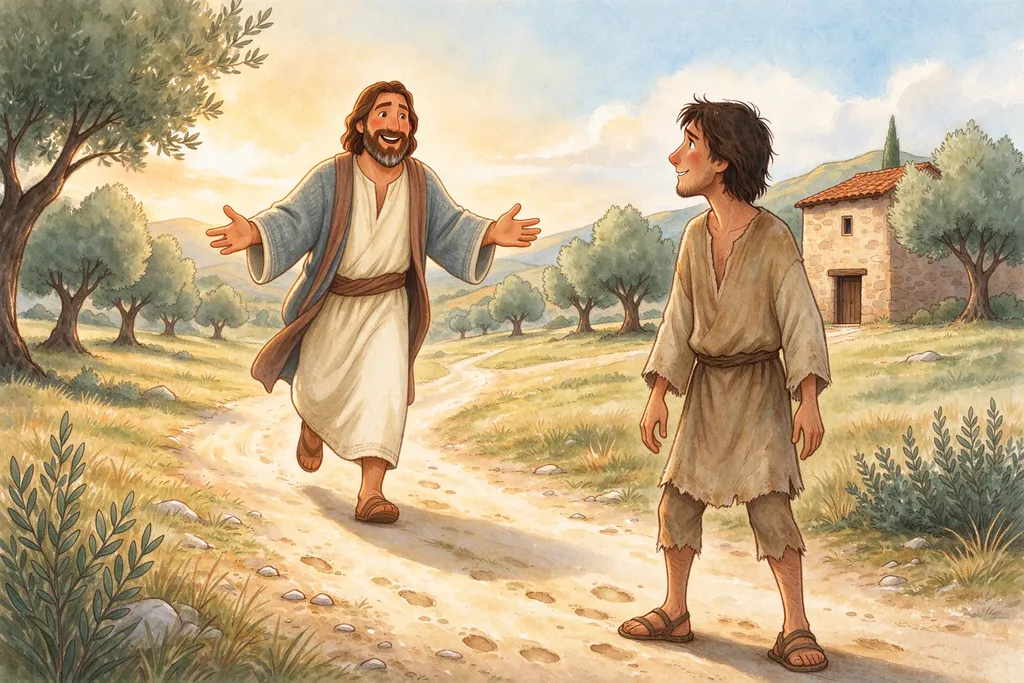
The road home was long and dusty. Step after step, the son walked, practicing his words. But while he was still far away, his father saw him coming. The father did not wait at the door. He did not fold his arms or frown. His heart was full of love and kindness for his son, and he ran! He ran down the road, threw his arms around his son, and kissed him.
The son began to say the words he had practiced. “Father, I have sinned against heaven and against you. I don’t deserve to be called your son anymore.”
But the father called to his servants. “Quick! Bring out the best robe and put it on him. Put a ring on his finger and sandals on his feet. Bring the fattened calf, and let’s have a feast and celebrate!”
The son had come home hoping to be one of the hired workers. Instead, his father dressed him in the finest robe and welcomed him as his own dear son. The son never even got to ask to be a worker. His father was simply too glad to have him back.
“This son of mine was dead, and is alive again,” the father said. “He was lost, and is found.” And the whole house began to celebrate, with food and music and dancing.
Chapter 4: The older brother
Now the older son had been out working in the field. As he came near the house, he heard music and dancing. “What is going on?” he asked one of the servants.
“Your brother has come home,” the servant said, “and your father has prepared the fattened calf, because he has him back safe and well.” The older brother was angry. He stood outside with his arms crossed and would not go in. So his father came out to him and gently begged him to come inside.
“Look,” said the older son, “all these years I have worked for you. I never disobeyed you. But you never gave me even a young goat to have a party with my friends. Yet when this son of yours comes home after wasting your money, you have a feast for him!”
“My son,” the father said softly, “you are always with me, and everything I have is yours. But we had to celebrate and be glad. This brother of yours was dead, and is alive again. He was lost, and is found.”
Jesus ended his story there. He wanted everyone listening to know what God is like: a Father who watches the road, runs to welcome people home, and invites everyone in to share the joy.
From the Bible itself
Read it in the Bible
This retelling follows Luke 15:1–2, 11–32. Read the passage alongside it with older children, and choose this memory verse to learn together this week.
Memory verse
“for this, my son, was dead, and is alive again. He was lost, and is found. They began to celebrate.”

Free printable
The Prodigal Son coloring page
Print it for quiet time after the story. Bold, simple lines for little hands, no sign-up needed.
Print the coloring pageTeaching this? Free lesson plan and printables
- Free lesson plan →45 minutes for Sunday school or home
- Word search and verse cards →Print-ready, with an answer key
People in this story: Who was Jesus?
The lesson, in one breath
The big idea
God runs to welcome us home.
A prayer to say together
Dear God, thank you that you are like the loving father in Jesus’ story. Thank you that you forgive us when we do wrong and come back to you. Help me to be glad when others come home to you too. Amen.
Conversation starters
Talk about it together
- 1Have you ever said sorry and been hugged instead of scolded? How did that feel?
- 2Why do you think the father ran instead of waiting?
- 3Who do you feel like in the story: the younger son, the older son, or the father?
- 4Why was the older brother upset? Was he right to feel that way?
- 5What does this story tell us about what God is like?
For home, homeschool and Sunday school
Teach The Prodigal Son in 15 minutes
Goal
Children will understand that God, like the father in Jesus’ story, lovingly welcomes people who turn back to him, and that we can be glad when others are welcomed too.
- 1 · Open
(3 minutes) Hide a small object before class. Tell the children something precious is lost, and let them hunt for it. When it is found, celebrate together. Say: “Jesus told a story about something much more precious that was lost: a son.”
- 2 · Talk
- (6 minutes) Read the story aloud, pausing after each chapter for the ask-together question.
- What did the younger son do with his father’s money? How did things turn out for him?
- What did the father do when he saw his son coming? Why is it surprising that he ran?
- How did the older brother feel? Have you ever felt left out when someone else got a celebration?
- Jesus told this story to people who were grumbling. What do you think he wanted them to learn about God?
- 3 · Close
(3 minutes) Have the children open their arms wide like the father. Say the memory verse together, then pray the story prayer. Remind them: God is always glad when we come back to him.
Teaching a full class? Get the free 45-minute lesson plan with a craft, game and take-home note.
Hands-on
Activities for home
About 15 minutes
Welcome-home paper robe and ring
You will need
- An old pillowcase or a large paper grocery bag
- Crayons or markers
- Scissors (grown-up help)
- A pipe cleaner or strip of foil
Steps
- Cut a head hole and two arm holes in the bag or pillowcase to make a simple robe.
- Let your child decorate the robe with bright colors. This is the “best robe” the father gave.
- Twist a pipe cleaner or a strip of foil into a ring that fits a finger.
- Act out the story: one person walks home slowly, the other runs to meet them and puts on the robe and ring.
- Swap roles and talk about how it feels to be welcomed.
About 10 minutes
Lost and found hunt
You will need
- A small toy or paper heart
- A room to hide it in
Steps
- One person hides the toy or paper heart somewhere in the room.
- Everyone else searches. Give warmer and colder clues if needed.
- When it is found, everyone cheers and shouts, “It was lost, and now it is found!”
- Talk together: the father was even happier to find his son than we are to find a toy.
The things parents wonder
Questions parents ask about The Prodigal Son
What does “prodigal” mean?
“Prodigal” is an old word for someone who spends money in a wasteful, careless way. The word isn’t in the Bible text itself; it’s a traditional name for the parable. Some people call it “The Lost Son” or “The Loving Father,” since the father’s welcome is really the heart of the story.
Is the prodigal son a true story?
It’s a parable, a story Jesus made up to teach something true about God. The people in it aren’t meant to be real historical people. Jesus told it, along with the stories of the lost sheep and the lost coin, to people who were grumbling that he welcomed sinners (Luke 15:1–2).
What does the father mean when he says his son “was dead”?
The son wasn’t actually dead. The father means that it felt as if he had lost his son forever, and now he has him back. With young children, you can say, “The father missed his son so much it was like he was gone forever. Now he’s home!”
How do I explain this story to a 4-year-old?
Keep it simple: a boy went far away and made unwise choices. He got hungry and sad and decided to go home and say sorry. His dad saw him coming and ran to hug him. Then say, “God is like that dad. When we say sorry, he is so happy to hug us.”
Was the older brother wrong?
Jesus doesn’t say exactly what happened next, and the story ends with the father’s invitation. The older brother had worked hard, and his feelings make sense. But the father gently invites him to share in the joy. Many Bible teachers think Jesus was speaking to the grumbling leaders through the older brother: God’s welcome is for them too, if they will come in.
Does this story mean it doesn’t matter what we do?
No. The son’s choices led him into real trouble, and he came home sorry. The story shows that God’s love is bigger than our mistakes, and that he is ready to forgive anyone who turns back to him.