Faith at home
Mealtime Prayers for Kids: Short Graces for the Family Table
Saying grace is often the very first prayer a child learns. Here are short, original mealtime prayers for every age, the traditional graces many churches still use, and practical tips for making grace a happy habit instead of a hungry wait.
By the Biblelings team · Updated
Why saying grace matters for children
Mealtimes are the easiest place in the whole day to start praying with children. Meals happen every day, the family is already gathered, and there is something obvious and good to be thankful for right there on the plate.
A short grace teaches children several big ideas without a single lecture:
- Good things come from God. Every meal is a gift, even an ordinary Tuesday pasta.
- We stop and say thank you. Gratitude is learned by practice.
- God is part of everyday life, not just Sundays.
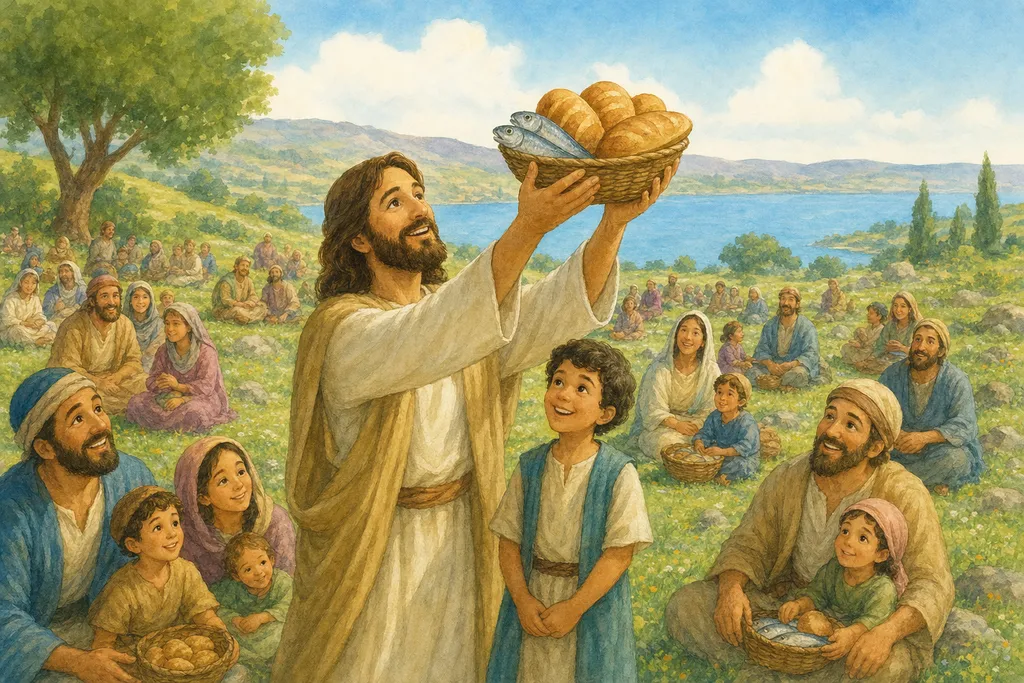
Jesus himself gave thanks before eating. When he fed the crowd with five loaves and two fish, "Jesus took the loaves; and having given thanks, he distributed to the disciples, and the disciples to those who were sitting down; likewise also of the fish as much as they desired." (John 6:11) Read the whole story together in Feeding the Five Thousand, then point out that when your family says grace, you are doing what Jesus did.
One-line graces for toddlers (ages 1 to 3)
For toddlers, grace must be short, because a hungry two-year-old is not a patient two-year-old. Pick one and say it the same way every meal so they learn it by heart.
- Thank you, God, for my food. Amen.
- Thank you, God, for yummy food and for my family. Amen.
- God is good, and God gives food. Thank you, God! Amen.
- Thank you for the [banana / pasta / soup]. Amen. (Naming the actual food helps toddlers connect the words to something real.)
Make it physical. Toddlers learn with their bodies. Try holding hands around the table, folding hands, or a little ritual like raising arms high on "Thank you, God!" and bringing them down on "Amen." Keep it the same every time.
Mealtime prayers for preschoolers (ages 3 to 5)
Preschoolers can learn a slightly longer grace, and they love rhyme and rhythm. These are short enough to learn in a week of dinners.
A rhyming grace For the food upon our plate, for our friends and family, thank you, God, for you are great, and you take care of me. Amen.
A thank-you-for-the-helpers grace Thank you, God, for this food, for the farmers who grew it, the drivers who brought it and the hands that made it. Amen.
A sharing grace Dear God, thank you for our food. Please help people who are hungry tonight, and help us to share. Amen.
A fill-in grace Thank you, God, for __ and __. Amen. Let your child choose what to thank God for, which is often not the food. Expect "my new shoes" or "the rain."
Mealtime prayers for kids ages 5 to 8
Older children can lead grace themselves and enjoy praying in their own words. A few prayers to give them a start:
A grace for the day Dear God, thank you for this food and for this day. Thank you for the people around this table. Please bless this meal and help it make us strong, so we can do good things for you. In Jesus' name, Amen.
A grace for busy days Lord, thank you that we could all sit down together. Thank you for this food. Help us to listen to each other and enjoy this time. Amen.
A grace that remembers others Thank you, God, for this meal. We pray for people who don't have enough to eat today. Show us how we can help. Amen.
Take turns leading. Give each family member a night of the week to lead grace. Children who know it is their turn on Thursday will often plan their prayer in advance, which is a lovely thing to watch.
Traditional graces many families still use
Learning a traditional grace connects children with Christians across generations, and gives them words they can say anywhere. These are old, public-domain prayers that have been said at family tables for centuries.
"God is great" (a children's grace prayed in many American homes) God is great, God is good, let us thank him for our food. Amen.
"Come, Lord Jesus" (a traditional Lutheran table prayer, also widely used by other Christians) Come, Lord Jesus, be our guest, and let these gifts to us be blessed. Amen.
"Bless us, O Lord" (the traditional Catholic grace before meals) Bless us, O Lord, and these thy gifts, which we are about to receive from thy bounty, through Christ our Lord. Amen.
The Doxology (written by Thomas Ken in the 1600s, sung as a grace in many Protestant homes and churches) Praise God, from whom all blessings flow; Praise Him, all creatures here below; Praise Him above, ye heavenly host; Praise Father, Son, and Holy Ghost.
A psalm as call-and-response. One person says, "Give thanks to Yahweh, for he is good;" and everyone answers, "for his loving kindness endures forever." (Psalm 136:1) Many families say "the Lord" in place of "Yahweh." Psalm 136 repeats that answer in every verse, so it was made for joining in.
You may also know the "Johnny Appleseed" grace that many families sing. We haven't printed it here because we couldn't confirm that the well-known sung version is in the public domain, but if your family already sings it, keep going.
Sung graces children love
Singing grace solves a lot of problems. Children who mumble a spoken prayer will belt out a song, and a sung grace has a clear beginning and end, which helps hungry little ones wait.
A few easy ways to sing grace:
- Sing the Doxology (above). Its tune, often called "Old Hundredth," is easy to learn.
- Put a grace to a tune they already know. "God is great, God is good" fits nicely to the first line of "Twinkle, Twinkle, Little Star," and "Thank you, God, for my food" can be sung to "Frère Jacques" as a round.
- Make up your own. Pick a familiar nursery tune and let your children fit new words to it. A grace your children wrote themselves will get sung with gusto.
Tips for grace with real families
Pray before anyone starts eating, but keep it brief. Grace that is too long becomes something children dread. Ten to twenty seconds is plenty with little ones.
For very hungry toddlers, put a few bites on their tray first, then pray. It is better than a prayer said over loud crying.
At restaurants, a quick, quiet grace with heads bowed or hands held is enough. Children learn that thanking God isn't something we hide, but it isn't a performance either.
At school or daycare, teach your child a silent grace they can say in their head: "Thank you, God, for my lunch. Amen." Tuck a note in their lunchbox now and then that says "Did you remember to say thank you to God?"
With guests, including friends of other faiths or none, a short, warm grace is usually welcomed. You might say, "In our family we say a quick thank-you before we eat," and keep it simple.
When kids get silly, stay relaxed. A giggle during grace is not a crisis. Laugh, say "Let's try again," and keep it short.
Use one meal for a longer conversation. Some families keep breakfast and lunch graces short and use dinner for a "highs and lows" round, then a prayer that includes everyone's news. Our guide to family devotions with little kids has more ideas for the dinner table.
Bible verses to read at the table
A verse read before or after grace turns mealtime into a tiny devotion. These are good ones to say together, one per week:
- "Give us today our daily bread." (Matthew 6:11)
- "The eyes of all wait for you. You give them their food in due season. You open your hand, and satisfy the desire of every living thing." (Psalm 145:15-16)
- "Whether therefore you eat, or drink, or whatever you do, do all to the glory of God." (1 Corinthians 10:31)
- "Give thanks to Yahweh, for he is good; for his loving kindness endures forever." (Psalm 136:1)
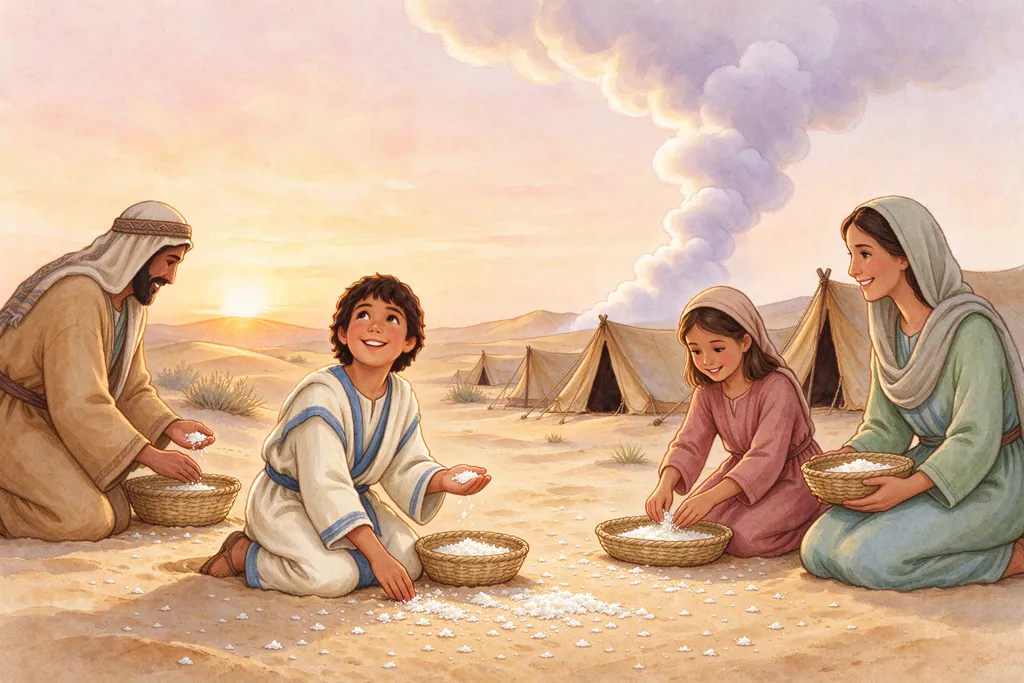
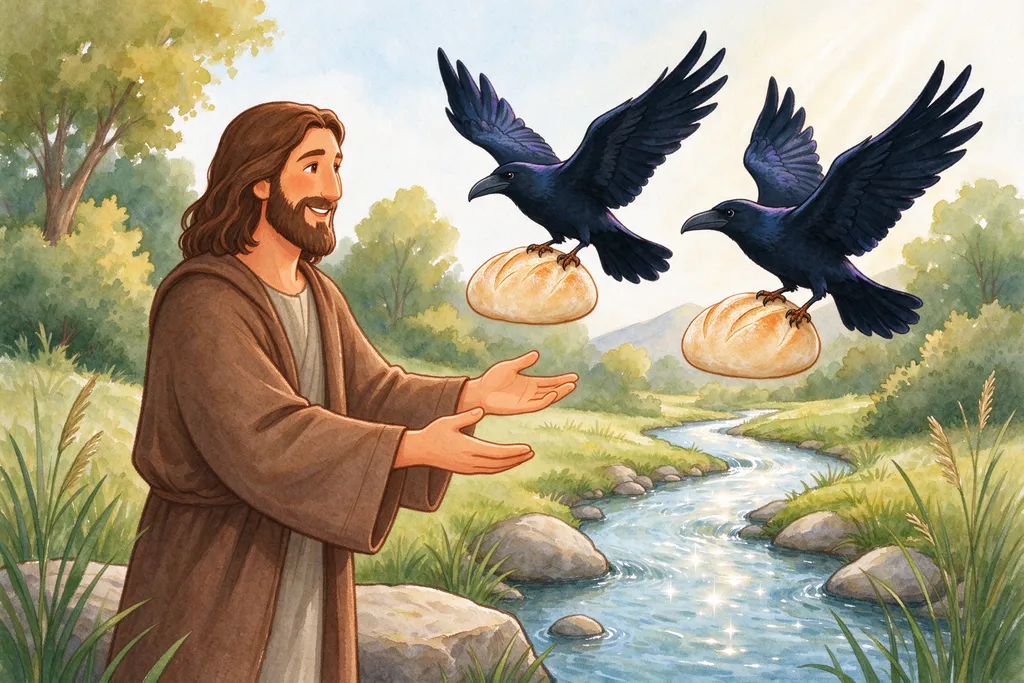
You can also read a Bible story about food: Manna from Heaven, where God gave his people bread every morning; Elijah and the Ravens, where birds brought Elijah his dinner; or The Last Supper, the meal Jesus shared with his friends. For more, browse our Bible verses about thankfulness.
Questions parents ask
Frequently asked questions
What is a short grace a child can say before meals?
Something like "Thank you, God, for my food. Amen" is perfect for toddlers. Preschoolers can learn a short rhyming grace such as "God is great, God is good, let us thank him for our food. Amen."
At what age should children start saying grace?
You can say grace with a baby in a high chair from the very start. Most toddlers can say "Amen" by two, and many can say a one-line grace on their own by three.
Should we hold hands when we pray at meals?
It's up to your family. Holding hands helps little ones stay still and feel included, and gives grace a clear start and finish. Folding hands or simply bowing heads is just as good.
How do I say grace when eating out?
Keep it short and quiet: a quick shared prayer with heads bowed or hands held, said before anyone starts eating. It teaches children that thanking God is normal, wherever you are.
What's a good grace for a family with different traditions?
"Come, Lord Jesus, be our guest, and let these gifts to us be blessed" and "God is great, God is good" are both widely known across churches. Or let your children make up a simple thank-you prayer in their own words.