
Faith at home
"Why Does God Let Bad Things Happen?" Answering Kids' Hardest Question
Sooner or later, every child asks some version of it: Why did God let Grandpa get sick? Why didn't God stop the storm? Here is how to answer honestly without pretending to have every answer, with words for each age, what to avoid saying, and how to bring the question to God together.
By the Biblelings team · Updated
First: it's a good question
When a child asks why God lets bad things happen, it can feel like a test you're about to fail. It isn't. It's a sign your child takes God seriously enough to expect him to be good, and is trying to fit that together with what they see. That's real faith at work.
The Bible doesn't hide from this question. Whole psalms ask it out loud. Job asks it. The prophets ask it. Jesus himself cried out from the cross. So you can start by saying something like:
"That's a really big, really good question. People in the Bible asked God that too. Let's think about it together."
You don't need a complete answer. Christians have thought about this for thousands of years and still hold some of it as mystery. What your child needs most is not a philosophy lecture but your honesty, your calm and your presence.
The heart of it in one breath
If you need a short answer for a young child, here is one that is honest and hopeful:
"I don't know all the reasons. But I know some true things. God didn't make the world to have sad and bad things in it. Things went wrong when people turned away from God, and now the world is broken in lots of ways. God is sad about the bad things too, and he's with us when they happen. And God has promised that one day he will fix everything and make it all new, with no more sadness or hurting."
Four truths are packed into that: I don't know everything; the world is broken, but that's not how God made it; God is with us in it and cares; and God will make all things new. You'll come back to these again and again as your child grows.
Simple words, age by age
Ages 3 to 4. Young children usually ask in response to something specific: a scraped knee, a sick pet, a frightening news story they overheard. Keep your answer small and focused on comfort.
"Sometimes sad things happen, and that makes God sad too. God is right here with us. Shall we ask him to help?" Then pray, and give a hug.
Ages 5 to 6. Children start to ask more pointed questions: "If God is strong, why didn't he stop it?" Acknowledge the puzzle honestly, then point to what we do know.
"God is strong enough to stop anything. And sometimes he does! But sometimes he doesn't, and we don't always know why. Here's what we do know: God loves us, he's with us when bad things happen, and one day he's going to stop all the bad things forever."
Ages 7 to 8. Older children can begin to understand some of the bigger ideas Christians talk about: that God gave people real choices, and some people choose to hurt others; that the whole world, even nature, was affected when things went wrong; and that God can bring good out of even very bad things.
"God made people able to choose, because real love has to be chosen. But that means people can choose to do wrong things that hurt others. God doesn't want that. And sometimes bad things happen that nobody chose, like illnesses or storms, because the whole world isn't the way God first made it. God hasn't given up on the world. That's why Jesus came."
God is with us in it
The Bible's main response to suffering is not an explanation but a person. God doesn't stand far away from our pain. In Jesus, God came right into it.
- Jesus cried. When his friend Lazarus died, "Jesus wept." (John 11:35) "Jesus knows how it feels to be sad. He cries with us."
- Jesus suffered. On the cross, Jesus went through the worst pain and loneliness anyone could. "Whatever happens to us, Jesus understands, because he's been through hard things too."
- God is near. "God is our refuge and strength, a very present help in trouble." (Psalm 46:1) "A refuge is a safe place to hide. God is like that when things are scary or sad."
- Jesus told us to expect trouble, and not to lose heart. "In the world you have oppression; but cheer up! I have overcome the world." (from John 16:33) For a child: "Jesus said there would be hard things in the world, but he is stronger than all of them."
Psalm 23 is a beautiful one to read together in hard times: "Even though I walk through the valley of the shadow of death, I will fear no evil, for you are with me." (from Psalm 23:4) Notice it doesn't promise no dark valleys. It promises we won't be alone in them.
What not to say
In the moment, it's tempting to reach for a quick answer. A few common ones can do harm, especially to young children who take words literally:
- "God made this happen to teach you a lesson." This can make children afraid of God or feel they caused the bad thing. God can bring good from suffering, but it's not our place to tell a child their pain is a punishment or a lesson.
- "Everything happens for a reason." Many Christians believe God is working in all things, but said glibly, this can sound as if the pain doesn't matter. Comfort first; theology later.
- "God needed him more than we did." Children may conclude God takes the people they love.
- "If you pray hard enough, God will fix it." This can leave a child feeling guilty or doubting God if the answer is no. God always hears; he doesn't always answer the way we hope.
- "Don't be sad, God's in control." Sadness isn't a lack of faith. The Bible says: "Weep with those who weep." (from Romans 12:15)
It's okay to say, simply, "I don't know. But I know God loves us, and I'm here with you."
God can bring good out of bad
With older children especially, it can help to tell stories where something terrible happened and God, over time, brought something good out of it. This doesn't make the bad thing good. But it shows that bad things don't get the last word.
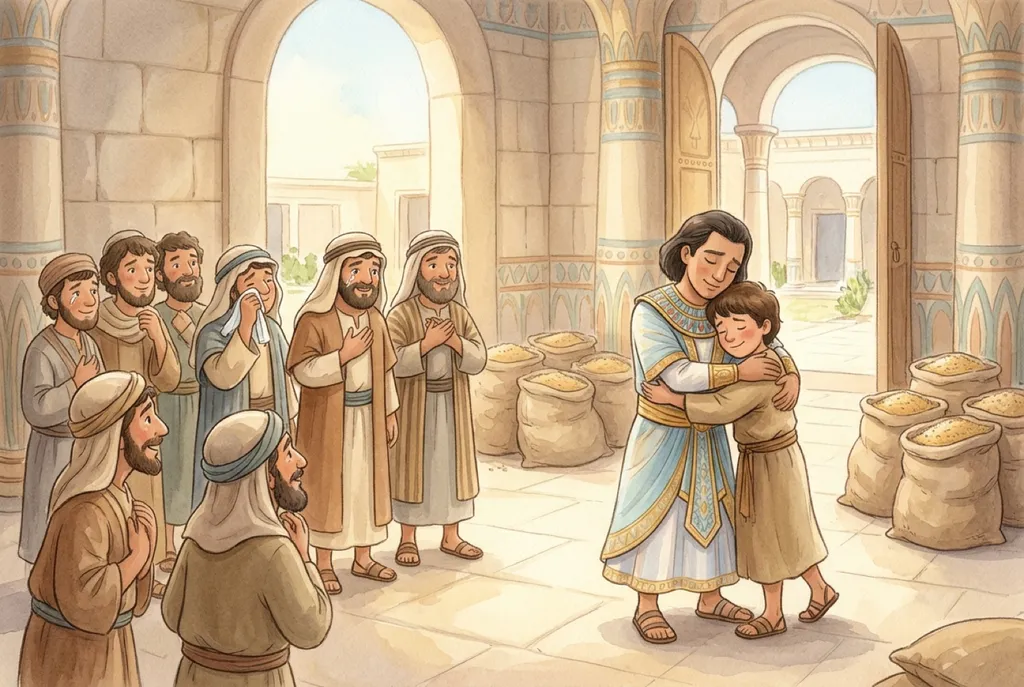
- Joseph. His brothers sold him as a slave. Years later, Joseph saved many lives, including theirs. He told them: "As for you, you meant evil against me, but God meant it for good" (from Genesis 50:20). Read Joseph's Colorful Coat and Joseph Forgives His Brothers.
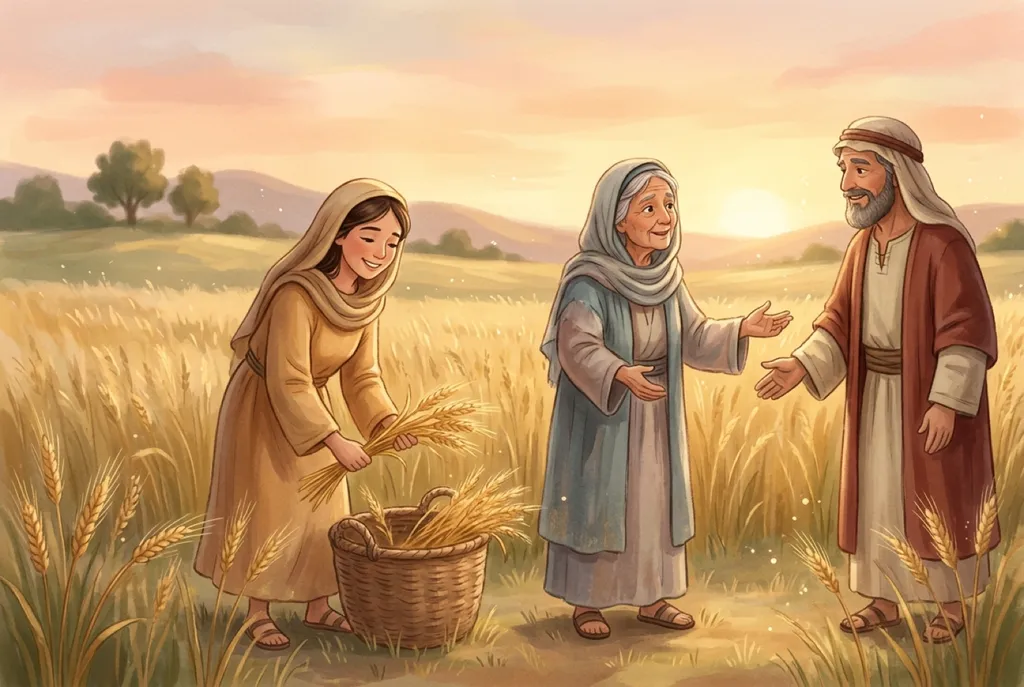
- Ruth and Naomi. Naomi lost her husband and sons and felt God had turned against her. But through Ruth's love, God gave her a family and a future. (Ruth and Naomi)
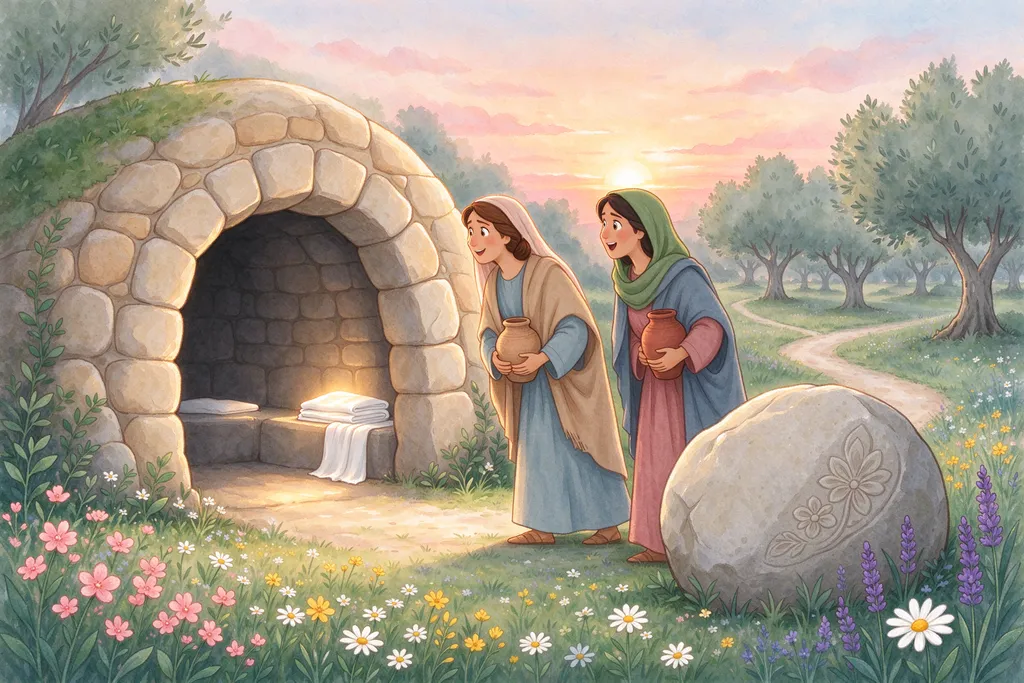
- The cross. The worst thing that ever happened, the death of God's own Son, became the way God rescued the world. And three days later, Jesus rose. (Jesus Is Risen)
Paul wrote that "all things work together for good for those who love God" (from Romans 8:28). Many families find hope in that promise. Just be gentle in applying it: it's a promise about God's long work, not a reason to tell a hurting child that their sadness is secretly good.
Where Christians put the emphasis differently
Christians agree that God is good, that he is powerful, that evil is real, and that God will one day put everything right. But traditions emphasize different things when they talk about why God allows suffering. Some, especially in the Reformed tradition, stress that God is sovereign over all things and works even suffering into his good purposes. Others stress human freedom and the brokenness of creation, and focus on God suffering alongside us.
Your child doesn't need to choose between these. For young children, the shared answer is enough: the world is broken, God is good, God is with us, and God will make all things new. If older children want to go deeper, your pastor or priest will be glad to talk with them.
Bring the question to God together
The Bible gives us permission to bring our hardest questions straight to God. That's called lament: honest prayer that tells God how we feel.
Try praying with your child something like: "Dear God, we don't understand why this happened. We feel sad and confused. Please be close to us. Please help the people who are hurting. Thank you that you love us, and that one day you'll make everything new. Amen."
You can also turn questions into action. When children hear about people suffering, help them do something: pray for them by name, make a card, give to help, take a meal to a neighbor. Read The Good Samaritan together. Children who are helped to respond to suffering with love feel less helpless.
And remember the end of the story. Read Revelation's promise together: "He will wipe away every tear from their eyes. Death will be no more; neither will there be mourning, nor crying, nor pain, any more." (from Revelation 21:4) For related conversations, see our guides to explaining death to a child, explaining heaven and Bible stories for kids who are scared.
Questions parents ask
Frequently asked questions
How do I answer when my child asks why God lets bad things happen?
Start by saying it's a good question that people in the Bible asked too. Then share what you know: the world is broken but that's not how God made it, God is sad about bad things and is with us in them, and he has promised to make everything new. It's fine to say you don't know all the reasons.
Is it okay to tell my child 'I don't know'?
Yes. Christians have wrestled with this question for thousands of years. Saying 'I don't know all the reasons, but I know God loves us and is with us' is honest and builds trust.
What should I avoid saying to a child about suffering?
Avoid telling a child that God caused something to teach them a lesson, that God 'needed' someone who died, or that praying harder would have fixed it. These can make children afraid of God or feel guilty.
What Bible stories help children understand suffering?
Joseph's story shows God bringing good out of evil. Ruth and Naomi shows God's faithfulness through loss. The Easter story shows the worst thing turned into the best. Psalm 23 reminds children God is with them in dark times.
How do I talk to my child about scary things in the news?
Keep it brief and age-appropriate, reassure them that they are safe, pray together for the people affected, and if possible help them do something kind in response. Limit their exposure to distressing images and coverage.