Faith at home
How to Explain Heaven to a Child
Children ask about heaven at bedtime, at funerals and in the car on the way to the shops. Here is how to talk about it simply and truthfully, with words to use at each age and gentle answers to the questions children really ask.
By the Biblelings team · Updated
The heart of it in one breath
If your child asks "What is heaven?" and you have ten seconds, here is an answer that is simple, true and gentle:
"Heaven is where God is. It's the happiest, safest place there is, because God is there and God is love. Jesus said he's getting a home ready for everyone who belongs to him. One day God will make everything new, and nobody will be sad or hurt anymore."
That covers the three things children most need to know: heaven is about being with God, it is good and safe, and it is a promise God will keep. Everything else, the details of what it looks like and how it works, can come later, and much of it the Bible leaves as a mystery anyway.
Start with Jesus' own words
When children ask about heaven, the most comforting thing you can give them is not your own picture but Jesus' promise. On the night before he died, Jesus told his worried friends:
"In my Father’s house are many homes. If it weren’t so, I would have told you. I am going to prepare a place for you." (John 14:2)
Children understand homes. They understand someone getting a room ready for a guest, making the bed, putting a lamp on. You might say: "Jesus said heaven is like a big house with a room for everyone who loves him. He's getting it ready, like Grandma gets the spare room ready when we visit."
Notice what Jesus does not do. He doesn't describe gold streets or harps. He talks about a Father's house, a place, and being together. Those are the parts to lead with.
What children can understand, age by age
Ages 3 to 4. Keep it concrete and warm. Heaven is God's home. It is a happy place. Jesus is there. There is no crying there. That is plenty.
"Heaven is where God lives. It's a very happy place. Nobody is ever sad or sick or hurt in heaven."
Ages 5 to 6. Children this age want to know where, what and who. They may ask if heaven is in the sky, what you eat there, whether there are toys. Answer what you can, and be relaxed about what you don't know.
"The Bible doesn't tell us exactly what heaven looks like. But it tells us the most important thing: God is there, and it's even better than the best day you've ever had."
Ages 7 to 8. Older children can start to grasp a bigger idea that many Christians miss: the Bible's great hope is not just "going up to heaven" but God making a new heaven and a new earth where his home is with his people. Revelation describes God wiping away tears and ending death itself.
"The Bible says one day God will make the whole world new. He will wipe away every tear. Death will be gone. God will live right there with his people. That's the end of God's big story, and it's a happy ending."
Gentle answers to the questions children ask
"Where is heaven? Is it in the sky?" "We often say heaven is 'up' because it's a way of saying God is great and above everything. But heaven isn't somewhere a rocket could fly to. It's where God is, and God's way of being there is different from ours."
"Can we see heaven?" "Not yet. It's a bit like how we can't see the wind, but we know it's real. Jesus promised us heaven is real, and Jesus always tells the truth."
"What do you do in heaven?" "The Bible gives us little peeks: people celebrating, singing, being with God and each other, a feast. It won't be boring. Being close to God is the best thing there is."
"Is Grandpa in heaven?" If your family's faith gives you confidence, say so warmly: "Grandpa loved Jesus, so we believe he's with Jesus now." If you are unsure, it is fine to say, "We trust God. God loved Grandpa even more than we did, and God is always kind and always fair." Avoid promising things you don't believe, and avoid giving a frightening answer. See our guide to explaining death to a child for more.
"Will my dog go to heaven?" Christians answer this differently, and the Bible doesn't say directly. An honest answer: "The Bible doesn't tell us about pets in heaven. But it does tell us God made the animals and loves them, and that God will make everything new. We can trust God with Biscuit." Resist the urge to invent a firm answer either way.
"Will I know you in heaven?" "Yes, I believe we will. When Jesus came back to life, his friends recognized him. Heaven is about being together with God and with the people who love him."
"Do people become angels?" "No. Angels are special helpers God made. People stay people, and God loves us just as we are. In heaven we'll be the best version of ourselves."
"When will I go to heaven?" "Most people don't go to heaven until they are very, very old. You have lots of living to do first! And Jesus is with us right here, right now, too."
Where churches see it differently
Christians agree on the heart of it: heaven is being with God, Jesus has made the way, and God will one day make all things new. But traditions understand some details differently, and it helps to know this so you can answer in a way that fits your church.
- What happens straight after death. Many Christians believe that people who die trusting Jesus go to be with him right away; when Jesus spoke to the man on the cross beside him, he promised they would be together in paradise that day. Some traditions describe death more as a rest or sleep until the resurrection. Catholic teaching also includes purgatory, a time of being made ready for heaven.
- Heaven and the new creation. Some churches talk mostly about "going to heaven." Others put more weight on the resurrection of the body and the new earth. Both are in the Bible.
- Who goes to heaven. Every tradition answers this from its own understanding of faith, baptism and grace. With young children, keep the focus on God's love and on trusting Jesus, and save the harder theology for when they are older.
If you're unsure how your church puts it, your pastor or priest will be glad to help. Children don't need every detail settled; they need to hear the core of it with confidence and love.
What to avoid saying
A few common phrases can confuse or worry small children:
- "God needed another angel." It isn't biblical, and children may wonder why God would take someone they loved for his own needs.
- "Heaven is up in the clouds." Fine as a picture, but young children take it literally and may look for people on airplanes.
- "Be good or you won't go to heaven." This turns heaven into a reward chart and can make anxious children very anxious. Most Christian traditions teach that heaven is God's gift, not something we earn by behaving. Keep the emphasis on God's love.
- Inventing details. It's tempting to describe cotton-candy clouds and endless ice cream. Children will remember, and later wonder what else was made up. "The Bible doesn't say, but I know it will be wonderful" is a better answer.
Bible stories that open the conversation
You don't have to wait for a hard moment to talk about heaven. These Biblelings stories give natural openings:
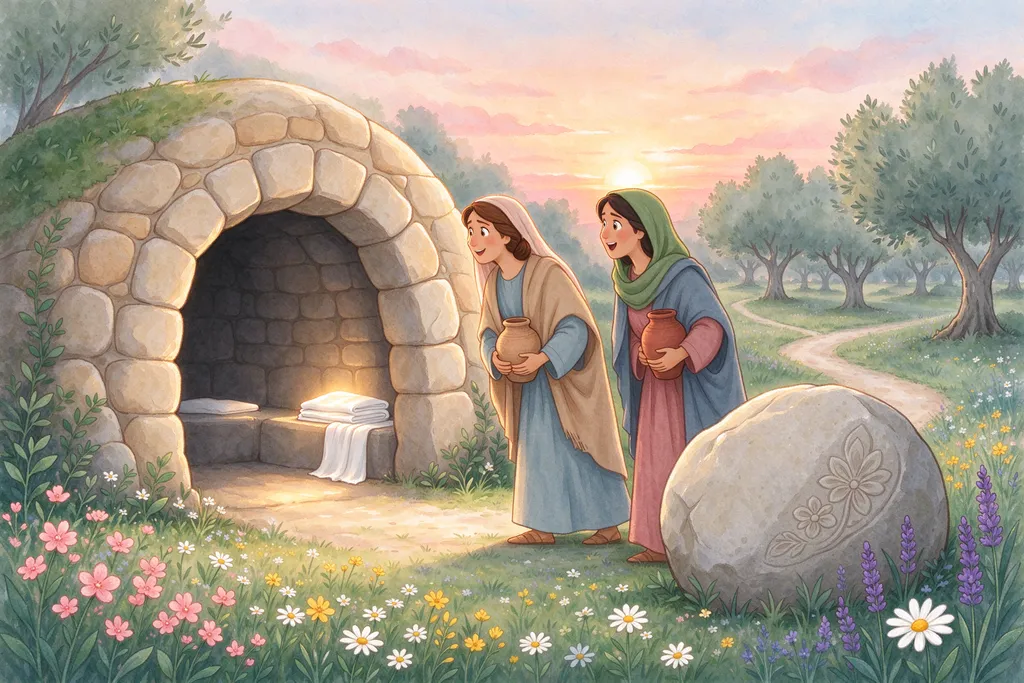
- Jesus Is Risen. The resurrection is the reason Christians have hope of heaven at all. Ask: "How did Jesus' friends feel when they saw he was alive?"
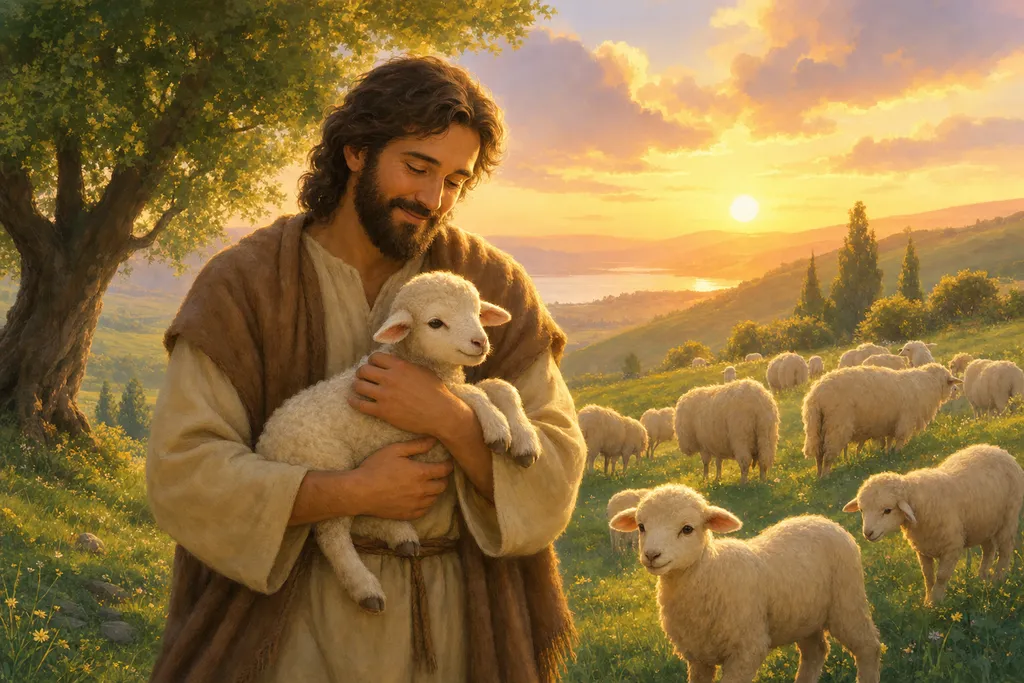
- The Good Shepherd. The shepherd who knows his sheep by name and keeps them safe is a gentle picture of how Jesus cares for us now and always.
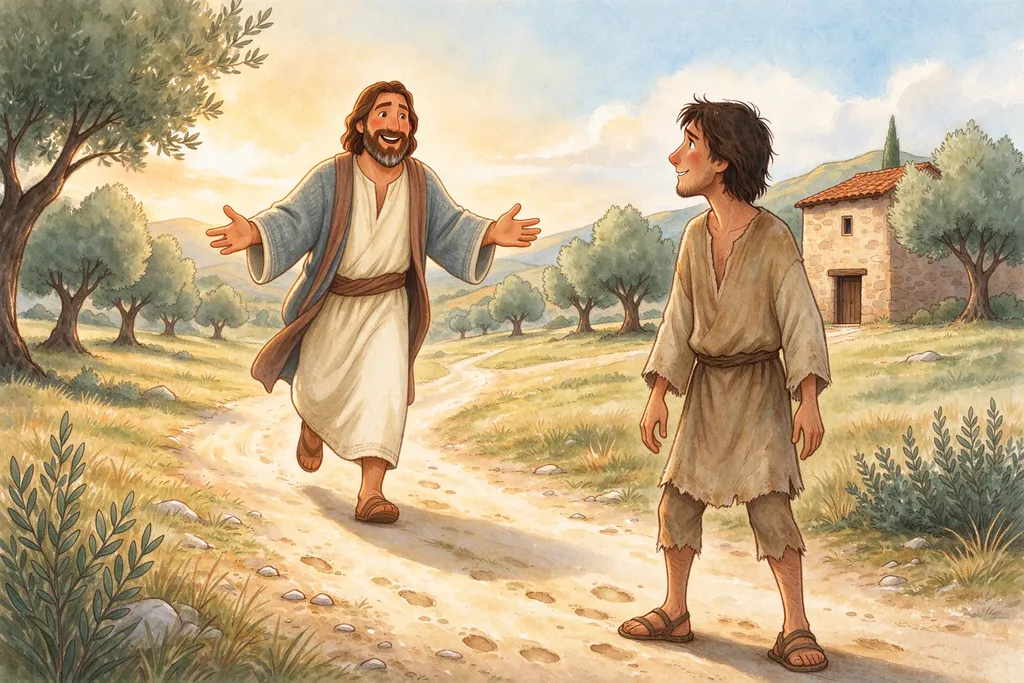
- The Prodigal Son. The father running out to welcome his son home, then throwing a party, is a lovely glimpse of the welcome of God's house.
- Jesus Loves the Children. Jesus said God's Kingdom belongs to children. Little ones are not an afterthought in heaven.
- The Shepherds and the Angels. A sky full of angels praising God is one of the few times heaven "opens" in a Bible story.
Every story ends with a short prayer and a question to ask together. Browse more on our Easter Bible stories page.
Keep it hopeful
Heaven is not a topic to get exactly right before you're allowed to mention it. It is good news, and children should hear it as good news.
Revelation's picture of the end of God's story is one of the most comforting passages in the whole Bible to read with a child: "He will wipe away every tear from their eyes. Death will be no more; neither will there be mourning, nor crying, nor pain, any more." (from Revelation 21:4)
Read it slowly. Let them ask questions. And remind them that the most important thing about heaven is already true today: nothing can separate them from God's love. Paul wrote that neither "death, nor life, nor angels... nor things present, nor things to come... will be able to separate us from God’s love, which is in Christ Jesus our Lord." (from Romans 8:38-39)
For more, see our guides to explaining God to a child, explaining Easter to a preschooler and answering "why does God let bad things happen?".
Questions parents ask
Frequently asked questions
How do you explain heaven to a 4-year-old?
Keep it short and warm: heaven is where God lives, it's the happiest and safest place there is, Jesus is getting a home ready for the people who love him, and nobody is ever sad or hurt there.
What does the Bible say heaven is like?
It gives pictures more than a map: a Father's house with many homes, a feast, a city, and a new heaven and earth where God lives with his people, wipes away every tear and ends death. The center of it all is being with God.
What should I say if my child asks if their pet will go to heaven?
Be honest that the Bible doesn't say directly and that Christians think about it differently. You can say God made the animals, loves them and will make everything new, so we can trust him with our pet.
Should I tell my child that people become angels when they die?
It's best not to. The Bible presents angels as a different kind of being God made. You can say that people stay themselves and that in heaven they are with God, safe and whole.
What if my child asks whether someone who didn't believe is in heaven?
With young children, avoid frightening answers or false promises. You can say that God loved that person even more than we did, that only God knows every heart, and that God is always good and fair. Your pastor can help with older children's questions.