
Faith at home
How to Explain Death to a Child: A Gentle Christian Guide
When someone your child loves dies, or when a pet dies or a question comes out of nowhere, it is hard to know what to say. Here are honest, gentle words for each age, answers to the questions children ask, and ways your faith can hold your child through grief.
By the Biblelings team · Updated
If you are reading this today because someone has died
First, we're so sorry. If you are grieving yourself and also trying to help a small child, you are carrying a great deal. You do not have to get this perfect. Children don't need a flawless explanation; they need the truth, told gently, by someone who loves them and stays close.
If you only read one section, read this one. Here is a simple way to tell a young child that someone has died:
"I have some very sad news. Grandma died today. Her body stopped working, and she can't come back. That means we won't see her or hug her anymore, and that makes me very sad. It's okay to feel sad, or confused, or anything you feel. I'm here, and we'll be sad together. Grandma loved Jesus, and we believe she is with him now, safe and not hurting anymore."
Then stop. Hold them. Let them respond however they respond, even if that is to ask for a snack and run off to play. That is normal; young children often grieve in short bursts.
If you are facing something especially hard, such as the death of a parent, a sibling, or a sudden or traumatic death, please lean on your pastor or priest, and consider a counselor who works with grieving children. You don't have to do this alone.
Use the real words
It feels kinder to soften death into gentler words, but with young children, soft words often cause confusion or fear.
- "Went to sleep" can make children afraid of falling asleep, or afraid that you won't wake up.
- "We lost Grandpa" can make them wonder why nobody is looking for him.
- "Went away" or "passed on" can make them wait for the person to come back, or feel abandoned.
- "God took her" can make children afraid of God, or worried God will take them next.
Instead, say "died" and explain what it means in simple, physical terms: "When someone dies, their body stops working. Their heart stops beating and they don't breathe anymore. They can't feel hurt or cold or hungry. They can't come back to their body."
You can still talk about the person being with Jesus. Christians believe both things at once: the body has died, and the person who loved Jesus is safe with him. Children can hold both.
What children understand at each age
Ages 3 to 4. Many preschoolers do not yet understand that death is permanent. They may ask when Grandma is coming back, even after you've explained. That's not because they weren't listening. Answer patiently, again and again: "Grandma died, so she can't come back. I miss her too."
Ages 5 to 6. Children begin to understand that death is permanent, and they may start to worry about who else will die, including you and themselves. They may ask very direct, physical questions ("Is she cold in the ground?"). Answer simply and calmly. Their questions are not disrespectful; they are how children make sense of things.
Ages 7 to 8. Most children now understand that death is permanent and happens to everyone. They may feel grief more deeply and for longer, and they may have spiritual questions: Why did God let this happen? Where is Grandpa now? Did I do something to cause it? Be ready to say, clearly, "Nothing you did or thought made this happen."
At every age, children often grieve in waves. They may seem fine for weeks and then fall apart over something small. That's normal too.
Jesus cried too
One of the shortest verses in the Bible is one of the most important to share with a grieving child. When Jesus' friend Lazarus died, and Jesus saw Lazarus' sister crying, the Bible says:
"Jesus wept." (John 11:35)
Jesus knew what he was about to do. He was going to bring Lazarus back to life. And still, he cried with his friends. Grief is not a lack of faith. Sadness is not something to hurry past.
You might say: "Even Jesus cried when his friend died. It's okay for us to cry. Jesus understands how we feel, and he is close to us when we're sad."
That echoes a promise from the Psalms that many grieving families hold onto: "Yahweh is near to those who have a broken heart, and saves those who have a crushed spirit." (Psalm 34:18) (In the World English Bible, "Yahweh" is God's name, often written "the LORD.")
Christian hope, told simply
Paul wrote to grieving Christians that he didn't want them to "grieve like the rest, who have no hope." (from 1 Thessalonians 4:13) He didn't say "don't grieve." He said grieve with hope.
For a young child, Christian hope can be put simply:
- Jesus died, and then God made him alive again. Death isn't the end of the story.
- Jesus promised that everyone who trusts him will live with him forever. Jesus said, "I am the resurrection and the life. He who believes in me will still live, even if he dies." (from John 11:25)
- One day God will make everything new. No more death, no more crying, no more hurting.
A script for ages 4 to 8: "We're very sad because we miss Grandpa. But we have hope, because Jesus is stronger than death. Jesus died and came back to life. And he promised that one day, he will make everything new, and we will be together with him. We're sad now, and that's okay. But sad isn't the end of the story."
For more on heaven itself, see our guide to explaining heaven to a child.
Hard questions (and gentle answers)
"Will you die? Will I die?" Answer honestly and with reassurance: "Everybody dies one day, but most people don't die until they are very, very old. I plan to be here to look after you for a long, long time." Avoid promising you will never die, but do make sure they know who would look after them.
"Why did God let Grandma die?" It's fine not to have a tidy answer. "I don't know all the reasons. I know God loved Grandma, and God is sad with us. Death wasn't part of how God first made the world, and one day God will end death forever." See our guide to why God lets bad things happen.
"Did I make it happen?" Children sometimes think an angry thought or a misbehavior caused a death. Say clearly: "No. Nothing you did, said or thought made Grandma die. She died because she was very old and very sick."
"Can Grandma see me?" The Bible doesn't tell us much about this, and Christians answer it differently. You might say: "I don't know. But I know God sees you, and God is looking after Grandma and you."
"Is Grandpa in the box?" "Grandpa's body is in the coffin. But the part of Grandpa that loved and laughed, we believe that is with Jesus. His body doesn't feel anything anymore."
"Why are you crying?" Let them see your tears. "I'm crying because I miss Grandma. Crying helps when we're sad. I'm okay, and I'm still here to look after you." Children learn how to grieve by watching you.
If you don't know the answer, "That's a big question. I don't know, but I know God is good, and we can ask him about it together" is a good, honest response.
When a pet dies
For many children, the death of a pet is their first experience of death, and the grief is very real. Take it seriously. Use the same honest words: the pet died, its body stopped working, it can't come back.
Many families find it helpful to have a small burial or goodbye: saying thank you to God for the pet, sharing a favorite memory, drawing a picture. A short prayer might be: "Dear God, thank you for Biscuit. Thank you for all the fun we had. We're sad he died. Please help us when we miss him. Amen."
If your child asks whether the pet is in heaven, be honest that the Bible doesn't say directly. You can say that God made the animals, loves them, and will one day make everything new.
Funerals, memories and the weeks after
Should my child go to the funeral? Families decide this differently, and there is no single right answer. If your child attends, prepare them beforehand: what they will see, that people will cry, how long it lasts. Bring a trusted adult who can step out with them if needed. Children who don't attend can still say goodbye: drawing a picture to put in the coffin, lighting a candle, visiting the grave later.
Keep the memory alive. Look at photos. Tell stories. Make a memory box. Say their name. Children often worry that if they stop being sad, they'll forget the person; reassure them that remembering can be happy too.
Keep routines. Bedtime stories, meals, school: predictability helps children feel safe when everything else feels shaky.
Pray together. Simple prayers help: "Dear Jesus, we miss Grandma. Please hold us close. Thank you that she's safe with you. Amen." See our guide to teaching kids to pray.
Watch for signs your child needs more help. If, weeks or months later, your child's grief seems to be getting heavier rather than lighter, or it is affecting sleep, eating, school or friendships in a lasting way, talk to your doctor, your pastor, or a counselor who works with grieving children. Asking for help is a good and loving thing to do.
Bible stories for grieving children
Bible stories won't fix grief, but they can give children a place to put their feelings and a hope to hold onto. Some gentle choices:
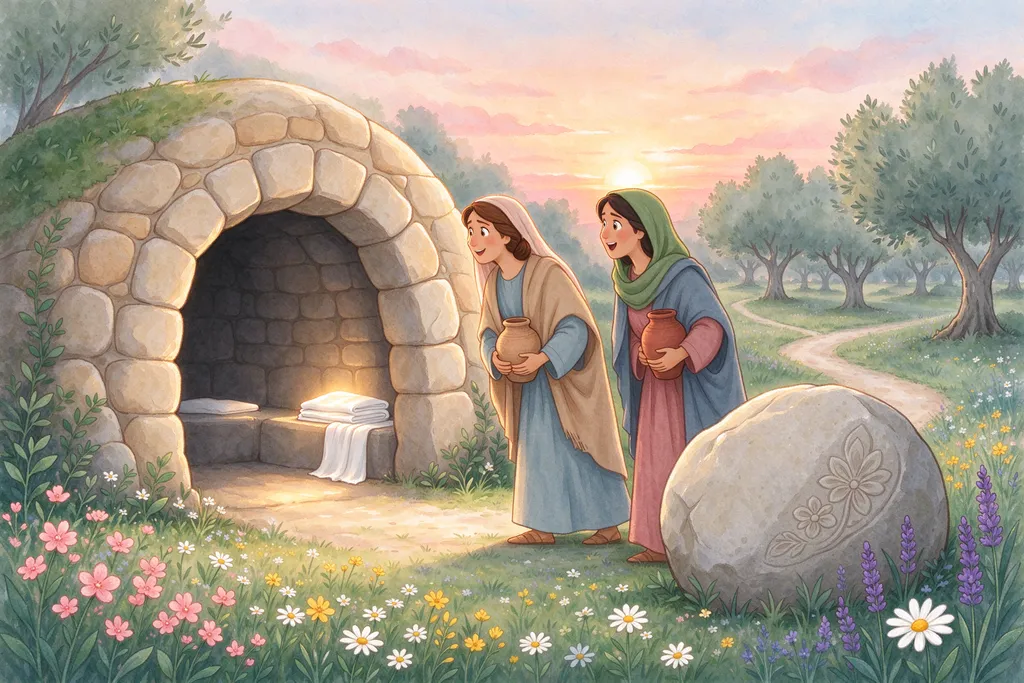
- Jesus Is Risen. Jesus' friends were heartbroken, and then God did something no one expected. The Easter story is the heart of Christian hope.
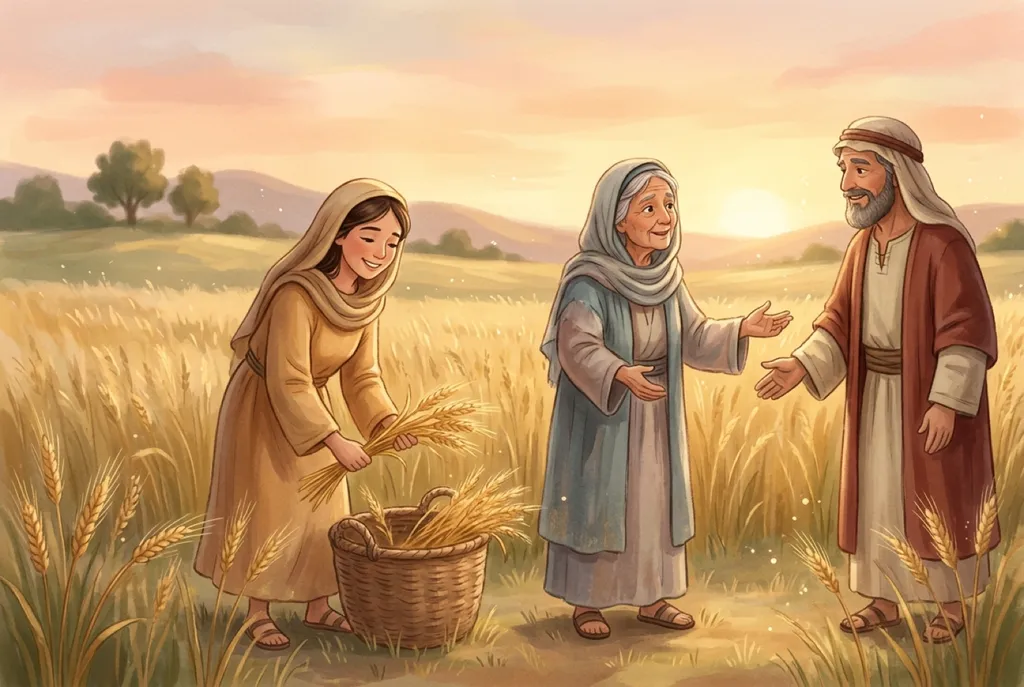
- Ruth and Naomi. Naomi's story begins with great loss, and Ruth's loyal love stays with her through it. God brings new joy in time.
- The Good Shepherd. A shepherd who knows each sheep by name and never leaves them.
- Jesus Loves the Children. A reminder that Jesus welcomes children, sad ones included, into his arms.
Read slowly, pause often, and let your child take the conversation wherever it needs to go. Our bedtime Bible stories are short and calm for difficult evenings.
Questions parents ask
Frequently asked questions
How do I tell my young child that someone has died?
Sit close, use simple, honest words like 'Grandma died. Her body stopped working and she can't come back,' name your own sadness, and let them respond however they need. Add your faith simply: 'We believe she is with Jesus, safe and not hurting.'
Should I say 'passed away' or 'went to sleep'?
With young children, it's clearer to say 'died.' Softer phrases can confuse them or make them afraid of sleep or of being left. You can still talk about the person being with Jesus.
Is it okay to cry in front of my child?
Yes. Seeing you grieve teaches them that sadness is normal and safe. Jesus himself wept when his friend died. Reassure them that you are okay and still there to look after them.
What Bible verse can I share with a grieving child?
'Jesus wept' (John 11:35) shows that Jesus understands sadness. Psalm 34:18 promises that God is near to the broken-hearted, and Revelation 21:4 says God will one day wipe away every tear.
When should I get extra help for a grieving child?
If your child's grief seems to grow heavier over weeks or months, or affects sleep, eating, school or friendships in a lasting way, talk to your doctor, your pastor, or a counselor who works with grieving children.