
Through the year
Easter Activities for Christian Families: Holy Week Day by Day
Holy Week is the most important week of the Christian year, and children understand it best one day at a time. Here is a simple, gentle plan for each day from Palm Sunday to Easter morning, with a story, an activity and a prayer for each.
By the Biblelings team · Updated
Why walk through Holy Week with children
If Easter arrives all at once, with a basket and a hunt on Sunday morning, it is easy for children to miss the story at its center. But when they walk through the week with Jesus, waving palms, sharing a meal, sitting quietly on Friday, waiting on Saturday, Easter morning lands with real joy. He's alive! means so much more when you've lived the days before it.
You don't need to do everything below. Pick one activity a day, or just the big three (Palm Sunday, Good Friday, Easter Sunday). Ten minutes a day is enough.
In 2027, Holy Week runs from Palm Sunday, March 21 to Easter Sunday, March 28 for churches that follow the Western calendar. Orthodox Easter usually falls on a different date. If your family keeps Lent in the weeks before, see our guide to Lent for kids.
Before you start: a simple supply list
Most of these activities use things you already have. Gather them the weekend before:
- Green paper (or real palm or leafy branches) and tape
- A small loaf of bread and a bottle of grape juice
- A bowl of warm water and a towel
- Two sticks or twigs and some string
- A shallow pot or tray, soil, a small upturned pot or cup (for a tomb), a stone big enough to cover its opening, and some moss, grass seed or small flowers
- A white cloth or napkin
- Plastic eggs (optional)
- Paper, crayons and printed coloring pages of Palm Sunday, the Last Supper and Jesus Is Risen
Palm Sunday: Jesus the King arrives
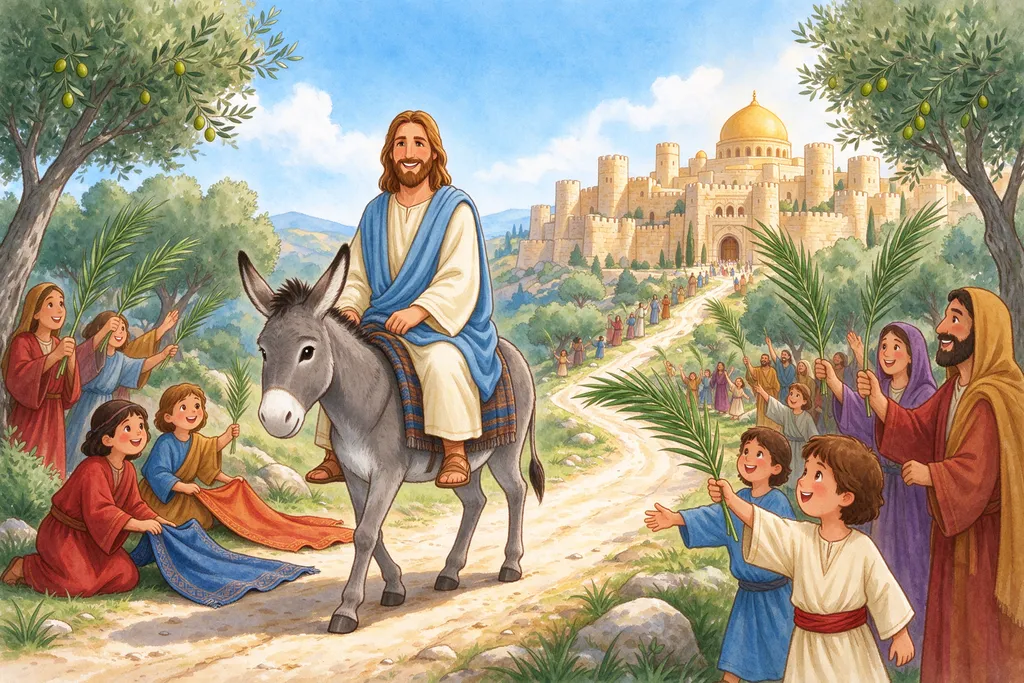
Read: Palm Sunday, the story of Jesus riding into Jerusalem on a donkey while the crowds cheered.
Activity: a palm parade. Make palm branches by tracing your child's hand on green paper several times, cutting out the hands and taping them up a cardboard tube or rolled sheet of paper. Then have a parade through the house or yard, waving your branches and shouting what the crowds shouted: "Hosanna to the son of David! Blessed is he who comes in the name of the Lord! Hosanna in the highest!" (from Matthew 21:9)
Toddlers can ride a "donkey" (a broom horse or a grown-up's back). Many churches hand out palm branches on Palm Sunday. Bring yours home and put them somewhere you'll see them all week.
Talk about it: "The people were so happy to see Jesus. Why do you think they called him a king?"
Pray: Jesus, you are our King. We're glad you came. Hosanna! Amen.
Monday to Wednesday: following Jesus through the week
The Gospels tell us that Jesus spent the early part of the week in Jerusalem, teaching in the temple and spending time with his friends. These three days are a good time for quieter activities that build toward the end of the week.
Monday: Jesus clears the temple. Jesus was upset that people were buying and selling in God's house instead of praying (you can read it in Mark 11:15-17). Activity: Clean and tidy one room together, then make a small "prayer corner" with a cushion, a candle (battery is fine) and a picture of Jesus. Pray there each evening this week.
Tuesday: Jesus teaches. Jesus told many stories that week. Read one of his parables, such as The Good Samaritan or The Wise and Foolish Builders. Activity: Do one secretly kind thing for a family member.
Wednesday: a gift for Jesus. In the days before Passover, a woman poured very expensive perfume over Jesus to show how much she loved him (Mark 14:3-9). Activity: Let your child smell a nice-smelling lotion or spice, like cinnamon, and talk about giving Jesus our very best. Ask: "What could you give Jesus?" Children often answer "my love" or "a song," which are perfect answers.
Each evening: add a coloring page to a wall or window so the week builds into a display.
Maundy Thursday: the Last Supper and serving one another
Read: The Last Supper, the meal Jesus shared with his friends the night before he died.
Activity: an upper-room supper. At dinner, dim the lights, light a candle and put a small loaf of bread and a cup of grape juice in the middle of the table. Before eating, break the bread and pass it around, and share the juice. Tell your children that Jesus shared bread and wine with his friends at this meal and asked them to remember him. (Different churches understand Communion in different ways, so keep the focus on the story: Jesus loved his friends and wanted them to remember him.)
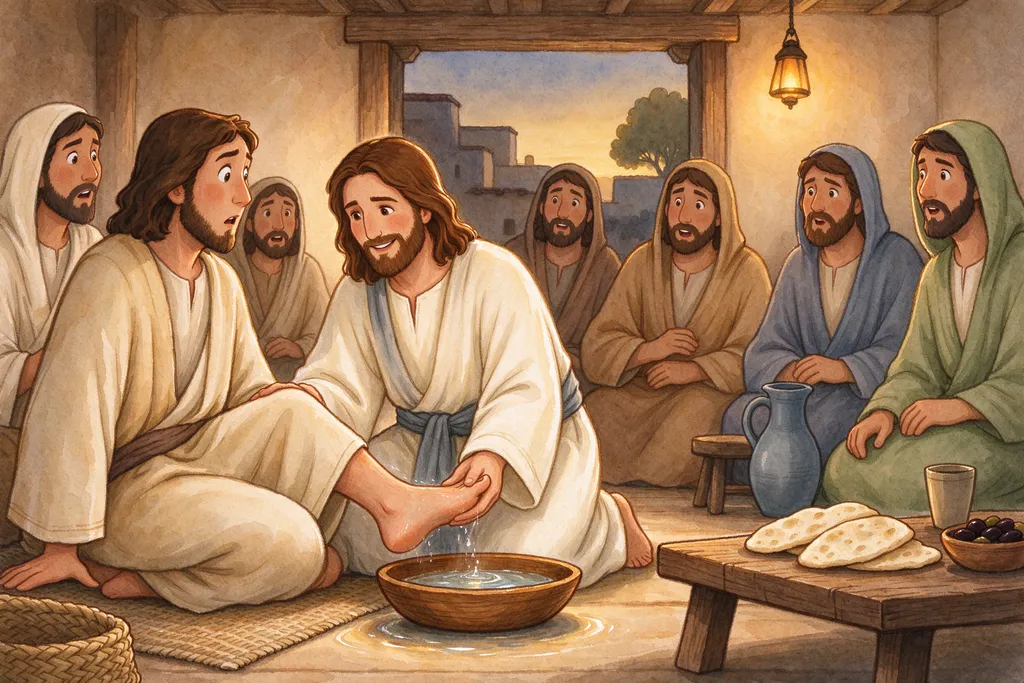
Activity: washing feet. That same evening, Jesus washed his disciples' feet, which was the job of a servant. After dinner, set a bowl of warm water and a towel on the floor and take turns washing each other's feet. Children often find it very funny and then, quite suddenly, very moving, especially when a parent kneels to wash theirs.
Read Jesus' words from that night: "A new commandment I give to you, that you love one another. Just as I have loved you, you also love one another." (John 13:34)
Pray: Jesus, thank you for loving your friends, and for loving us. Help us to serve each other the way you did. Amen.
Good Friday: Jesus dies on the cross
Good Friday needs a gentle touch with young children. The aim is not to frighten them but to let them know that Jesus died because he loves us, and that this day is quiet and sad, but not the end of the story. Our guide to explaining Easter to a preschooler has words you can use.
Read: the first three chapters of Jesus Is Risen, stopping after "Resting in the tomb." Tell your children you will finish the story on Sunday.
Activity: a simple cross. Tie two sticks together with string to make a small cross. Put it on the table or in the prayer corner.
Activity: a quiet afternoon. Many families keep Good Friday afternoon a little quieter than usual: no screens for an hour, a walk, gentle music. Some eat hot cross buns, a traditional Good Friday food in many countries, and point out the cross on top.
Talk about it: For a three- to five-year-old: "Jesus died on the cross. His friends were very, very sad. But Jesus knew something they didn't know yet. We'll find out on Sunday." For older children you can add: "Jesus died to take away the wrong things we do, so we can be friends with God forever." The Bible says, "For God so loved the world, that he gave his one and only Son, that whoever believes in him should not perish, but have eternal life." (John 3:16)
Pray: Jesus, thank you for loving us so much. Amen.
Holy Saturday: waiting, and making a resurrection garden
Holy Saturday is a day of waiting. Jesus' body lay in the tomb, and his friends didn't know what would happen next. It is the perfect day to make a resurrection garden together.
How to make a resurrection garden
- Fill a shallow pot, tray or dish with soil.
- Lay a small pot or cup on its side at one end, pushing it partly into the soil so it looks like a cave. This is the tomb.
- Cover the soil with moss, grass seed or small flowers. Add a path of small pebbles leading to the tomb.
- If you like, heap a little mound of soil at the back and push in three small twig crosses for the hill outside Jerusalem.
- Put a small white cloth inside the tomb and roll a stone across the entrance.
- Water it gently and put it somewhere the children will see it.
Before bed, look at the garden together. "The stone is closed. Jesus' friends are waiting. Tomorrow is a very special day." After the children are asleep, roll the stone away, and leave just the folded cloth inside.
Pray: God, we're waiting for Sunday. Thank you that you always keep your promises. Amen.
Easter Sunday: He is risen!
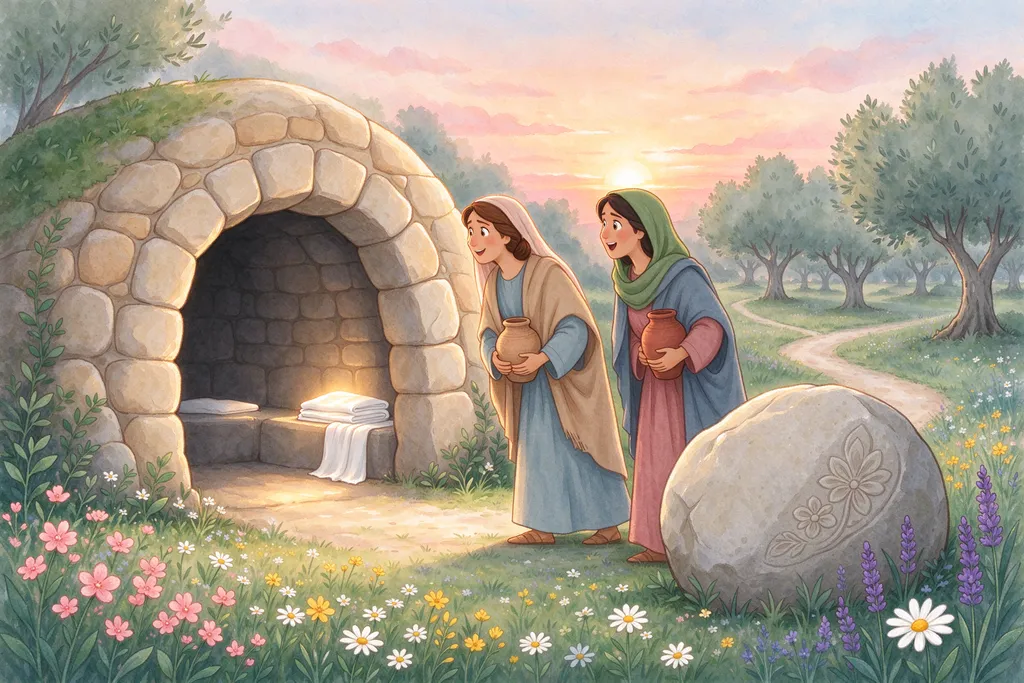
First thing: let the children discover the resurrection garden with the stone rolled away. Read the angel's words: "He is not here, for he has risen, just like he said. Come, see the place where the Lord was lying." (Matthew 28:6)
Read: the rest of Jesus Is Risen, all the way to the joyful ending.
The Easter greeting. Teach your children the greeting Christians have used for centuries. One person says, "He is risen!" and the other answers, "He is risen indeed!" Use it all day, at breakfast, in the car, at church, at lunch with grandparents.
An empty-egg hunt. If you do an egg hunt, add one plastic egg that is empty. Whoever finds it gets to tell everyone why: "It's empty, like the tomb, because Jesus is alive!" Some families use a set of Resurrection Eggs, with a small symbol of the story in each one; see our Easter basket ideas for more.
A sunrise moment. If your little ones are early risers anyway, go outside at sunrise with a warm drink and say the greeting together. The women came to the tomb very early in the morning.
Celebrate. Flowers on the table, a special breakfast, Easter songs, and plenty of joy. In the church year Easter is a fifty-day season, so keep saying "He is risen!" well into spring.
Pray: Jesus, you're alive! Thank you for winning over death, and for loving us forever. Hallelujah! Amen.
Keeping it right for your child's age
Toddlers (1 to 3): Palm waving, a short story each day from the Easter Bible stories collection, watering the resurrection garden, and an exciting reveal on Sunday. Skip the details of Good Friday; "Jesus died, and then God made him alive again!" is plenty.
Preschoolers (3 to 5): Most of the plan works well. Keep each day to ten or fifteen minutes. Foot washing and the resurrection garden are usually favorites.
Ages 5 to 8: Add more of the story each day, ask bigger questions ("Why did Jesus wash their feet?" "How do you think Peter felt?"), and let them lead parts, like reading the verse or saying the prayer. Our list of Christian Easter books has good read-alouds for this age.
For verses to learn this week, see our Easter Bible verses for kids.
Questions parents ask
Frequently asked questions
What are some Christ-centered Easter activities for kids?
A palm parade on Palm Sunday, a simple shared supper and foot washing on Maundy Thursday, a resurrection garden on Holy Saturday and an empty-tomb reveal on Easter morning. Pair each with a short Bible story so children follow the week with Jesus.
How do you make a resurrection garden?
Fill a shallow pot with soil, lay a small pot on its side as a tomb, cover the soil with moss or grass seed, and put a stone over the tomb's opening. On Easter morning, roll the stone away to show the empty tomb.
How do I explain Good Friday to a young child?
Keep it short and calm: Jesus died on the cross because he loves us, his friends were very sad, and he was laid in a tomb. Then let them know the story isn't finished, and that something wonderful happens on Sunday.
When is Holy Week in 2027?
For churches that follow the Western calendar, Holy Week runs from Palm Sunday, March 21, 2027, to Easter Sunday, March 28, 2027. Orthodox Easter usually falls on a different date.
Is it okay to do an Easter egg hunt as a Christian family?
Many Christian families enjoy egg hunts. You can connect them to the story by including one empty egg to stand for the empty tomb, and by reading the Easter story before or after the hunt.
What can toddlers do during Holy Week?
Wave paper palms, hear a very short story each day, help water a resurrection garden and join the excitement of Easter morning. Simple, sensory activities work best for under-threes.